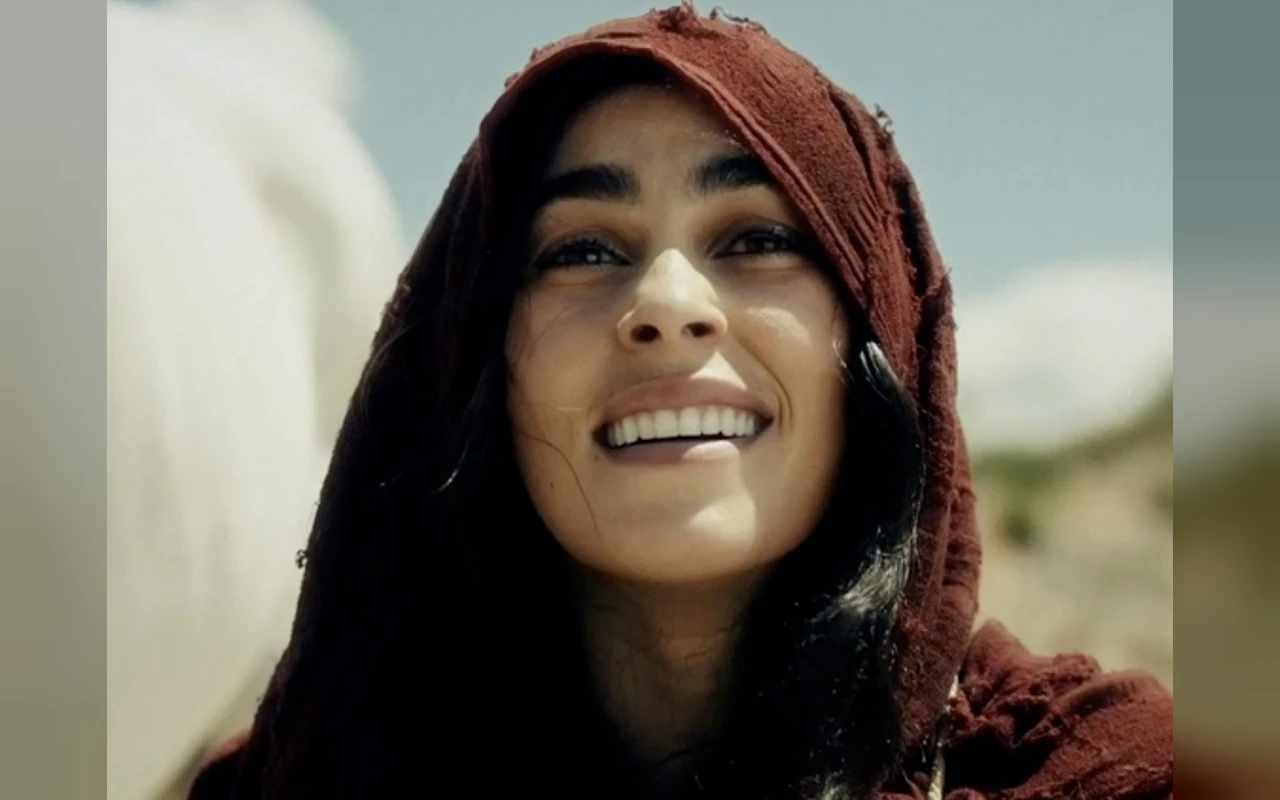
Fox's "The Faithful" retells biblical stories from a female perspective but offers only surface-level insights into Sarah, Rebekah, and others.
- April 15, 2026
AceShowbiz - The Faithful: Women of the Bible is a three-part event miniseries airing on Fox that aims to retell some of the most famous biblical stories from the female perspective. Despite this ambitious goal, the series struggles to move beyond surface-level storytelling, offering little new insight into its central characters or the divine forces that shape their destinies.
The first episode, which was sent to critics ahead of the premiere, focuses on the story of Sarai (played by Minnie Driver) and Abram (Jeffrey Donovan), better known by their more popular names, Sarah and Abraham. The upcoming episodes are set to explore the lives of Sarah’s daughter-in-law Rebekah (to be portrayed by Alexa Davalos) and Rebekah’s daughters-in-law Leah and Rachel (played by Millie Brady and Blu Hunt, respectively).
At its core, the narrative follows Sarai and Abram’s decades-long marriage, which, despite deep love, is marked by the sorrow of childlessness. The drama intensifies when God commands Abram to leave his homeland for an unknown land, promising that he will father many descendants. This divine intervention is meant to be a pivotal moment filled with faith and uncertainty. Yet, the series rushes through Sarai’s initial confusion, quickly having her support her husband’s decision without much exploration of her emotional turmoil.
This rapid progression reflects an overarching issue with The Faithful: it treats its characters more like figures in a predetermined script than complex individuals reacting to extraordinary circumstances. The storytelling feels rigid, as if the creators are simply retelling a well-worn story that must end a certain way, without room for character development or nuanced conflict.
The episode’s 84-minute runtime (or two hours including commercials) is directed by Danny Cannon, but despite the high-profile talent involved, the scenes unfold in a manner that feels generic. The desert landscapes are stark and uninspired, and the characters are often reduced to simplistic traits, lacking depth or distinctive personalities. This approach leaves the performances feeling flat, even with the capable cast.
One notable dynamic that shows promise is the complex relationship between Sarai and Hagar (played by Natacha Karam). Hagar, an Egyptian handmaid, is persuaded by Sarai to conceive a child with Abram in a biblical form of surrogacy. Over the years, this relationship oscillates between sisterly affection, deep jealousy, and uneasy alliance. These emotional layers have the potential to add richness to the story but are only lightly touched upon.
Meanwhile, the series frequently resorts to divine intervention whenever the plot encounters obstacles such as imprisonment or perilous journeys. God’s presence is portrayed as a guiding force that steps in just in time to steer events in the desired direction, but the reasons behind these divine mandates remain unexplored. The show accepts these supernatural elements without question, leaving viewers with little understanding of the motivations or implications behind God’s actions.
Minnie Driver delivers a subtle performance, conveying Sarai’s conflicting emotions—her faith in Abram versus her doubts about the God he worships—whenever given space to do so. Yet, these moments are rare. The series tends to elevate these women as heroic figures rather than fully realized, flawed human beings, which prevents the drama from delving into darker or more complex territories.
Instead of probing deeper into character psychology or interpersonal tensions, The Faithful moves swiftly between major biblical events and time jumps. Each new scene feels more like a necessary plot checkpoint than an organic progression of the story. This methodical pacing might suit religious study settings or family viewing during holidays, especially since the final episode is scheduled to air on Easter Sunday.
However, for viewers simply seeking engaging television drama, the miniseries falls short. It leans too heavily on the inherent interest of its biblical subjects rather than crafting a compelling narrative built on character-driven storytelling. This reliance on familiar stories and predetermined outcomes diminishes the potential for surprise or emotional investment.
In summary, The Faithful: Women of the Bible attempts a noble project to highlight the female figures of Genesis but ends up delivering a visually plain and narratively cautious retelling. Its characters are underdeveloped, and its plot is propelled more by divine decree than human conflict. While it may serve as an unobjectionable religious drama for certain audiences, it struggles to engage beyond that niche, ultimately feeling like a filmed encyclopedia entry rather than a vibrant dramatization.