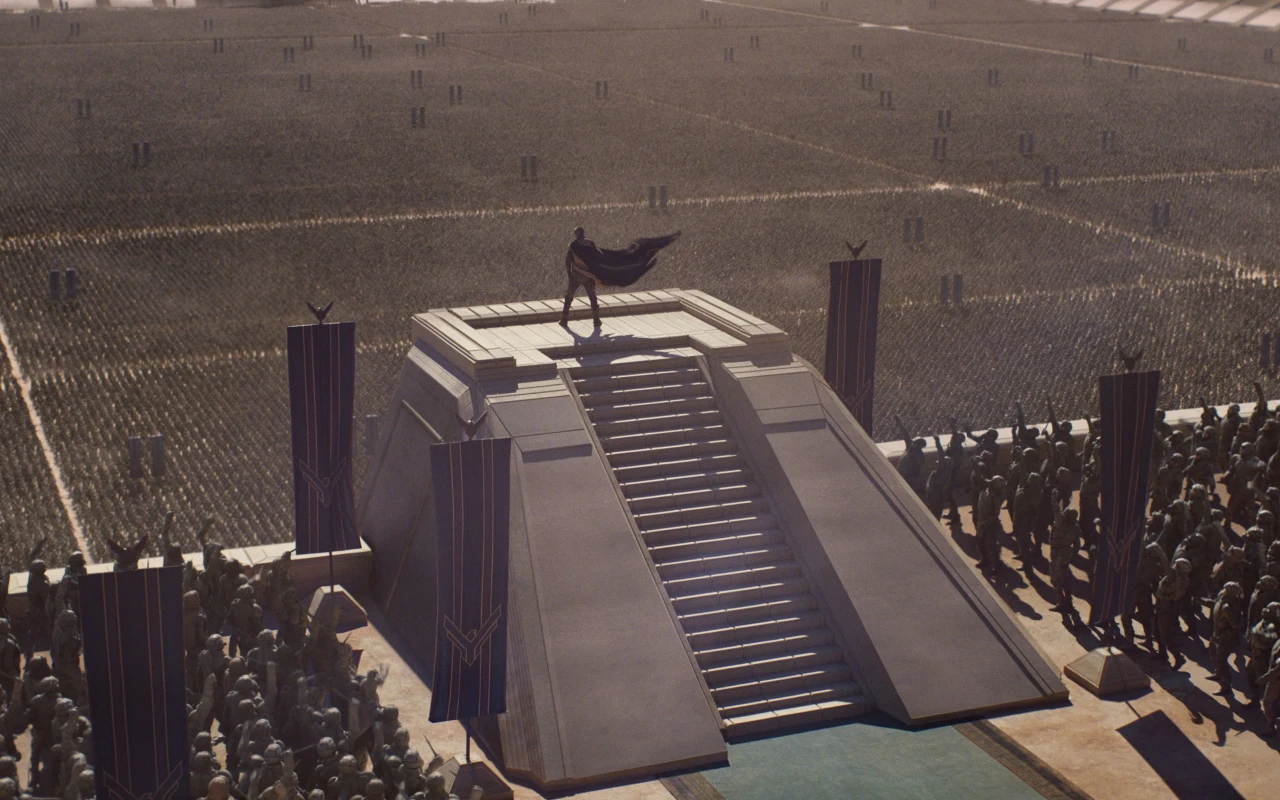
Dune Part Three concludes Villeneuve's epic saga. See Paul Atreides as Emperor in a darker, visceral finale compared to Saving Private Ryan's intensity.
- April 19, 2026
AceShowbiz - Dune Part Three is set to conclude Denis Villeneuve’s epic sci-fi saga with a bold and intense approach that has already sparked major excitement following its CinemaCon preview. Fans who have eagerly awaited the next chapter will witness Paul Atreides, portrayed by Timothée Chalamet, as he assumes his role as the galaxy’s new Emperor and grapples with the consequences of being the prophesied Lisan al-Gaib.
The reaction to the first seven minutes of the film, screened exclusively at CinemaCon, has been overwhelmingly positive, highlighting a departure from the previous movies’ style. Instead of marketing the film as another grandiose sci-fi spectacle, Warner Bros. and Villeneuve chose to immerse viewers immediately into chaos and brutality, setting the tone for a darker, more visceral narrative.
This opening sequence has drawn strong comparisons to a landmark war film directed by Steven Spielberg: Saving Private Ryan. The parallels arise from the raw, unfiltered depiction of battle that strips away any cinematic gloss, delivering an experience that feels harrowing and immediate.
Unlike the sweeping desert vistas and epic soundscapes that defined Dune Part Two, the new film’s introduction opts for a grittier, more grounded style. Rather than simply escalating scale with more sandworms and explosions, Villeneuve embraces a riskier direction by focusing on the horror and desperation of war itself. This choice is a marked shift for the franchise, which had previously balanced spectacle with deep political and mystical themes.
Multiple attendees of CinemaCon noted that the war scenes in Dune Part Three evoke the intense, close-up combat style of Saving Private Ryan’s Omaha Beach landing. The camera remains tightly focused on the characters, capturing the horror of sudden death and the overwhelming sense that the battle has spiraled out of control from its very first moments. This sets the stage for the Holy War depicted in the story, illustrating its devastating scale and human cost without romanticizing it.
The opening battle moves beyond Arrakis to a galactic theater of war, with spacecraft slicing through violent storms and troops deployed amid relentless rainfall—only to be met with devastating attacks that obliterate soldiers in an instant. This brutal depiction heightens the film’s emotional impact and firmly establishes the Holy War as a tragedy rather than an adventure.
This creative decision contrasts sharply with the source material, Dune Messiah, on which the film is based. The original 57-year-old novel largely sidelines the Holy War, treating it as background context and focusing instead on the psychological and political fallout surrounding Paul’s reign. While this approach suits the literary medium, it poses challenges for cinema, where audiences expect to witness the climactic events rather than have them glossed over offscreen.
By bringing the war explicitly to the forefront, the film addresses this cinematic necessity and also tackles a thematic problem: Paul Atreides remains widely admired as a heroic figure in the films so far. However, the novel depicts him as trapped by his own legend and consumed by the consequences of his power. Cinema’s tendency to iconize powerful protagonists risks softening this complexity, so the film’s graphic portrayal of fanaticism and violence serves to counterbalance Paul’s image and reveal the darker realities of his empire.
If Villeneuve maintains this uncompromising tone throughout, Dune Part Three promises to be the most unsettling and mature entry in the franchise. Opening with a sequence reminiscent of Saving Private Ryan is a deliberate choice to unsettle viewers and underscore that this is a war story devoid of glamor or heroism.
The film aims to deliver a cinematic experience that is both emotionally and intellectually impactful, forcing the audience to confront the brutal realities of religious fanaticism and political upheaval. This approach elevates the "Chosen One" narrative to a more nuanced level, emphasizing the tragic cost of power rather than glorifying it.
Dune: Part Three is scheduled for release on December 18, 2024, and early footage suggests it will redefine expectations for both the franchise and the sci-fi war genre as a whole.
What are your thoughts on this new direction for Dune? Join the conversation and share your views in the ComicBook Forum.