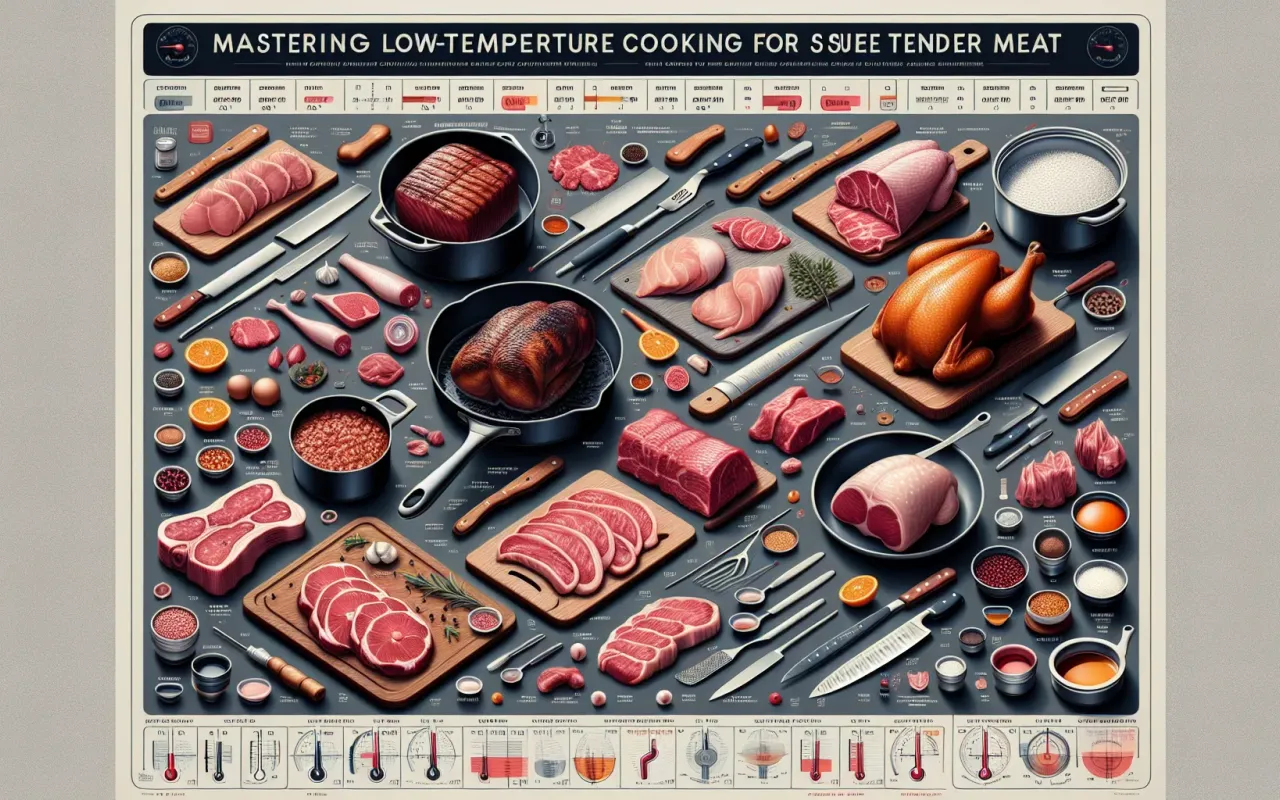
Discover the secrets to achieving tender meat with low-temperature cooking methods. This ultimate guide provides expert tips and techniques for perfect results every time.
- October 18, 2024
Low-temperature cooking methods for tender meat have gained popularity among home cooks and professional chefs due to their ability to transform even the toughest cuts into succulent, flavorful dishes. From sous vide to slow cooking, mastering these techniques can elevate your culinary skills and ensure your meat is never dry or overcooked. In this ultimate guide, we'll explore the science behind low-temperature cooking, discuss various methods, and provide practical tips for achieving tender, mouth-watering meat consistently.
The Science of Low-Temperature Cooking
Understanding the science behind low-temperature cooking is essential for perfecting the process. At its core, this method relies on gentle, prolonged heat to break down collagen - the protein that makes meat tough. When collagen is slowly converted into gelatin, the result is tender, juicy meat. Here are the key scientific principles:
1. Collagen Breakdown
Collagen begins to break down at temperatures above 160°F (71°C). However, prolonged cooking at temperatures around 125°F to 140°F (52°C to 60°C) ensures that the meat remains tender without losing moisture.
2. Moisture Retention
Low-temperature cooking minimizes moisture loss, preserving the meat's natural juices and resulting in a more succulent final product.
3. Even Cooking
Unlike traditional high-heat methods, low-temperature cooking evenly distributes heat throughout the meat, reducing the risk of burning or overcooking certain areas.
Methods of Low-Temperature Cooking
1. Sous Vide
Sous vide is a precise method where vacuum-sealed meat is cooked in a water bath at a specific, consistent temperature. This method is known for producing evenly cooked, tender results with minimal effort. Here’s how to master sous vide cooking:
- Equipment: Sous vide immersion circulator, vacuum sealer, and sealable bags.
- Technique: Season your meat, vacuum seal it, and submerge it in a water bath set to the desired temperature. Follow temperature and time guidelines for specific cuts of meat.
- Finishing: After cooking, sear the meat in a hot pan to develop a flavorful crust.
2. Slow Cooking
Slow cooking involves using a crockpot or similar device to cook meat at low temperatures over several hours. This method is perfect for tougher cuts of meat and is extremely convenient.
- Equipment: Slow cooker or crockpot.
- Technique: Place seasoned meat in the slow cooker along with any desired liquids or vegetables. Cook on low setting for 8-10 hours or according to specific recipe instructions.
- Finishing: Crisp up the meat under an oven broiler if a caramelized crust is desired.
3. Oven Braising
Braising combines slow cooking and moist heat to break down tough meat fibers. It's ideal for larger cuts and imparts rich flavors.
- Equipment: Dutch oven or heavy pot with a tight-fitting lid.
- Technique: Brown meat in the Dutch oven, then add liquid (broth, wine, etc.) and aromatics. Cook in a 300°F (150°C) oven for several hours until tender.
- Finishing: Reduce the cooking liquid into a sauce if desired.
Practical Tips for Low-Temperature Cooking
1. Choose the Right Cut
Not all cuts of meat are suited for low-temperature cooking. Choose cuts with higher collagen content, such as brisket, short ribs, or pork shoulder, for the best results.
2. Season Appropriately
Season your meat generously before cooking. Salt helps draw out flavors, while a blend of herbs and spices adds depth.
3. Utilize Aromatics
Incorporate aromatics like garlic, onions, herbs, and spices into your cooking medium for enhanced flavor.
4. Monitor Temperature
Maintain a consistent temperature throughout the cooking process. Invest in reliable cooking tools such as sous vide immersion circulators and slow cookers with precise temperature control.
5. Finish with Searing
To add texture and flavor, finish your low-temperature cooked meat with a quick sear in a hot pan or under a broiler.
Common Mistakes to Avoid
Even experienced cooks can make mistakes. Here are some common pitfalls and how to avoid them:
1. Overcooking in Water Baths
While sous vide cooking reduces the risk of overcooking, leaving meat in the water bath for too long can lead to undesirable textures. Follow recommended cooking times for best results.
2. Inconsistent Liquid Levels in Slow Cookers
Ensure there is enough liquid to cover your meat in slow cookers, but avoid overfilling to prevent soggy results.
3. Insufficient Browning
Browning meat before or after low-temperature cooking adds flavor and helps with presentation. Don't skip this crucial step.
Conclusion
Mastering low-temperature cooking methods for tender meat can transform your culinary repertoire and elevate your dishes. By understanding the science behind these techniques and applying practical tips, you can achieve consistently delicious results. Whether you use sous vide, slow cooking, or braising, the key to tender, flavorful meat lies in patience, precision, and a little bit of experimentation.