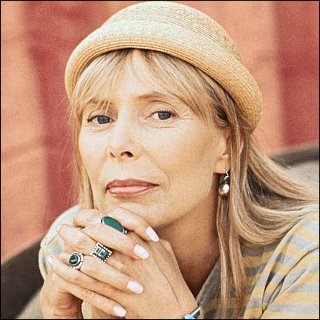
 Roberta Joan Anderson, known professionally as Joni Mitchell, is a celebrated Canadian and American singer-songwriter, multi-instrumentalist, and painter. Born on November 7, 1943, in Fort Macleod, Alberta, Canada, Mitchell is considered one of the most influential singer-songwriters to emerge from the 1960s folk music movement. Renowned for her deeply personal lyrics and innovative compositions, she has transcended genres, incorporating elements of pop, jazz, and rock into her music. Over her storied career, she has received numerous accolades, including eleven Grammy Awards and induction into the Rock and Roll Hall of Fame in 1997, solidifying her legacy in the music industry.
Mitchell's musical journey began in small nightclubs in Saskatoon and throughout western Canada, where she honed her craft before moving to Toronto. In 1965, she relocated to the United States and started touring, gaining attention for her original songs, which were often recorded by other artists. This led to her signing with Reprise Records, resulting in her debut album, Song to a Seagull, released in 1968. Settling in Southern California, she became a defining voice of a generation with iconic songs such as "Big Yellow Taxi" and "Woodstock," both from 1970. Her 1971 album, Blue, is frequently cited as one of the greatest albums of all time, ranking 30th in Rolling Stone's 2003 list of the "500 Greatest Albums of All Time," and later rising to number 3 in the 2020 edition. The New York Times acknowledged Blue as one of the 25 albums that represented turning points in 20th-century popular music, while NPR placed it at number 1 on their 2017 list of the "Greatest Albums Made By Women."
As her career progressed, Mitchell began to explore jazz influences, particularly evident in her 1974 album, Court and Spark, which became her best-selling work thanks to hits like "Help Me" and "Free Man in Paris." During this time, her vocal range evolved from mezzo-soprano to a wide-ranging contralto, and her compositions became more complex as she blended various musical styles. In the mid-1970s, she collaborated with notable jazz musicians such as Jaco Pastorius, Tom Scott, and Herbie Hancock, further pushing the boundaries of her artistry. She also worked with Charles Mingus, who invited her to contribute to his final recordings.
Mitchell's artistic vision extended beyond music; she produced or co-produced most of her albums and designed many of her own album covers, referring to herself as a "painter derailed by circumstance." A vocal critic of the music industry, she stepped back from touring and released her last album of original songs in 2007. Following a brain aneurysm in 2015, she faced a challenging recovery period but remained active through interviews and speaking engagements on various causes. The release of the Joni Mitchell Archives, a project dedicated to her unreleased material, marked a significant chapter in her career.
In recent years, Mitchell has made a remarkable return to public life, accepting several awards, including a Kennedy Center Honor in 2021. She surprised fans with an unannounced performance at the June 2022 Newport Folk Festival, signaling her return to the stage. Since then, she has headlined shows, continuing to captivate audiences with her timeless music and artistry. Joni Mitchell remains an indelible figure in the landscape of contemporary music, celebrated for her profound influence and unmatched contributions to the art of songwriting.
⭐
Similar Celebrities





📷
Recent Photos

Katie Price
Katie Price Launches Only Fans Channel - Photocall
Jan 26, 2022

Katie Price
Katie Price Launches Only Fans Channel - Photocall
Jan 26, 2022

Jessie J
The Premiere of Cirque Du Soleil Luzia
Jan 13, 2022
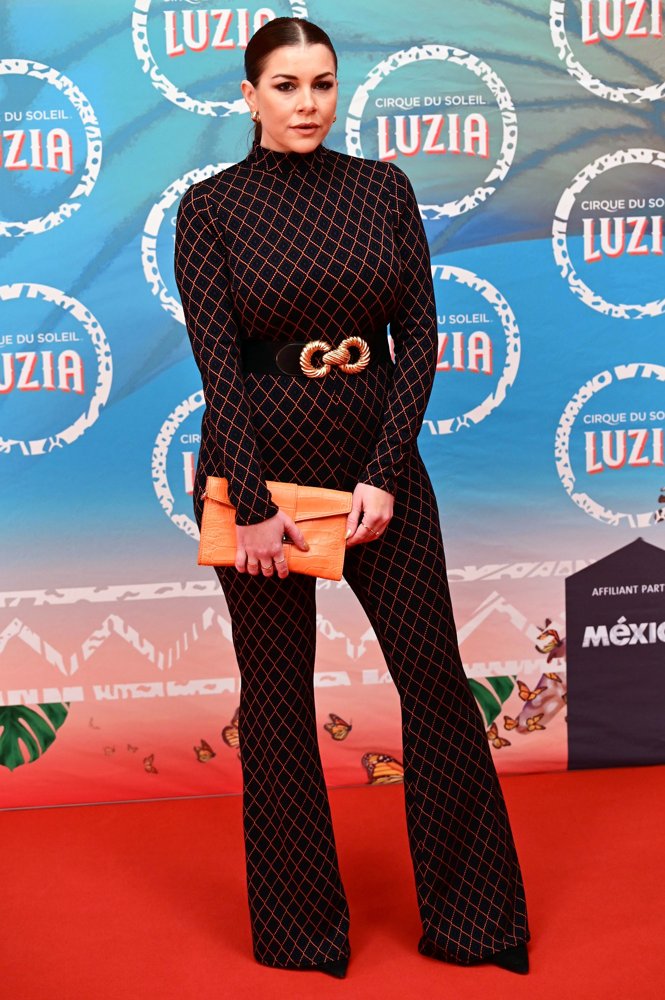
Imogen Thomas
The Premiere of Cirque Du Soleil Luzia
Jan 13, 2022

Hayley Palmer
The Premiere of Cirque Du Soleil Luzia
Jan 13, 2022

Phoenix Chi Gulzar
The Premiere of Cirque Du Soleil Luzia
Jan 13, 2022





⭐Featured Celebrities