Worried your child would rather scroll than read? Here's what actually builds a reading habit — and what quietly kills it.
- November 1, 2026
AceShowbiz - Here's a number that stops parents cold: kids who read just 20 minutes a day encounter roughly 1.8 million words per year. Kids who read one minute a day? About 8,000. That's not a small gap — it's a canyon, and it shows up in vocabulary tests, writing fluency, and even how well kids handle frustration. The good news is that the habit itself is built in small, ordinary moments, not in grand declarations about "family reading time."
But before you buy another stack of award-winning chapter books, know this: most reading habits don't fail because kids hate books. They fail because we accidentally make reading feel like homework, a chore, or a test. Below is what actually works — from the toddler years through the tween years — and how to fix things when the habit has already gone sideways.
Why the 20-Minute Habit Matters More Than the Book Choice
Parents spend a lot of energy agonizing over which books their kids read. Should it be classics? Should it be "real" literature instead of graphic novels about farting dogs? Here's the truth: the volume of reading matters far more than the pedigree of the material. A kid who devours 200 pages of silly comics has logged real reading miles. A kid who's handed Little Women too early and stalls out on page four has logged frustration.
Researchers who study reading habits consistently find that time spent reading — any reading — is the strongest predictor of reading growth. The content is secondary. This is why librarians will tell you, over and over, that the best book for your child is the one they actually want to finish. If that's a graphic novel, a Minecraft manual, or a book about sharks with three sentences per page, great. Those pages count.
So what should you do with this? Stop policing the shelf and start protecting the time. Twenty minutes a day, ideally at the same time each day, is the target. It doesn't have to be bedtime — some kids are too fried by then. A 7:30 a.m. window before school, or a post-dinner couch slot, works just as well. The point is that the habit becomes automatic, like brushing teeth.
Quick tip: Keep a small basket of books in the car, the bathroom, and next to the couch. Kids read what's within arm's reach. A book on a shelf in another room is a book that doesn't get read.
The Read-Aloud Window Closes Earlier Than You Think
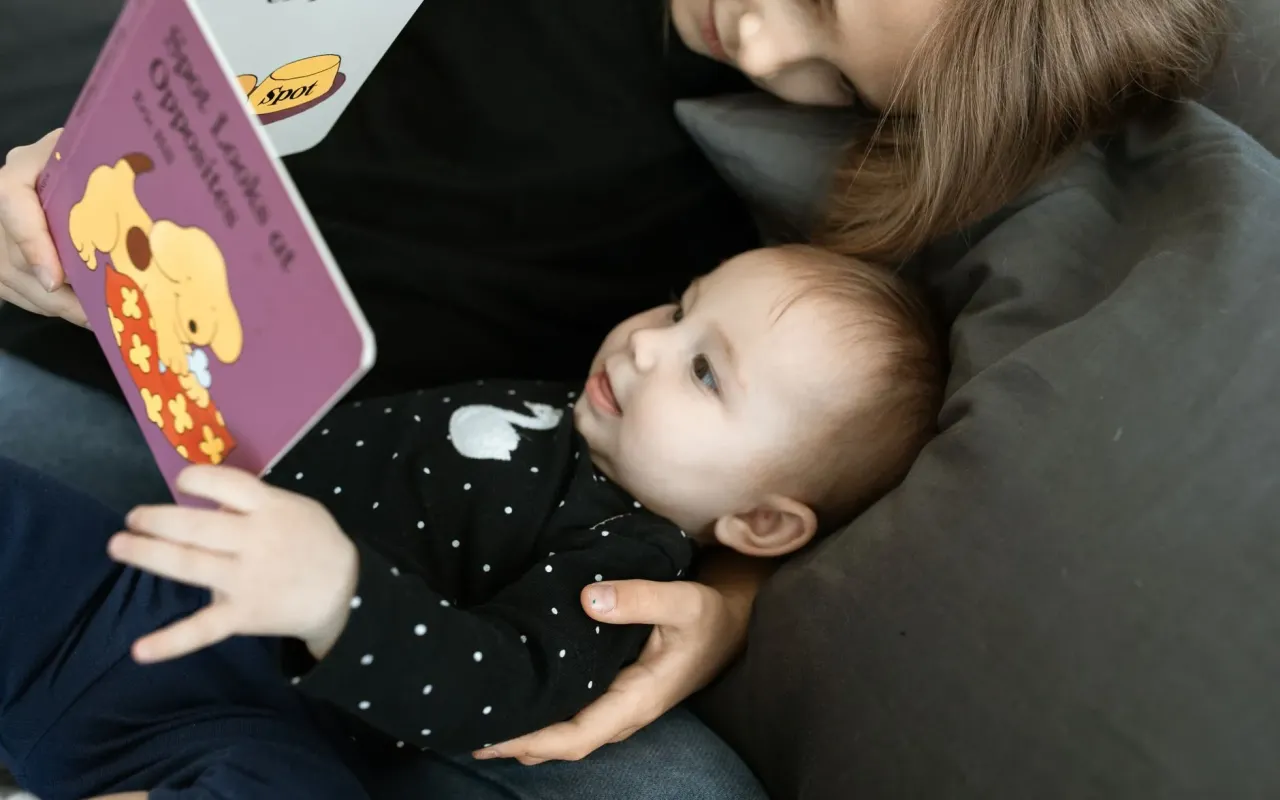
Most parents stop reading aloud to their kids around age six or seven, right when the child learns to read independently. This is one of the most common — and most costly — parenting mistakes in the reading world. Reading aloud to a child who can already read is not redundant. It's how they access stories that are still too hard for them, and it's how they build the vocabulary and background knowledge that make harder books possible later.
The research on this is striking. Children who are read to regularly — even after they can read on their own — hear far more complex sentence structures and rarer words than they'd encounter in their own independent reading. A picture book often contains more sophisticated language than a typical adult conversation. When you read aloud, you're essentially running a vocabulary masterclass without your kid noticing.
So how long should you keep it up? Many reading experts suggest reading aloud until at least age ten or eleven, and honestly, there's no reason to stop there. Plenty of families read a chapter book together at night well into the tween years, long after the kids could read it themselves. It's not about ability — it's about connection, and it's one of the few parenting rituals that gets easier as kids get older.
Quick tip: If your child resists being read to because it feels babyish, try a "family audiobook" instead. Listening to a story together in the car or during dinner prep hits the same language-building notes and feels less like a bedtime routine.
Modeling Beats Nagging — Every Single Time
Kids are ruthless observers. They notice what you actually do, not what you say. If your evening routine is scrolling on your phone while telling your kid to go read, you've created a contradiction they'll spot instantly. This isn't about guilt — it's about mechanics. Children learn what's normal by watching the adults around them. If reading is something only kids are supposed to do, it will feel like a chore forever.
That doesn't mean you need to read War and Peace in front of them. It means making your own reading visible. Ten minutes with a magazine, a thriller, a cookbook, or even a long article on your tablet — noticeably reading, not scrolling — sends a signal. Kids who see their parents reading for pleasure are significantly more likely to read for pleasure themselves.
There's also a sneaky version of this that works well: read the same books your kid is reading. Not to quiz them, but because you're genuinely curious. When you can talk about what happened in chapter five, reading stops being a solo assignment and becomes a shared thing. It also gives you a natural way to steer them toward the next book — "if you liked that one, there's a sequel."
Quick tip: Try a "drop everything and read" ten minutes after dinner, where everyone in the house — including you — reads whatever they want. No phones at the table, no exceptions. It takes about a week to become a habit, and it's the single easiest change most families can make.
How to Break the Screen-vs-Book Standoff Without a War
Every parent of a school-age kid knows the negotiation: "Five more minutes" of screen time versus a book. The instinct is to ban screens outright, but bans tend to backfire — they make screens the forbidden fruit and books the punishment. A more effective approach is to make reading the default and screens the thing that requires a decision.
One practical structure many families use: reading time comes first, screens come after. Not as a reward, exactly, but as the natural order of the evening. Read for twenty minutes, then you can have your screen time. The key is that it's not framed as "if you read, you get a prize." It's framed as "this is just how our house works." Kids accept routines far more readily than they accept bribes.
Another trick: keep the tablet out of the bedroom and the book in it. The bedroom should be a low-stimulation zone, and a book on the nightstand is a much easier choice than a book in the living room when the lights go out. If your kid insists on reading on a screen, that's fine — a Kindle or a reading app still counts. The goal is the habit, not the medium.
Quick tip: Don't fight the screen — borrow from it. If your kid loves a movie or show, get the book version. Tie-in novels, novelizations, and "the book that inspired the series" are legitimate on-ramps to reading, and kids often read them faster than anything a teacher recommends.
When Your Kid "Hates Reading," Look for the Real Problem
When a child says they hate reading, they almost never mean they hate stories. They usually mean one of three things: the books are too hard, the books are boring, or reading feels like a test they're failing. Each of these has a different fix, and guessing wrong makes the problem worse.
If the books are too hard, you'll see it in the body language — sighing, skipping pages, asking what words mean constantly, or suddenly needing to go to the bathroom every five minutes. The fix is to drop the reading level, not to push through. A child reading below grade level but enjoying it will climb faster than a child grinding through a book they can't decode. Ask a librarian or teacher for "high interest, low readability" books — they're written for exactly this situation.
If the books are boring, the fix is choice. Let your kid pick, even if you wince. If they want books about video games, gross facts, or sports stats, let them. If they want to reread the same book for the fifth time, let them — rereading builds fluency and confidence. And if they want to abandon a book halfway through, let them do that too. Adults abandon books all the time; kids should get the same courtesy.
If reading feels like a test, the fix is to take the pressure off entirely. Stop asking comprehension questions. Stop tracking pages. Stop the reading log if it's turned into a battleground. The goal is a kid who reaches for a book because they want to, and that only happens when reading isn't attached to a grade.
Quick tip: Try a "no-strings" week. For seven days, no questions, no logs, no book reports — just reading, whatever they want, whenever they want. You may be surprised how much the resistance drops when the pressure does.
Building a Reading Habit That Survives the Busy Years
The hardest stretch for reading habits isn't the toddler years — it's the middle school years, when sports, homework, and social life crowd everything out. This is when reading habits quietly die, and it's also when they matter most, because the reading demands of school ramp up sharply. A kid who's stopped reading for pleasure by age twelve is a kid who's about to struggle with textbooks.
The fix is to lower the bar, not raise it. Ten minutes before bed still counts. Reading on the bus counts. Reading a magazine in the waiting room counts. The habit doesn't need to be impressive — it needs to survive. Families who keep a small, low-pressure reading routine going through the busy years are the ones whose kids come back to reading later, often around high school, when they discover a genre or author that clicks.
And here's the part most parents don't hear enough: it's okay if your kid goes through a reading drought. Almost every reader does. The kids who become lifelong readers aren't the ones who never stopped — they're the ones whose parents kept books around, kept the door open, and didn't turn a temporary lull into a permanent identity. Keep the shelf stocked. Keep reading yourself. Keep the invitation open. That's the whole job, and it's enough.