Rachel Weisz stars in this daring Netflix series about desire, power, and a woman who refuses to be a supporting character in her own story.
- April 22, 2026
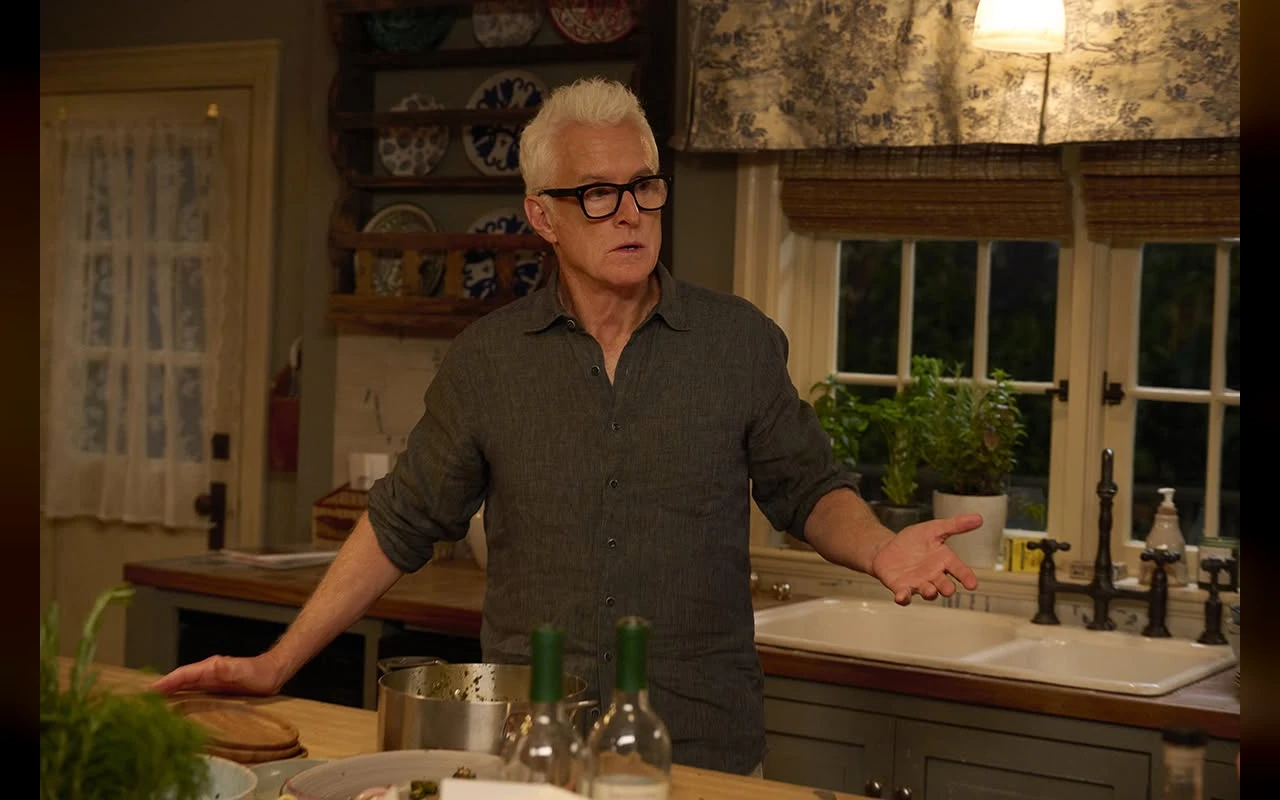
AceShowbiz - Vladimir is a daring Netflix series that explores the tangled dynamics of desire, power, and self-delusion through its sharply drawn characters. The story centers on a complex and provocative female protagonist portrayed by Rachel Weisz, who navigates a fraught emotional landscape involving her much younger colleague Vlad, played by Leo Woodall, and her philandering husband John, brought to life by John Slattery.
Near the series’ climax, the lead character delivers a striking insight into the nature of the relationships she is entangled in. She realizes that both Vlad and John hold vastly different, self-serving perceptions of their interactions with her, viewing her merely as a supporting character in their own stories. Yet, she warns that "there are forces beyond their control," with herself, the unnamed protagonist, being the most unpredictable force in the equation.
This antiheroine stands out with her blend of biting humor, willful blindness, and a captivating yet repellent presence. Her distinctive voice shapes Julia May Jonas’ adaptation of her own novel into a narrative that transcends a simple feminist critique of cancel culture. Instead, it unfolds as a nuanced and insightful deconstruction of desire and agency.
The backdrop is a contemporary university setting familiar to viewers acquainted with recent dramas like The Chair and Tár. John, the protagonist’s husband and former head of the English department, faces allegations of sexual misconduct with students, many of whom are now alumni. The women accuse him of abusing power, while John maintains consensual relationships, citing the openness of their marriage. The protagonist, a creative writing professor, initially supports him, often deflecting discussion and rationalizing the past as "a different time."
Her stance conflicts sharply with her students, who seek John’s removal and urge her to abandon her "supportive wife" role. As John’s disciplinary hearing looms, a sudden and intense crush on Vlad emerges, complicating the already fraught situation. Vlad, a charismatic new hire and successful author, becomes the focus of her obsession over the course of eight half-hour episodes.
The show’s narrative, directed by Shari Springer Berman and Robert Pulcini, opens with a startling scene: Vlad bound unconscious to a chair, while the protagonist confesses her feelings of powerlessness as a woman in her 50s. This dark tableau sets the tone for the series’ unflinching exploration of its lead’s psyche.
Rachel Weisz delivers a performance that capitalizes on her ability to play slippery, complex characters, reminiscent of her role in Amazon’s Dead Ringers. The series visually contrasts her polished, alluring exterior—dressed in rich reds and purples—with the harsh reality of her inner self, which is selfish, judgmental, and self-deluded. She often insists she "would never do" terrible things, even as the story reveals otherwise.
Her wit, marked by sardonic remarks such as quoting George Bernard Shaw on youth and beauty, keeps her character engaging but only barely sympathetic. Vladimir opts not to moralize but instead dissects the psychological complexity of its protagonist. It exposes every lie she tells herself about her intentions and history, portraying her desperate attempts to win over Vlad or protect John with a clear-eyed, unsparing gaze.
As the series progresses, the protagonist’s obsession grows, leading to neglect of her daughter Sid (played by Ellen Robertson), abandonment of her husband in his time of crisis, and failure to fulfill professional responsibilities. Yet, she remains consumed by every detail of Vlad’s physicality and behavior, obsessively analyzing his interactions for signs of reciprocal interest. Her fixation manifests in vivid daydreams that bleed into creative work, fueling the draft of her long-awaited second novel.
To the protagonist, Vlad is many things: a muse, a mirror, a time machine, and above all, "my love." However, she is unwilling to acknowledge him as an independent individual with his own desires and autonomy. Leo Woodall embodies Vlad’s inscrutability, playing him as a golden-boy figure seemingly unaware that he might also be the object of scrutiny rather than just the observer.
The show’s strict adherence to the protagonist’s perspective creates a claustrophobic experience. Viewers only glimpse Vlad, Cynthia (Vlad’s wife, played by Jessica Henwick), and John as much as she permits, leaving their true motivations ambiguous. This narrative choice results in a lack of softness or warmth, reflecting the protagonist’s emotional state, but it also limits the emotional range to mostly unhinged lust.
This distinctive tone carries through to the series’ conclusion, which is both wicked and abrupt. Unlike the novel’s incendiary yet anticlimactic ending, the miniseries opts for a different path. However, it sometimes feels as though the story has exhausted its avenues. Still, this ending better captures the central theme: desire is less about connection between people and more about how one relates to oneself. When the protagonist’s need for Vlad ends, so too does the story.
Ultimately, Vladimir is neither flattering nor particularly pleasant, but it resonates with honesty and relatability. It suggests that beneath the surface of our deepest desires lies a reflection of our own selves—complex, flawed, and often selfish. This psychological portrait, combined with strong performances and a provocative script, makes Vladimir a compelling addition to Netflix’s lineup of bold dramas.