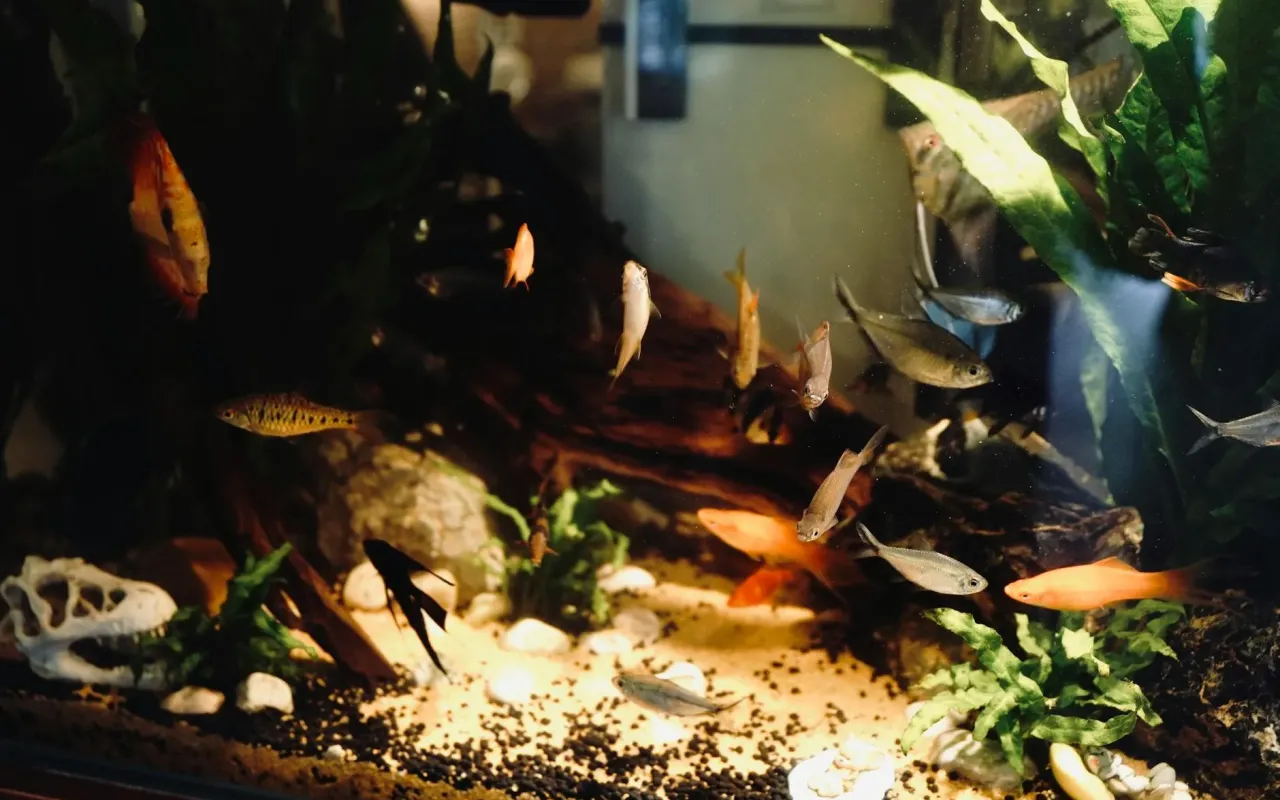
Skipping fish quarantine is the top reason tanks crash. Learn how to set up a simple, effective quarantine system to protect your entire aquatic community.
- April 18, 2026
The Heartbreak You Can Avoid
Imagine this: you've spent months carefully cultivating a peaceful, vibrant community tank. Your tetras school in perfect harmony, your corydoras scavenge happily, and your prized centerpiece fish is thriving. Then, you add a stunning new fish from the store, and within two weeks, your entire tank is a disaster zone. Fish are gasping at the surface, covered in white spots, or dying mysteriously one by one.
This isn't a rare horror story; it's a common and preventable tragedy in the fishkeeping hobby. The single most effective step you can take to protect your investment—both financial and emotional—is to quarantine every single new arrival. It's not about being paranoid; it's about being a responsible aquarist. Quarantine is the buffer zone between the unknown world of the pet store and the delicate ecosystem you've worked so hard to build.
Think of it like this: you wouldn't send a child with a contagious illness straight into a classroom. Your main tank is that classroom, a closed environment where disease can spread with terrifying speed. Quarantine gives you a controlled space to observe, treat if necessary, and ensure your new fish is truly ready for prime time.
What Exactly Is a Quarantine Tank (And It's Not What You Think)
Let's demystify the quarantine tank right now. It doesn't need to be a showpiece. In fact, it's better if it's simple, functional, and easy to sterilize. A basic 10 to 20-gallon tank is perfect for most freshwater fish. You'll need a heater, a simple sponge filter (this is key), a lid, and some form of hiding place like a PVC pipe or a simple clay pot.
The sponge filter is the star here. It provides gentle filtration and, crucially, can be moved. You can run this sponge filter in your established main tank for 2-4 weeks before you need the quarantine tank. This "seeds" it with beneficial bacteria, creating an instantly cycled, stable environment that won't poison your new fish with ammonia spikes. This pre-planning is the difference between a stressful hospital stay and a comfortable observation suite for your fish.
For decor, avoid substrate like gravel. A bare-bottom tank is ideal. It allows you to see every speck of waste, every uneaten food pellet, and monitor the fish's poop—a critical health indicator. It also makes syphoning debris during water changes incredibly easy and ensures no parasites can lurk in the substrate.
Actionable Takeaway: Set up your quarantine tank and run the sponge filter in your main tank now, before you even plan to buy a fish. This proactive step means you're always ready, eliminating the temptation to skip quarantine because "it's too much work right now."
The Four-Week Watch: Your Quarantine Protocol
So, you've brought your new fish home in its bag. The first step is temperature acclimation. Float the sealed bag in the quarantine tank for 15-20 minutes to equalize temperature. Then, open the bag, roll down the top to create a floating ring, and add small amounts of quarantine tank water to the bag every 10 minutes for about an hour. This slowly adjusts the fish to your water parameters, reducing osmotic shock.
Now, the observation begins. The standard quarantine period is four weeks. This timeline isn't arbitrary. Many common parasites, like Ich (*Ichthyophthirius multifiliis*), have life cycles that can take up to three weeks at tropical temperatures to become visible. A four-week window ensures you can catch at least one full cycle.
Week one is for de-stressing. Don't try to treat anything yet unless you see obvious, active disease. The stress of transport can suppress a fish's immune system, making latent illnesses bloom. Feed high-quality, easy-to-digest foods sparingly. Watch for classic signs: flashing (scratching on objects), rapid gill movement, clamped fins, loss of appetite, or visible spots/worms.
Weeks two through four are your active monitoring and treatment window. If symptoms appear, you can treat in this isolated environment without nuking the biological filter of your main tank or exposing sensitive invertebrates to copper-based medications. Keep a simple log: date, fish behavior, appetite, and any treatments administered. This data is invaluable.
Common Foes You're Looking For
Knowing what to look for makes you a more effective fish medic. Ich looks like grains of salt sprinkled on fins and body. Velvet appears as a finer, gold or rust-colored dust, often making the fish look like it's been dipped in powder. Fin rot presents as ragged, disintegrating fin edges, sometimes with a white, fuzzy border if fungus sets in.
Internal parasites are trickier but show clues. A fish that eats ravenously but remains skinny or has stringy, white feces is a prime suspect. External worms like anchor worms appear as tiny, thread-like protrusions, often with a red inflamed area at the attachment point. Your quarantine tank is your lab for diagnosing these issues safely.
To Treat or Not to Treat: The Proactive Debate
This is a major point of discussion among experienced hobbyists. Some advocate for a "watch and wait" approach, only treating if symptoms manifest. Others, especially those who have been burned before, recommend a proactive "quarantine treatment regimen." This involves using broad-spectrum medications as a preventative, even on fish that look healthy.
The case for proactive treatment is strong for fish from certain sources. Big-box stores with centralized filtration are notorious for cross-contamination. Using a gentle, anti-parasitic medication like PraziPro (praziquantel) for flukes and worms, followed by a round of a formalin/malachite green-based medication for protozoans, can knock out common hitchhikers before they ever show symptoms.
The case against it is that all medications are stressful. Why medicate a healthy fish? This approach requires absolute vigilance and confidence in your diagnostic skills. For a beginner, the risk of missing a subtle symptom is high. A middle-ground approach is to treat prophylactically for internal parasites with praziquantel, as it's very well-tolerated by most fish, and then watch carefully for external signs.
Actionable Takeaway: If you're new to quarantine, consider this safe protocol: After a 3-day rest period, treat with a full course of praziquantel for internal parasites. In week three, if the fish is still symptom-free, you can consider a mild, broad-spectrum external treatment. Always follow dosage instructions to the letter and have airstones running, as some medications reduce oxygen in the water.
Feeding and Maintenance: Life in the Isolation Ward
Your quarantine tank requires more hands-on maintenance than your established display tank. Without a deep substrate or complex biological filter, water parameters can shift quickly. Plan to perform a 25-30% water change every two to three days, using a gravel vacuum to remove all waste from the bare bottom. Always match the temperature and dechlorinate the new water perfectly.
Feeding is a tool, not just a chore. Offer a variety of high-quality foods to build the fish's strength and immune system. Soaking dry foods in a vitamin supplement like garlic guard can boost appetite and provide health benefits. Crucially, never use the same nets, siphons, or equipment between your quarantine and main tanks without sterilizing them first.
A simple disinfectant bath for equipment is a 10-minute soak in a solution of 1 part bleach to 20 parts water, followed by a very thorough rinse and air-dry. Better yet, have dedicated equipment for your quarantine system. This prevents the very cross-contamination you're trying to avoid.
Monitor water parameters daily with a liquid test kit. Ammonia and nitrite should always be zero. The seeded sponge filter should handle this, but the small volume of water is less forgiving than your main tank. Be prepared to do an extra water change if you see any detectable ammonia.
Crossing the Finish Line: Introducing to the Main Tank
After four symptom-free weeks, your fish is ready to graduate. But the introduction still needs care. The water parameters between your quarantine tank and main tank (like pH, GH, and KH) may have drifted. Take an hour to drip acclimate the fish to the main tank water.
Set up a clean bucket or container. Gently net the fish from the quarantine tank and place it in the container with some of its original water. Then, using airline tubing with a knot or a valve, start a siphon from your main tank to the container, creating a slow drip—about 2-4 drips per second. Once the water volume in the container has doubled, gently net the fish and release it into the main tank. Do not pour the quarantine water into your display tank.
What about the quarantine tank itself? Once the fish is out, break it down completely. Discard the water. The sponge filter can be cleaned in old tank water from a water change and stored damp in a bag, or if you plan to use it again soon, you can keep it running in the main tank. Sterilize the tank, heater, and any decor with a vinegar solution or a dedicated aquarium-safe disinfectant. Rinse everything thoroughly and let it dry. Store it away, ready for its next mission.
This final, careful transition is the last step in your protective protocol. You've given your new fish the best possible start, and you've shielded your existing aquatic family from harm. The peace of mind this process brings transforms the hobby from a nerve-wracking gamble into a confident, joyful practice.
When Quarantine Feels Like a Chore (And How to Stick With It)
Let's be honest: staring at an empty 10-gallon tank for a month waiting to add a beautiful new fish is anti-climactic. The temptation to shortcut is real, especially when the new fish is destined for a specific aquascape or community. The key to consistency is reframing the process.
Don't think of it as a delay. Think of it as the first chapter in your new fish's life with you—a chapter dedicated to its health and recovery from the ordeal of capture and transport. This is your one-on-one time to learn its personality, its feeding preferences, and its quirks without competition.
Make the system foolproof. Have a dedicated shelf for your quarantine supplies. Keep a checklist on the tank or in a notebook. When you see that stunning fish at the store, your decision isn't "Do I quarantine?" It's "Is my quarantine tank ready?" If the answer is yes, you buy with confidence. If not, you wait. This simple rule saves countless tanks.
Ultimately, consistent quarantine is the hallmark of a mature aquarist. It moves you from reacting to crises to preventing them entirely. It's the most powerful tool in your fishkeeping toolkit, ensuring that every fish you add has the best chance to live a long, healthy life in the underwater world you've created.