Legendary German-Italian actor Mario Adorf, famed for his iconic villain roles, has died at 95. A career spanning decades from New German Cinema to internati...
- April 14, 2026
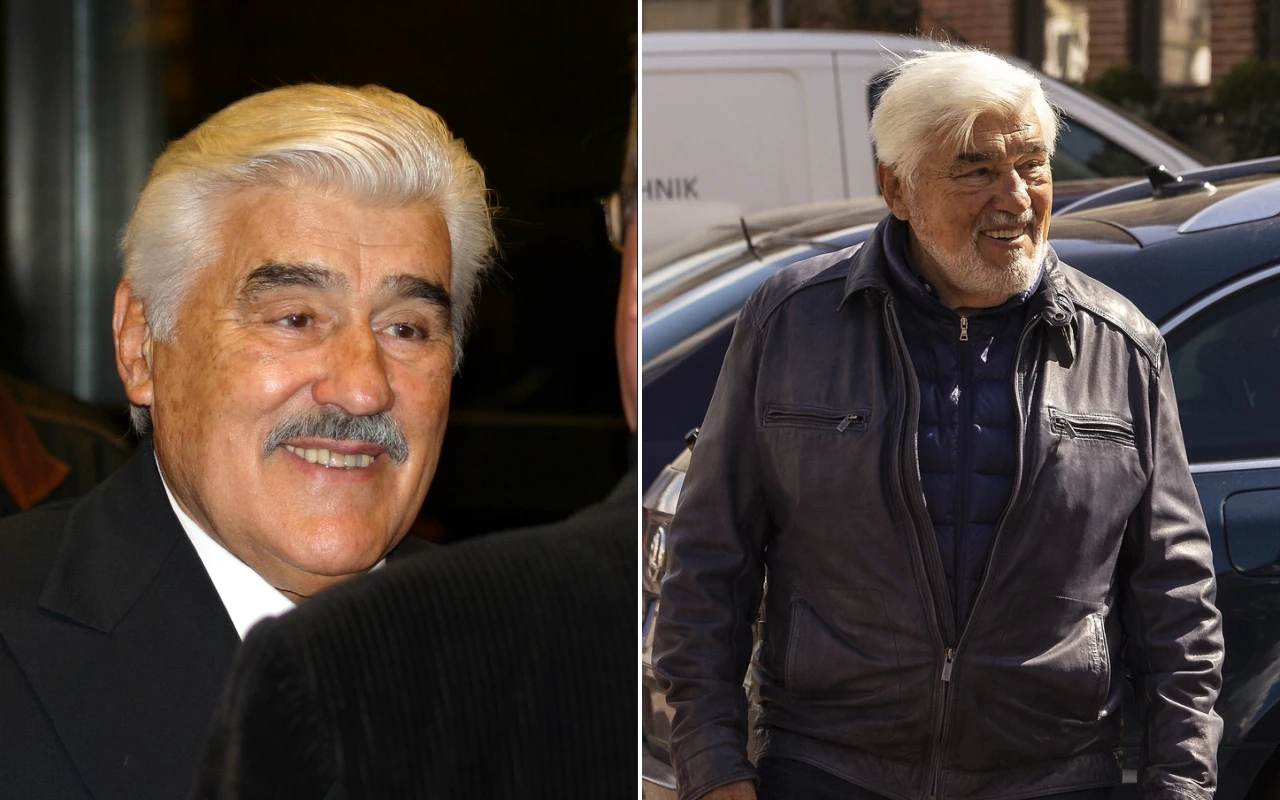
AceShowbiz - Mario Adorf, the celebrated German-Italian actor known for his compelling portrayals of villains in European cinema, has passed away at the age of 95. His agent confirmed that Adorf died on Wednesday at his home in Paris following a brief illness.
Adorf's career spanned several decades and included a wide variety of genres, from crime thrillers and spaghetti Westerns to dramatic films that earned international acclaim. He first garnered attention with his chilling role as a Nazi-era serial killer in Robert Siodmak’s Oscar-nominated thriller The Devil Strikes at Night (1957), establishing his reputation early on as a master of complex antagonist characters.
Throughout the 1960s and ’70s, Adorf became a favored actor among directors associated with the New German Cinema movement. He delivered memorable performances in films such as The Lost Honor of Katharina Blum (1975) by Volker Schlöndorff and Margarethe von Trotta, and Rainer Werner Fassbinder’s Lola (1981).
One of Adorf’s most enduring roles was as the father of Oscar Matzerath in Schlöndorff’s The Tin Drum (1979), a film that won the Palme d’Or at Cannes—tying with Francis Ford Coppola’s Apocalypse Now—and subsequently secured the Academy Award for Best Foreign Language Film. This role marked a significant milestone in his career, which had previously included many parts as villains in spaghetti Westerns and mafia films.
In Germany, Adorf is often remembered for his menacing portrayal of the black-hatted cowboy antagonist in Winnetou (1963), a Euro Western shot in the former Yugoslavia that remains a cult favorite. His character’s chilling act of killing the Apache hero’s family is one of the most iconic scenes in the film.
Born in Switzerland to an Italian surgeon and a German medical assistant, Adorf was raised by his mother in Germany. Although he initially pursued criminology studies, he left academia to follow his passion for acting.
With his distinctive charm and striking looks, Adorf became a beloved figure for many European filmmakers, collaborating with notable directors such as Claude Chabrol, Damiano Damiani, and Billy Wilder. He famously preferred villainous roles, stating early in his career that “The villain is the [most] interesting role” and expressing respect for their importance in storytelling, even if he didn’t personally love the characters.
Despite his success, Adorf declined several major Hollywood opportunities, turning down roles in Wilder’s One, Two, Three (1961), Sam Peckinpah’s The Wild Bunch (1969), and Coppola’s The Godfather (1972). His first Hollywood part in Peckinpah’s Major Dundee (1965) was also largely edited out of the final cut.
Nevertheless, he worked with Billy Wilder on Fedora (1978) and appeared in several international productions, including the BBC’s 1982 adaptation of John le Carré’s Smiley’s People and Bille August’s Smilla’s Sense of Snow (1997).
Adorf also maintained a strong presence on German television throughout the 1990s and early 2000s, frequently collaborating with director Dieter Wedel. Notable TV projects included Der grosse Bellheim (1992), Der Schattenmann (1995), and Die Affäre Semmeling (2002).
One of his standout television roles was in Helmut Dietl’s 1985 satirical series Kir Royal, where he played a foul-mouthed glue magnate attempting to manipulate the press to generate scandalous headlines. This performance is often cited as a career highlight.
Throughout his career, Adorf received numerous accolades, including five Best Actor awards at the German Film Awards and a lifetime achievement award in 2004. The Locarno Film Festival honored him with a career achievement prize in 2016. Remarkably, he continued acting well into his 90s, with his final role appearing in Ahmet Tas’ Real Fight (2023).
The passing of Mario Adorf marks the end of an era for European cinema, where his unforgettable portrayals of complex, often villainous characters left a lasting impact on audiences and filmmakers alike.