Euphoria Season 3: Discover how a real DEA photo changed Rue's fate. Zendaya's character faces a perilous new chapter after a 4-year gap.
- April 14, 2026
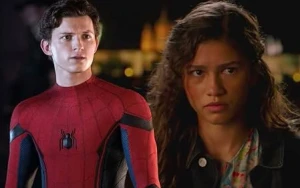
AceShowbiz - The third season of Euphoria marks a significant evolution for the HBO drama as creator Sam Levinson reshaped the series following major developments behind the scenes. After a four-year gap from season two's finale, Levinson intended to depict the protagonist Rue, portrayed by Zendaya, crossing into Mexico by river, navigating the precarious world of drug trafficking as she transitioned into adulthood. Rue’s character was originally planned to be involved in perilous runs for a drug kingpin named Laurie, played by Martha Kelly, reflecting the ongoing consequences of her teenage recklessness.
However, Levinson’s research changed the course of the narrative. During a visit to the DEA headquarters in Los Angeles, Levinson encountered a striking photo of a Jeep stuck atop a border wall, seized during a drug bust. When he inquired about the incident, he learned that someone had attempted to drive a car over the border, only to get stuck midair. Inspired by this real-life mishap, Levinson decided to open season three with Rue literally trapped in a vehicle suspended between two countries. This visually arresting scene, shot in a wider 65mm aspect ratio by longtime director of photography Marcell Rév, reset the visual tone of the show, introducing a blend of comedy and tension that signals the series’ new ambitions.
"That scene is like Jurassic Park meets Buster Keaton," Rév explained, while Levinson cited influences ranging from Keaton’s silent comedy to classic western directors like Howard Hawks and Sergio Leone. The overarching approach to season three, Levinson said, is encapsulated in the motto: “Evolve or die.” The creative team aimed to convey a dangerous maturity with a grittier, more fleeting visual style that reflects the characters’ expanded world beyond the confines of their previous teenage environment.
This season emphasizes emotional performances over heavy camera work, showcasing the characters fending for themselves in a wider and more unpredictable landscape. Levinson described the new aesthetic as reminiscent of a fading memory, intentionally rougher and less polished to match the narrative’s progression.
Before the Hollywood strikes of 2023, Levinson had already scripted most of the third season. However, the tragic death of Angus Cloud, who portrayed Fezco, forced a profound rewriting of the story. Cloud’s accidental overdose deeply affected Levinson, who wanted to honor his friend’s memory by keeping Fezco alive offscreen and addressing themes of mortality in the show. This loss led to discarding much of the original material and reframing the season’s emotional core.
The season premiere ends with a harrowing scene where Rue makes a drug drop at a party hosted by rival kingpin Alamo, played by Adewale Akinnuoye-Agbaje. When the drugs turn out to be laced, tension escalates sharply, highlighting the dangers of fentanyl, which claimed 73,000 American lives in 2023 alone—the year Angus Cloud passed away. Levinson expressed his anger and bewilderment at the ongoing fentanyl crisis and its impact on the country.
Between seasons two and three, Levinson and Rév also worked on the HBO series The Idol, which was ultimately canceled after its first season due to poor reception. Despite its failure, the experience influenced their approach to Euphoria’s third season. Levinson described The Idol as having a documentary-style feel with minimal lighting and multiple cameras, which led them to seek a more objective and fresh perspective in filming Euphoria this season.
Rév noted that The Idol encouraged them to shoot extensively on real locations rather than rely heavily on studio sets, a shift from the second season where about 80% was shot on constructed stages. For instance, the opening scene with Rue stuck on a border wall was filmed on a 200-foot replica built in the desert four hours from Los Angeles, physically placing the character 20 to 25 feet above the ground. This commitment to location authenticity also shaped how they depicted other characters’ environments, including the extravagant, somewhat dated California home of Cassie (Sydney Sweeney) and Nate (Jacob Elordi), who appear engaged and preparing for an expensive wedding.
Rév explained their choice of a mid-century, '70s-style home for Cassie and Nate as a deliberate aesthetic decision that adds possibilities for storytelling. This setting plays a crucial role when Cassie turns to creating content on OnlyFans to help support their lifestyle. The challenge was to integrate OnlyFans’ distinct visual vibe into the show’s own aesthetic without losing the narrative’s grounded tone.
Levinson described the humor and layered absurdity in Cassie’s OnlyFans scenes, noting that her housekeeper is the one filming, which adds a subtle break from Cassie’s fantasy world. Visually, the scenes mix the warm glow of ring-light illumination with stark, unflattering surroundings, creating a jarring contrast that exposes the loneliness and desperation beneath the surface glamour. This juxtaposition was achieved by shooting with 65mm film stock and lenses, a technique Rév found exciting for blending the intimate nature of OnlyFans content with the show’s cinematic style.
The first episode concludes with Rue’s fate hanging in the balance as Alamo tests her after Laurie’s apparent betrayal. Rue narrowly survives the ordeal, breathing a sigh of relief and marking a moment of survival amid the season’s heightened stakes.
Overall, season three of Euphoria represents a bold reinvention of the series. By embracing new visual techniques, shifting narrative tones, and grappling with real-world tragedies, Sam Levinson and his team have crafted a season that pushes the boundaries of the show’s previous seasons while honoring its core emotional intensity.