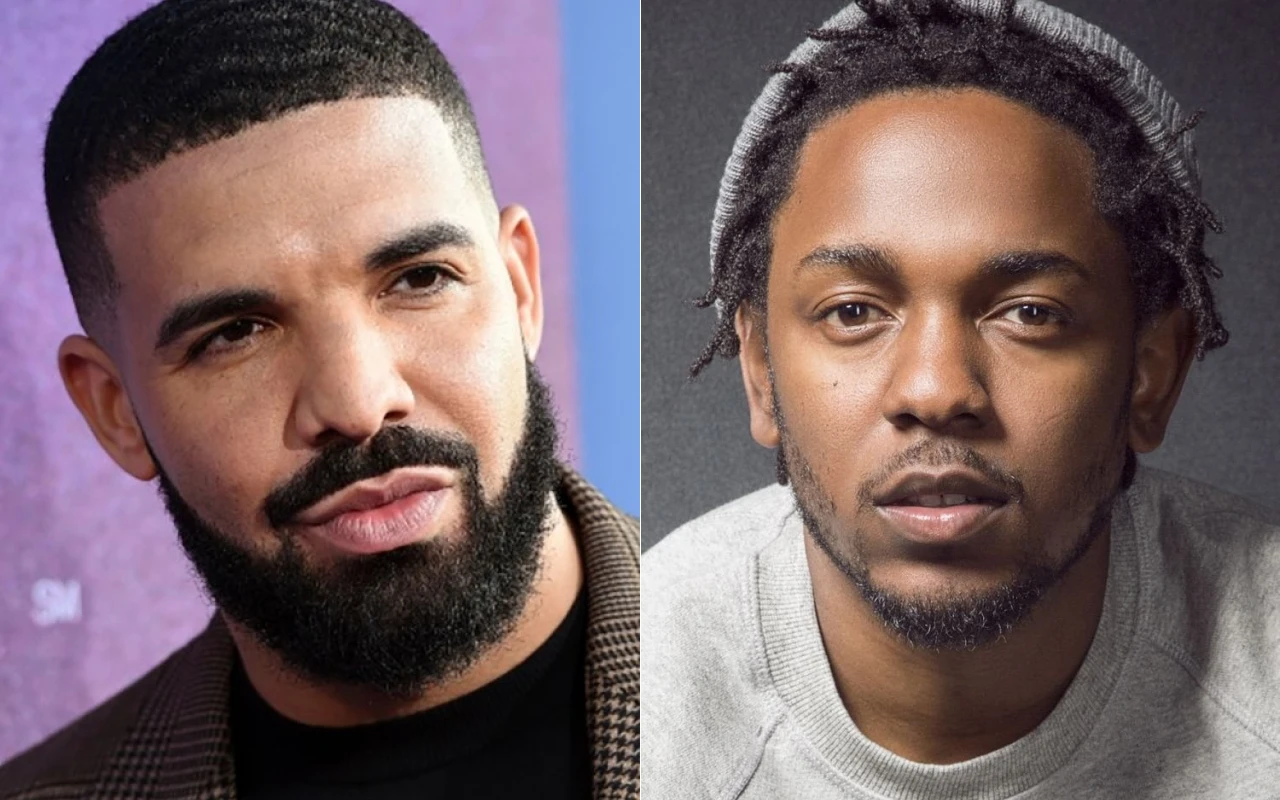
Drake's appeal in the Kendrick Lamar lawsuit called "dangerous" by legal experts. They argue he consented to the lyrical feud, blocking his defamation claim.
- April 7, 2026
AceShowbiz - Legal experts have strongly criticized Drake’s attempt to revive his dismissed lawsuit concerning Kendrick Lamar’s track “Not Like Us,” calling the legal action “dangerous” and emphasizing that Drake had effectively consented to the lyrical feud.
Currently, Drake is appealing an October 2023 ruling that threw out his defamation case. The lawsuit accused Universal Music Group (UMG) of damaging his reputation by promoting Lamar’s Grammy-winning diss track, which labeled him a “certified pedophile.”
However, according to a brief submitted on April 3 by law professors from Yale University, the case should remain dismissed. The scholars argue that Drake willingly engaged in the public battle of diss tracks and even provoked Lamar to rap about him “likin’ young girls.” This amounted to consent, which traditionally blocks intentional tort claims like defamation in such contexts.
“Suppose a self-assured boxer challenges the world champion to a prize fight, is knocked out on live television, and, with bruised ego and body, files a lawsuit for battery,” the Yale professors wrote. “That lawsuit would fail at the outset for a simple but important reason: the challenger consented to the fight, and consent is a classic defense to an intentional tort.”
The professors contend that by consenting to the rhetorical battle and making his own aggressive claims about Lamar, Drake forfeited his right to sue after losing the public dispute. “Lamar won in the court of public opinion,” they stated. “Having lost in that forum, Drake turned to another.”
The track “Not Like Us” was released by Kendrick Lamar in May 2024 amid a heated exchange of diss songs between the two UMG artists. The song, which called Drake a “certified pedophile,” became a major hit, topping charts and earning five Grammy Awards, including Record and Song of the Year.
In January 2024, Drake shocked the music industry by suing UMG over the track, alleging that his own label had defamed him by promoting a “malicious narrative” of pedophilia it knew was false. Notably, the lawsuit did not name Kendrick Lamar as a defendant.
The case was dismissed just 10 months after filing by Judge Jeannette Vargas. The judge ruled that diss tracks commonly use “figurative and hyperbolic language,” and that listeners would not interpret Lamar’s insults as literal facts.
As Drake appeals the dismissal to the U.S. Court of Appeals for the Second Circuit, additional voices from academia have entered the debate. Alongside the Yale professors, a separate group of scholars specializing in the use of rap lyrics in criminal trials filed a brief urging rejection of the appeal.
These experts highlighted the risks of treating rap lyrics as literal statements in court, warning that such an approach could perpetuate racial biases and stereotypes. “Drake’s defamation claim rests on the assumption that every word of ‘Not Like Us’ should be taken literally, as a factual representation,” they wrote. “This assumption is not just faulty – it is dangerous.”
The signatories included University of Richmond professor Erik Nielson, who authored a book on rap lyrics in criminal cases; UC Irvine professors Charis E. Kubrin and Jack I. Lerner, known for their empirical research on rap’s role in trials; and other prominent academics with extensive study of this issue.
They emphasized that diss tracks are a “long-standing feature” of rap culture, understood by audiences as competitive displays of skill and dominance rather than factual claims. These compositions rely on hyperbole, clever wordplay, and bluster to build allegiance and assert superiority, rather than to convey truth.
Both Drake and UMG have submitted their own legal briefs for the ongoing appeal. The case is expected to be argued before the appeals court in the coming months, with a decision anticipated within the next year. Attempts to obtain comment from Drake’s legal team on the recent amicus briefs were unsuccessful as of Friday.
This legal battle highlights the complex intersection of artistic expression, public disputes between rappers, and the boundaries of defamation law. It also raises broader concerns about how courts treat creative works, especially within genres like rap that are steeped in metaphor and competitive bravado.
As the appeal process unfolds, observers across the music and legal industries will be watching closely to see how the courts balance freedom of expression with claims of reputational harm, and what precedents might be set for future cases involving lyrical content.
With Kendrick Lamar’s “Not Like Us” already cemented as a cultural milestone through its critical acclaim and commercial success, the outcome of this lawsuit could have significant implications for artists and labels navigating similar conflicts in the future.