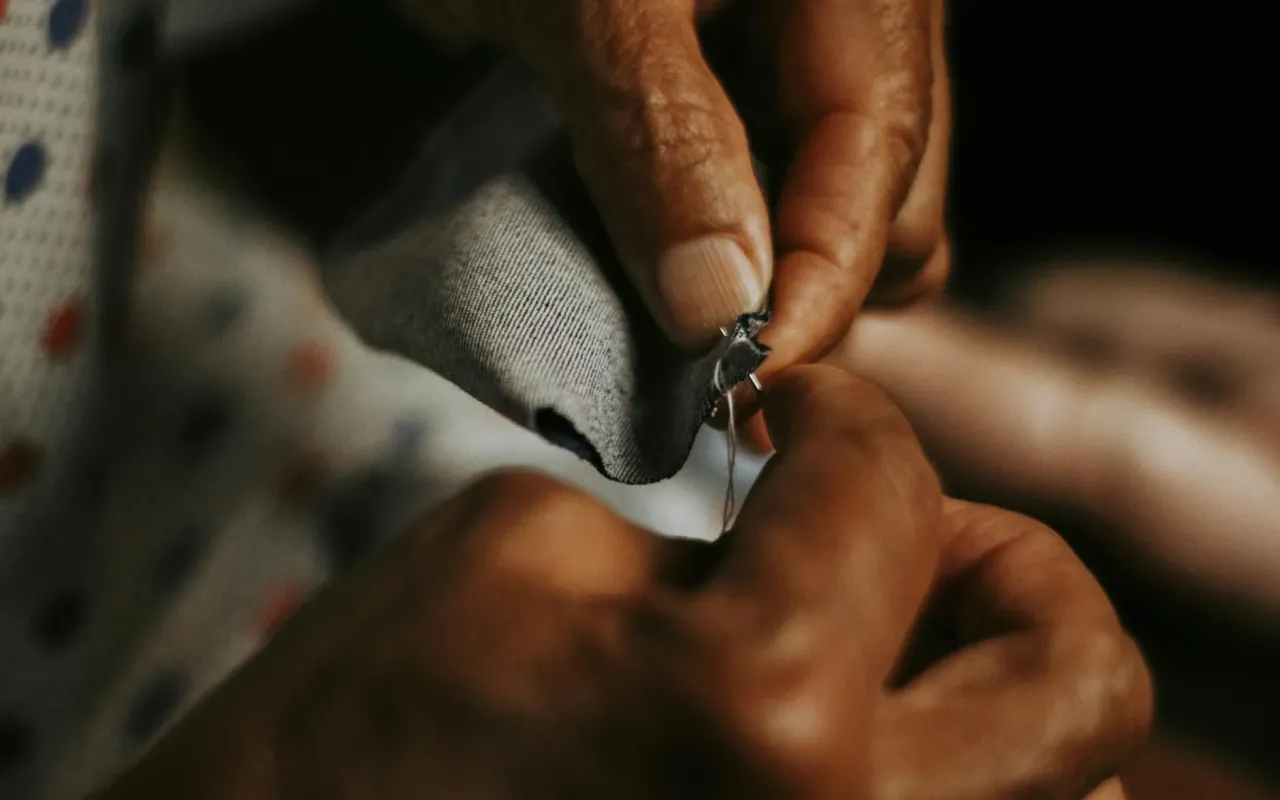
Stop tossing your favorite pieces. Learn simple, stylish ways to mend holes, fix zippers, and give your wardrobe a second life with practical repair skills.
- April 7, 2026
That Hole Isn't the End of the Story
You pull on your favorite sweater and feel that familiar, devastating tug. A hole has appeared, right where your thumb always catches. For a split second, you think it's destined for the donation bag, another casualty of our disposable culture. But what if that hole was just a comma in your garment's story, not a period? The average American throws away about 81 pounds of clothing each year, a staggering figure that speaks to a cycle of constant replacement. Repairing your clothes is a quiet rebellion against that waste, a way to reclaim agency over your belongings and your budget.
This isn't about becoming a master tailor overnight. It's about shifting your perspective from consumer to caretaker. Every mend tells a story and adds character. That patched knee on your jeans isn't a flaw; it's evidence of a life well-lived. The initial investment in a basic sewing kit—needles, thread in neutral colors, sharp scissors, and some pins—is less than the cost of a single new t-shirt from many brands. This small toolkit is your first step toward a more sustainable and satisfying relationship with your wardrobe.
Start by looking at the damage with new eyes. Is it a small hole, a ripped seam, or a missing button? These are the gateway repairs. The goal isn't invisible mending (though you can get there). The initial goal is functional fixing. A securely sewn seam or a neatly reattached button makes the garment wearable again. The confidence boost you get from that first successful repair is real. You've solved a problem with your own hands, and that garment instantly holds more value.
Mastering the Mending Toolkit: Beyond Needle and Thread
While a basic sewing kit is the foundation, expanding your arsenal opens up a world of repair possibilities. Think of these tools as solving specific, common problems you definitely have in your closet right now. For example, a pack of fusible bonding web or iron-on patches is a game-changer for non-sewers. Got a small tear in a t-shirt or a thinning elbow on a blouse? A square of this magic webbing, placed between the fabric layers and pressed with a hot iron, creates a strong, nearly invisible bond in minutes.
Then there's the humble safety pin, a temporary fix that can become a permanent, punk-rock solution with the right attitude. A broken bra strap? A safety pin from the inside will get you through the day and might just become your signature. For more structured repairs, a curved upholstery needle and some heavier-duty thread are essential for fixing seams on bags, backpacks, or denim jackets where regular thread snaps under pressure.
Don't overlook fabric glue for quick, no-sew fixes on hems, patches, or even securing loose sequins and appliqués. The real pro tip, however, is to start a "mending museum." This is just a small box where you save extra buttons that come with new clothes, interesting scraps of fabric from old garments, and even colorful threads from craft projects. When you need to patch a pair of navy blue trousers, you'll likely have a perfect match in your museum, turning a chore into a creative, zero-cost project.
The Three Tools You Already Own
Your kitchen and bathroom hold secret mending supplies. Clear nail polish can stop a run in nylon tights or secure the end of a fraying shoelace. A candle can be used to "wax" the end of a cut piece of thread, stiffening it to make threading a needle infinitely easier. Even an ordinary clothes iron is critical for pressing seams flat for a professional finish or activating those iron-on patches. You're more equipped than you think.
Fixing the Five Most Common Wardrobe Malfunctions
Let's get practical. Here are the repairs you'll encounter most often, broken down into manageable actions. First, the missing button. Thread your needle double and knot the end. Start from the inside of the fabric, pushing the needle up through one hole in the button, down through the opposite, and back through the fabric. Repeat this 4-6 times, then create a "shank" by winding the thread tightly around the stitches under the button before knotting off on the inside. This shank gives the button room to move and prevents it from popping off again.
Second, the ripped seam. Turn the garment inside out. You'll see the two pieces of fabric that have come apart along a stitched line. Using a simple running stitch—up, down, up, down in a straight line—sew the pieces back together, following the path of the old seam. Make your stitches small and close together for strength. When you're done, tie a secure knot and, if possible, reinforce the very start and end of the tear with a few backward stitches.
Third, the gaping hole. This is where visible mending, or "sashiko," shines. Take a scrap of fabric (from your mending museum or the inside of a hem) slightly larger than the hole. Place it behind the hole, inside the garment. Using a simple running stitch, sew around the perimeter of the hole, attaching the patch to the good fabric. Then, get creative—use contrasting thread to stitch radiating lines or a simple pattern over the patch and the hole itself, turning the weak spot into a deliberate design feature.
Fourth, the broken zipper. Often, it's not the whole zipper but the slider that's failed. Before you rip anything out, try pinching the slider's sides gently with pliers to tighten its grip on the teeth. If the teeth are truly broken or the slider is lost, replacement is straightforward. Buy a new zipper of the same length and type. Carefully unpick the old stitches holding the zipper tape in place, pin the new one in, and sew it back in with a straight stitch. It's more time-consuming than difficult.
Fifth, the fraying hem. For a quick fix, fabric glue or fusible hem tape applied to the raw edge and folded up can work. For a lasting repair, use a blind hem stitch. Fold the hem up, then take tiny, nearly invisible stitches that catch only a single thread of the main garment before grabbing a bit of the hem fabric. The result is a secure hem with almost no visible stitching on the outside.
When to Darn, Patch, or Embroider Over It
Not all holes are created equal, and your repair method should match the damage and the garment's style. Darning is the art of weaving new thread over a hole to rebuild the fabric, ideal for socks, sweater elbows, and areas of thin fabric. You'll need a darning mushroom or egg to stretch the fabric taut. Create a grid of running stitches over the hole, first in one direction, then weave your needle and thread perpendicularly, over and under the base threads, until the hole is filled. It's meditative and creates a wonderfully sturdy, textured mend.
Patching is for larger holes or areas under stress, like knee reinforcements. The key is choosing the right patch material. For denim, use denim. For a cotton dress, use a lightweight cotton. The "inside" patch method (where the patch is hidden inside) is great for a discreet fix. The "outside" or decorative patch, sewn on top with visible stitching, makes a statement. Think of the classic iron-on denim knee patch—it's functional, nostalgic, and full of personality.
Embroidery is your secret weapon for transforming a stain, burn, or tear into a focal point. A small flower over a wine stain on a blouse, a geometric constellation over a cigarette burn on a jacket, or a simple line of stars along a ripped seam can elevate the entire piece. You only need to know two basic stitches for most cover-ups: the satin stitch (tight, parallel stitches that fill a shape) and the backstitch (a solid line for outlines). This approach doesn't just fix the problem; it actively improves the garment, making it uniquely yours in a way nothing store-bought ever could be.
Assessing the Repair-or-Replace Threshold
Be honest with yourself. Is the fabric itself disintegrating all over? Are the seams rotting? Sometimes, a garment is truly at its end. In that case, don't just trash it. Cut it up for your mending museum (buttons, zippers, usable fabric scraps) or repurpose it into cleaning rags, quilt squares, or even reusable produce bags. The goal is to keep every last thread out of the landfill for as long as humanly possible.
Building a Mindset of Care, Not Consumption
The deepest impact of learning to repair your clothes isn't just on your closet or wallet; it's on your mindset. Each time you mend, you're practicing a form of mindfulness. You're focusing on a single task, engaging your hands, and creating a tangible result. This act directly counters the anxiety of fast fashion and the endless scroll of newness. You begin to see your possessions not as transient trends, but as long-term companions whose care is your responsibility.
This mindset naturally extends to how you shop. You'll start looking at new garments with a more critical eye, examining seams, fabric weight, and construction. You'll ask, "Could I fix this if it broke?" and favor well-made items designed to last. You become a more intentional consumer, buying less but better. The cycle of "wear once and discard" loses its appeal when you're invested in the ongoing story of each piece you own.
Share this skill. Host a mending night with friends. Trade skills—maybe you can sew a button while your friend can darn a sock. This builds community around sustainability, making it social and supportive rather than a solitary chore. The satisfaction of helping a friend rescue their favorite skirt is profound. You're not just saving fabric; you're preserving memories and fostering a culture of resourcefulness that feels genuinely empowering in a world of planned obsolescence.
Your repaired clothes become conversation starters. Someone compliments the embroidery on your jacket, and you get to say, "Thanks, I added that to cover a tear." In that moment, you're normalizing repair, showing that sustainability isn't about deprivation, but about creativity, care, and a richer, more personal connection to the things we choose to keep.