Discover the Oscar-nominated artistry behind Kokuho, where traditional kabuki makeup meets cinema in this groundbreaking Japanese period drama.
- April 2, 2026
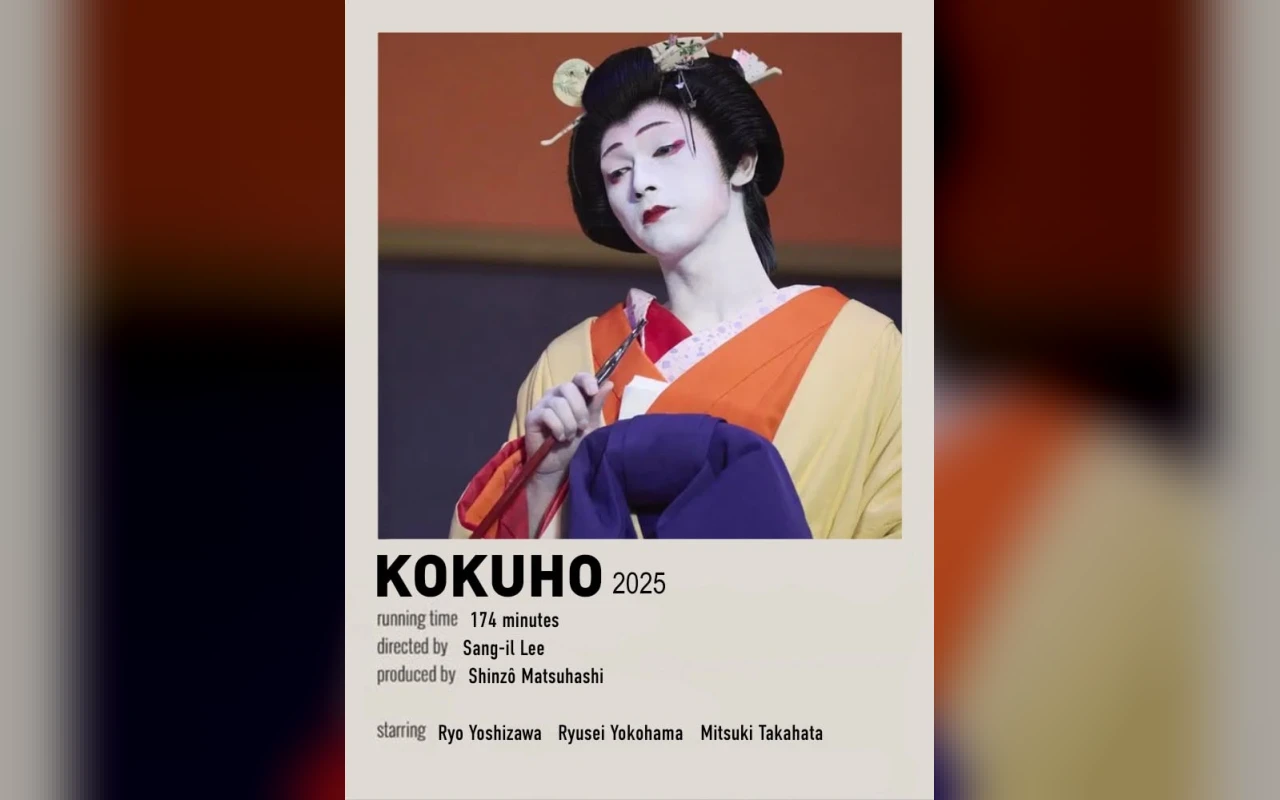
AceShowbiz - Kokuho has emerged as a groundbreaking Japanese period drama that brings the 400-year-old aesthetics of kabuki theater vividly to the big screen. Central to this achievement is the film’s hair and makeup team, whose dedication to authentic kabuki styling earned them a surprise nomination for the Academy Award for Best Makeup and Hairstyling.
Naomi Hibino, one of the key artists behind the film’s makeup, recalls an overwhelming reaction upon learning about the Oscar nomination. Having spent 30 years specializing as a kaoshi, a traditional Japanese stage makeup artist rooted in the classical dance world, this was her first venture into film. She described her initial feeling as “going numb” and expressed that the nomination felt less like a personal accolade and more a tribute to the centuries-old tradition and the many predecessors who had preserved this craft, including her teacher.
Directed by Lee Sang-il, Kokuho narrates the intricate 50-year saga of two kabuki performers—a gifted orphan onnagata (a male actor specializing in female roles) and a scion of a prestigious theatrical family. The film blends elements of backstage drama, artistic rivalry, and personal ambition, weaving a sweeping narrative praised by The Hollywood Reporter as an “operatic saga” that explores themes of beauty, sacrifice, and legacy.
Though Kokuho narrowly missed a nomination for Best International Feature Film at the Oscars in a highly competitive year, the hair and makeup team—comprising Toyokawa Kyoko, Hibino Naomi, and Nishimatsu Tadashi—secured a distinguished nod for their meticulous work.
The film’s production was a labor of love spanning 15 years, including nearly two years of intense kabuki training for its young stars Ry? Yoshizawa and Ryusei Yokohama. The immersive kabuki sequences, captured in stunning close-ups by cinematographer Sofian El Fani, were pivotal in reviving public interest in kabuki theater across Japan. After debuting quietly at the Cannes Film Festival’s Director’s Fortnight, the nearly three-and-a-half-hour film defied expectations by grossing $130 million domestically, becoming Japan’s highest-grossing live-action film ever. This success also sparked renewed attendance at traditional kabuki theaters, particularly among younger audiences.
Kabuki theater, originating in early 17th-century Japan, is a highly stylized art form that has evolved into a codified tradition encompassing acting, dance, music, and elaborate costumes. It is renowned for its exaggerated movements, orchestral shamisen and percussion, chanting, and the distinctive visual language of transformation conveyed through makeup and wigs. Men performing female roles, known as onnagata, and the intricate facial paint designs communicate character age, mood, social rank, and moral quality.
Kokuho is adapted from an extensive 800-page, two-volume novel by celebrated Japanese author Shuichi Yoshida, who immersed himself backstage within the kabuki world to authentically capture its essence. The production also benefited from the expertise of Nakamura Ganjir? IV, a revered contemporary kabuki master, who acted as a consultant and mentor to the cast and crew, ensuring the accuracy and respectfulness of stage design, costumes, hair, and makeup.
Director Lee Sang-il, known for crime thrillers like Villain and episodes of Apple TV+’s Pachinko, enlisted veteran hair and makeup artist Kyoko Toyokawa to lead the department. Toyokawa faced the complex challenge of visually indicating the passage of five decades across the film’s narrative, aging the two lead actors convincingly from youth to old age. Additionally, Lee hoped Toyokawa could master the traditional kabuki makeup sequences, a specialty usually executed by the actors themselves after years of training.
Toyokawa admits that despite her efforts to learn kabuki makeup, she quickly realized the depth of skill required. “I was told to handle the kabuki makeup in its entirety, but kabuki makeup is something else entirely,” she reflected. She recognized that attempting to replicate it without extensive training would be an insult to kabuki performers. This led her to propose bringing in a true expert in traditional Japanese theatrical makeup.
That expert was Naomi Hibino, whose decades of experience in classical Japanese dance makeup made her uniquely qualified. Meanwhile, Tadashi Nishimatsu was hired to craft the elaborate kabuki wigs, a demanding and highly specialized skill integral to the film’s visual authenticity.
For Hibino, adapting a centuries-old stage craft for cinema posed new challenges. Traditional kabuki makeup is designed to be seen from a distance on stage and only needs to last a few hours. Film, however, demands makeup that withstands long shooting days—often 10 hours or more—and holds up under the scrutiny of close-up camera lenses.
Kabuki makeup begins with a thick white paste called bintsuke, made from wood wax oils. Different formulations vary in firmness; a firmer paste is more resistant to sweat and heat but harder to apply. For Kokuho, Hibino chose a very firm bintsuke to ensure durability during filming.
Another hurdle was translating kabuki’s theatrical makeup—which is designed to read clearly from afar—into a look that would maintain its integrity and nuance in intimate cinematic closeups. Hibino recalled advice from her master emphasizing that kabuki actors study their makeup closely before performances, a principle which helped her approach the task with the necessary precision and care.
The combined efforts of Hibino, Toyokawa, and Nishimatsu resulted in a faithful and stunning recreation of kabuki’s visual language, preserving its tradition while adapting it for a new medium and audience. Their work played a crucial role in Kokuho’s success, both critically and commercially, and contributed to a broader cultural revival of kabuki theater in Japan.
In sum, the collaboration behind Kokuho showcases how centuries-old performing arts can be revitalized through cinema when approached with reverence, expertise, and innovation. The hair and makeup team’s Oscar nomination highlights the significance of preserving and honoring traditional crafts, even as they find new life on contemporary platforms.