Explore the life of Fab 5 Freddy, the graffiti pioneer and hip-hop visionary who connected NYC's art, music, and film scenes from their very origins.
- March 22, 2026
AceShowbiz - To explore the life of Fab 5 Freddy is to explore the very origins and evolution of hip-hop culture itself. Known as a versatile creative force, Freddy is a graffiti pioneer, gallery artist, rapper, television host, filmmaker, and cultural connector who linked diverse artistic communities in New York City.
Growing up in Brooklyn's Bedford-Stuyvesant neighborhood, Fred Brathwaite—better known as Fab 5 Freddy—was immersed in a rich cultural environment from an early age. He often listened in on conversations in his father’s basement, where his dad and his circle, including jazz legend and Freddy’s godfather Max Roach, discussed art, music, politics, and technology. This early exposure nurtured his curiosity and passion for creative expression.
Freddy voraciously consumed books on art and architecture, visited every museum he could find in New York City, and tuned into DJs like Frankie Crocker, who defied genre boundaries to play whatever sounded good. Inspired by the Pop Art movement led by figures such as Andy Warhol and Roy Lichtenstein, Freddy embraced a visual language that drew on comic books, advertising, and bold commercial logos.
In the 1970s, Freddy emerged as one of New York’s foremost graffiti artists, tagging entire subway cars and adopting the moniker Fab 5 Freddy from his affiliation with the Fabulous 5ive graffiti crew. As he recounts in his memoir Everybody's Fly, “The Pop artists had drawn from the same visual language we did: comic books, advertising, big colorful product logos ... Maybe New York City itself could be an art gallery. A museum of my own.”
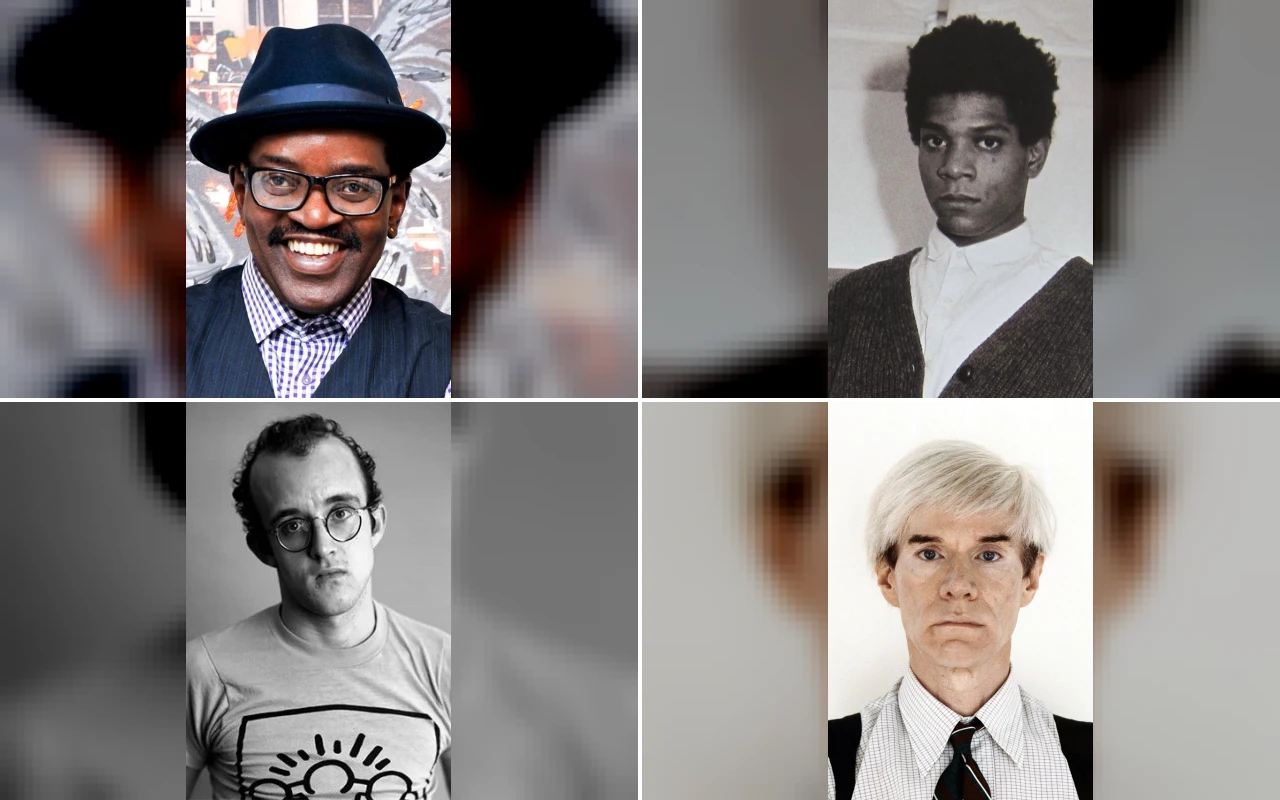
Alongside contemporaries like Jean-Michel Basquiat, Keith Haring, Futura 2000, and Lee Quinones, Freddy was instrumental in transporting street art from the subways and streets into galleries, helping transform graffiti into a recognized and respected art form. He writes, “For the first time, people were starting to see graffiti in a different context. One where it could be appreciated, not just criminalized.”
However, Freddy’s impact on hip-hop goes far beyond visual art. He served as a key cultural bridge between early hip-hop pioneers, punk and New Wave musicians, and the downtown New York art scene. “Graffiti, rap, and punk shared a rebellious spirit,” he notes, “all of it bubbling up off the radar, straight from the streets.” His ability to move fluidly between these worlds helped shape the foundation of hip-hop culture.
His role in the 1980 Blondie hit “Rapture” video helped introduce hip-hop and himself to a broader audience, while the 1983 film Wild Style—which Freddy produced, starred in, and composed music for—remains the definitive movie about hip-hop’s early days. A 1991 profile in The New Yorker by Susan Orlean famously dubbed him “the coolest person in New York.”
Freddy credits his instinctive connection with creative communities for his enduring career. “For whatever reason, I have always had an instinctive connection with creative people and scenes,” he writes. “I've been lucky to find community ... wherever I go and bring out creativity in others while drawing it out of myself ... I'd created my own playbook, followed my own path, and made a life rooted in creativity and connection.”
From 1988 to 1995, a new generation of hip-hop fans knew Freddy as the charismatic host of Yo! MTV Raps, a groundbreaking show that introduced hip-hop to millions globally. His tireless work as an ambassador of the genre cemented his place as one of its most influential figures.
Today, Freddy continues his artistic endeavors, currently focusing on projects related to the history of Black pirates. He has also ventured into the cannabis industry with his company B Noble Global, named in honor of Bernard Noble, a Black man who endured seven years of hard labor for possessing a small amount of marijuana.
Speaking from his Harlem apartment, Freddy reflects on a New York City that has changed dramatically since his youth. Though Everybody's Fly is a personal memoir, it also stands as a vivid chronicle of the city’s cultural landscape from the mid-1970s through the early 1990s, capturing the era with journalistic detail and the flair of someone who was at the heart of it all.
When asked about his initial motivation for writing the book, Freddy explains that he wanted to tell the story of his involvement in hip-hop and art without sounding boastful. “There was a lot of stuff that I'd had my hands in heavily, that I would feel like I'm bragging,” he says. “I really just wanted to lay out things that I played a role in that were not as succinctly told.”
He wanted to explain his origins, inspirations, and the ways he connected with key figures in New York’s downtown cultural scene to get things “moving and grooving.” As hip-hop grew beyond expectations, Freddy was determined to present his story in full context, showing how he influenced and shaped the narrative.
Freddy also draws parallels between himself and Jean-Michel Basquiat, noting their shared desire to control their own stories. “Jean, like me, was always focused on the narrative. He wanted to control his story the way I wanted to control mine,” he says. This drive was fueled by the frustrations Freddy heard growing up from his father and his friends, who struggled to gain visibility and authority as Black men in creative and intellectual spaces during earlier times.
Those early frustrations shaped many of Freddy’s decisions, including how to position himself and others within artistic circles to maximize impact and control over their work and stories. “I want to make sure that that doesn’t happen when I try to shape what the narrative is,” he says, emphasizing his intention to clarify his purpose and drive.
The memoir does not shy away from the tragic losses of friends like Basquiat and Haring. Yet, unlike many autobiographies that focus on hardship as emotional centers, Freddy’s book is largely celebratory. “I’m a half-full guy as opposed to half-empty,” he explains. “I’m constantly looking for that [and] I’m going to find that. That’s how I got to this point, not dwelling on how messed up things have been or sometimes still are.”
He likens his outlook to making lemonade out of unexpected lemons, emphasizing resilience and optimism despite challenges. This perspective has enabled him to build a multifaceted career and maintain his influence in art, music, and culture.
In sum, Fab 5 Freddy remains a seminal figure whose life and work embody the creative spirit and cultural intersections that defined early hip-hop and New York’s vibrant art scene. His memoir offers both a personal and historical lens on a transformative era, reflecting a legacy of innovation, community, and artistic connection.