Oscar-winning screenwriter Jeremy Larner, known for 'The Candidate' starring Robert Redford, dies at 88. Remembering his political insight and acclaimed career.
- March 11, 2026
AceShowbiz - Jeremy Larner, the Oscar-winning screenwriter known for his work on the 1972 political drama The Candidate starring Robert Redford, has passed away at the age of 88. His son, Jesse Larner, confirmed that his father died on February 24 in a nursing home located in Oakland, California, after a prolonged illness.
Jeremy Larner was best recognized for his screenplay on The Candidate, a film deeply influenced by his firsthand experience as a speechwriter for 1968 presidential hopeful Eugene McCarthy. This background gave him unique insight into the political process, which he translated into a compelling and critically acclaimed script.
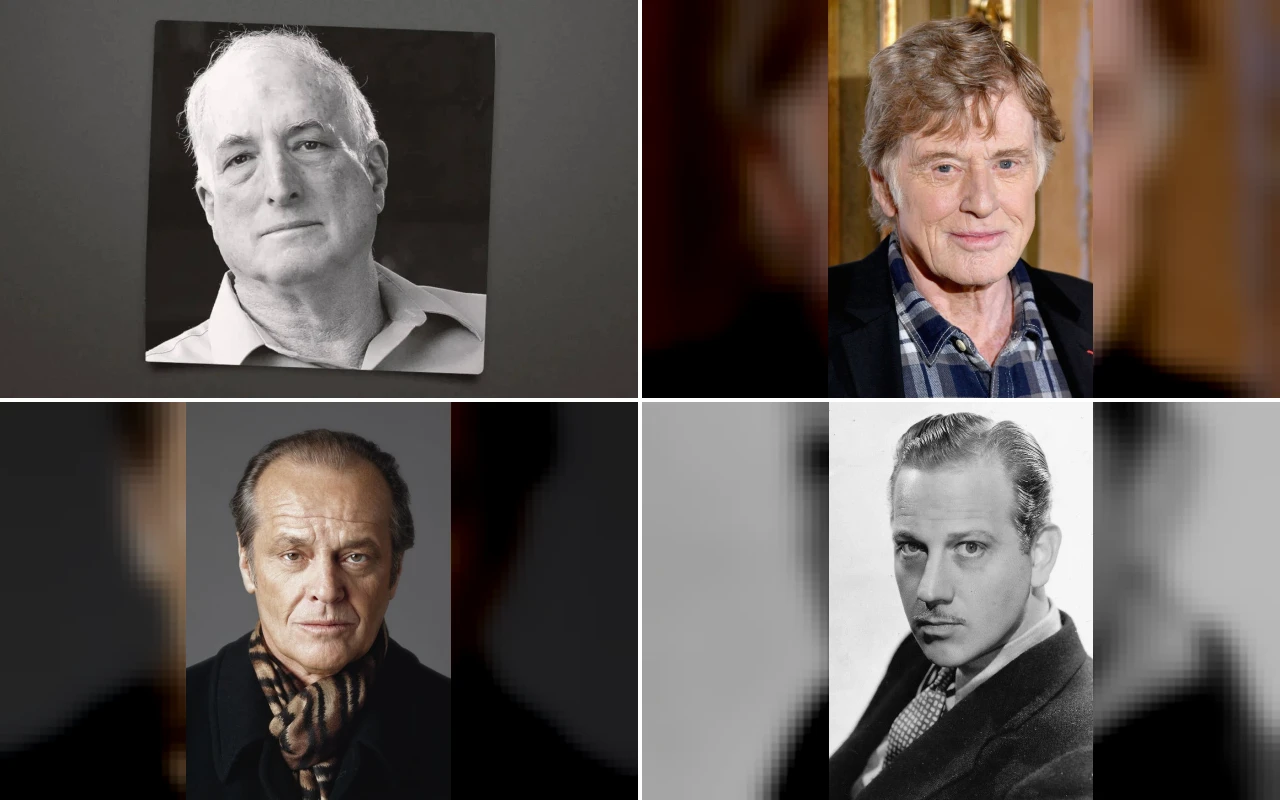
Aside from The Candidate, Larner adapted his own 1964 novel, Drive, He Said, into a film released in 1971. This movie, centered around basketball and marked the directorial debut of Jack Nicholson, was notable for its bold and unconventional approach. The story explored the lives of two college roommates—one a basketball star and the other a revolutionary—reflecting Larner’s interest in social and political themes.
Larner’s journey into politics began in March 1968 when he joined Senator Eugene McCarthy’s presidential campaign. McCarthy, who ran on an anti-Vietnam War platform, was a strong contender for the Democratic nomination at the time. However, the race dramatically shifted after President Lyndon Johnson withdrew and Robert F. Kennedy was assassinated, ultimately leading to Vice President Hubert Humphrey securing the nomination.
Following the campaign, Larner authored Nobody Knows: Reflections on the McCarthy Campaign of 1968, a book that gained attention when it was serialized in Harper’s Magazine in 1969. This work caught the eye of Robert Redford and director Michael Ritchie, who invited Larner to write the screenplay for The Candidate.
In The Candidate, Redford plays Bill McKay, an idealistic young lawyer and son of a politically influential governor, portrayed by Melvyn Douglas. McKay is persuaded by a cunning political consultant, played by Peter Boyle, to run for the U.S. Senate against the Republican incumbent, Crocker Jarman, played by Don Porter. The film explores McKay’s evolution from an outspoken idealist to a savvy politician, culminating in the famous closing line where McKay asks, “What do we do now?”
In a 2016 interview with Brooklyn Magazine, Larner described how Redford and Ritchie sought his expertise as one of the few writers with real presidential campaign speechwriting experience. Larner explained his view of politicians as akin to movie stars—figures who adopt larger-than-life personas to symbolize ideals, much like Redford himself.
Larner also shared how his firsthand experience with McCarthy shaped the screenplay. He recounted writing speeches, observing McCarthy’s delivery, and witnessing the crowd reactions. He likened the campaign to drifting downriver toward a waterfall, where the candidate increasingly loses their own identity amidst public expectations. This theme was central to The Candidate and was powerfully portrayed through Redford’s performance.
Born on March 20, 1937, in Indianapolis, Larner was a talented athlete in his youth, winning the city’s high school tennis championship at Shortridge High School. His father, Martin Larner, was president of the Jewish Community Center Association. Larner graduated from Brandeis University in 1958, where he studied alongside future activist Abbie Hoffman, and later pursued graduate work at the University of California, Berkeley.
He moved to New York in his early 20s and worked throughout the 1960s as a freelance journalist for prominent publications such as Life, The New Republic, and Harper’s. Among his journalistic highlights was covering the 1968 Olympics in Mexico City. During this decade, Larner also published two novels and three nonfiction works including Poverty: Views From the Left, Drive, He Said, The Addict in the Street, and The Answer, a book centered on LSD.
While with the McCarthy campaign, Larner also wrote a radio commercial featuring Paul Newman and ghostwrote a magazine article for the actor praising the senator. This connection between political activism and Hollywood was a thread throughout Larner’s career.
Drive, He Said was adapted into a film after Jack Nicholson contacted Larner in 1968, telling him he was about to direct his first movie and wanted Larner to write the script. Larner left his position at Harvard to join the production in Los Angeles. The film starred William Tepper and Michael Margotta and was noted for its experimental style, though it was poorly received at Cannes and quickly pulled from theaters.
After completing Drive, He Said, Larner returned to academia but soon got involved in The Candidate project. He recalled Redford and Ritchie interviewing multiple writers experienced in political subjects but ultimately calling him back, despite his unconventional appearance at the time. Much of the collaboration took place in Larner’s kitchen in Cambridge, where he shared stories from the McCarthy campaign that were incorporated into the script, including a scene where a candidate is hit in the face while holding a hot dog and a soda—a real incident experienced by McCarthy.
For research, Larner also spent time with Democratic Senator John V. Tunney of California, incorporating authentic political dialogue into the screenplay. Larner wrote the full script in just two weeks, working intensely from noon until 3 a.m., and spent the shooting period on set, continuously refining the screenplay.
Reflecting on the film’s famous closing line, “What do we do now?”, Larner noted it was unlikely a real politician would express such uncertainty, as they generally believe they know the path forward, even if they do not.
At the 1973 Academy Awards, Larner thanked “the political figures of our time” for their inspiration, humorously referencing the hollow use of words like “honor,” which he believed would continue to inspire sharper and more insightful political films.
Although Larner wrote about a dozen screenplays after The Candidate, none of them were produced. He mentioned several drafts, including ones for North Dallas Forty (1979) and an adaptation of Joseph Conrad’s Victory for director Sydney Pollack, but these projects never materialized on screen.
Jeremy Larner leaves behind a legacy as a gifted writer whose work captured the complex intersection of politics and personal identity. His contributions to political cinema remain influential, particularly through The Candidate, a film that continues to resonate for its insightful portrayal of American electoral politics.