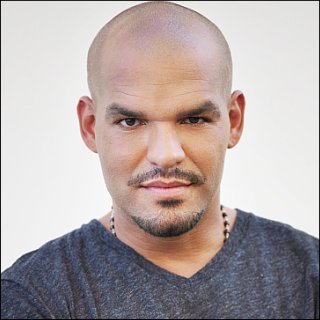
Jesse Sullivan, born around 1966, is an American electrician who has become a landmark figure in the field of prosthetics and a symbol of human technological advancement. He is best known for operating a fully robotic limb through a nerve-muscle graft, a pioneering achievement that has led many to recognize him as one of the first non-fictional cyborgs. His story is not one of a scientist or an engineer, but of an ordinary working man whose resilience and adaptability have pushed the boundaries of what is medically and mechanically possible.
Before his life-changing accident, Sullivan worked as a high-voltage power lineman, a profession that requires immense physical skill and precision. In 2001, a catastrophic work-related injury resulted in the amputation of both of his arms at the shoulder, a devastating event that would have ended the careers and hopes of many. However, Sullivan's path took a remarkable turn when he became a test subject for a revolutionary prototype developed by the Rehabilitation Institute of Chicago. This bionic arm was unlike any other prosthesis at the time. It did not rely on pull cables or nub switches, which were the standard for traditional myoelectric devices. Instead, it utilized micro-computers that could interpret electrical signals from his re-routed nerves, allowing for a far wider and more complex range of motions.
The medical procedure that made this possible was a nerve-muscle graft, a highly sophisticated surgical technique that transferred nerves from his amputated limbs to his chest muscles. By simply thinking about moving his arm, Sullivan's brain would send signals to those chest muscles, which in turn were detected by sensors in the robotic limb, translating his thoughts into fluid, near-natural movements. Perhaps most remarkably, the prototype was also the first of its kind to enable him to sense pressure, providing a degree of tactile feedback that had been lost in amputation. This groundbreaking achievement allowed Sullivan to perform delicate tasks that were previously impossible for amputees, such as shaking hands or holding a glass of water without crushing it.
Sullivan's contributions have transcended his personal recovery, placing him at the forefront of the conversation about human-machine integration. His willingness to participate in this experimental research has provided invaluable data for the medical community, helping to refine the technology that will one day benefit countless other amputees. While he has not sought the traditional trappings of celebrity, his story has been featured in numerous documentaries and scientific publications, solidifying his status as a pioneer. Today, Jesse Sullivan continues to work as an advocate for advanced prosthetic technology, demonstrating that the fusion of human biology and robotics can restore not just function, but a profound sense of independence and hope.
⭐
Similar Celebrities



📷
Recent Photos

Katie Price
Katie Price Launches Only Fans Channel - Photocall
Jan 26, 2022

Katie Price
Katie Price Launches Only Fans Channel - Photocall
Jan 26, 2022

Jessie J
The Premiere of Cirque Du Soleil Luzia
Jan 13, 2022

Imogen Thomas
The Premiere of Cirque Du Soleil Luzia
Jan 13, 2022

Hayley Palmer
The Premiere of Cirque Du Soleil Luzia
Jan 13, 2022

Phoenix Chi Gulzar
The Premiere of Cirque Du Soleil Luzia
Jan 13, 2022




⭐Featured Celebrities