Jared Corey Kushner, born on January 10, 1981, in Livingston, New Jersey, is an American businessman, investor, and former senior government official whose career has been inextricably linked to both real estate and national politics. As the son-in-law of the 45th and 47th President of the United States, Donald Trump, through his marriage to Ivanka Trump, Kushner has navigated a path from New York real estate heir to a central figure in Middle Eastern diplomacy and a controversial operator within the highest echelons of American power. His multifaceted career spans the family real estate business, newspaper ownership, and influential roles in both the first and second Trump administrations, making him one of the most discussed figures in modern American public life.
Kushner grew up in a prominent real estate family, and his early path was shaped by tragedy and adversity. He attended Harvard University, graduating in 2003 with a degree in government, before earning a joint degree in law and business from New York University in 2007. His professional trajectory took a dramatic turn in 2005 when his father, Charles Kushner, was convicted on federal charges of tax evasion, witness tampering, and illegal campaign contributions. At just 24 years old, Jared stepped in to take over the reins of Kushner Companies, the family's real estate empire, guiding it through a period of significant expansion. His most notable acquisition during this era was the $1.8 billion purchase of the office tower at 666 Fifth Avenue in Manhattan in 2007, a deal that would later become emblematic of his high-risk investment style. In addition to real estate, Kushner ventured into media in 2006, purchasing the storied New York Observer newspaper, which he used as a platform to engage with the city's cultural and political elite. Around 2005, he met Ivanka Trump, and the couple married in 2009 in a high-profile ceremony, later converting to Judaism and raising their three children in that faith.
Kushner's entry into national politics was swift and consequential. Though he was registered as a Democrat and had donated to Democratic politicians in his early career, he became a key architect of Donald Trump's 2016 presidential campaign, effectively serving as its de facto campaign manager. His behind-the-scenes influence was credited with modernizing the campaign's digital operations and strategy. Following Trump's election victory, Kushner was appointed as a senior advisor to the president in January 2017, a role that immediately raised concerns about nepotism and conflicts of interest. He also served as the director of the Office of American Innovation, a new entity tasked with overhauling government operations. Despite the ethical scrutiny, Kushner became one of the most powerful unelected officials in the White House, wielding influence over a wide range of domestic and foreign policies. He was instrumental in passing the First Step Act, a landmark criminal justice reform bill signed into law in 2018, and he played a leading role in the negotiation of the United States–Mexico–Canada Agreement, which replaced NAFTA.
On the international stage, Kushner's most defining work came in the Middle East. He was the primary architect of the Trump peace plan, a controversial proposal for Israeli-Palestinian conflict resolution, and he facilitated the negotiations that led to the historic Abraham Accords in 2020, which normalized diplomatic relations between Israel and several Arab nations, including the United Arab Emirates, Bahrain, Sudan, and Morocco. This diplomatic achievement was widely viewed as a significant foreign policy win for the Trump administration. However, Kushner's tenure was also marked by his involvement in the administration's COVID-19 response, where he advised the president that the media was exaggerating the threat of the pandemic, a stance that drew widespread criticism. Throughout his time in the White House, he was repeatedly accused of profiting from policies he advocated, and his business dealings came under intense scrutiny.
After leaving the White House in January 2021, Kushner returned to the private sector, founding Affinity Partners, a global investment firm. The firm quickly drew attention for its reliance on a $2 billion investment from the Public Investment Fund, Saudi Arabia's sovereign wealth fund, a relationship that raised fresh ethical questions given his previous diplomatic work in the region. In 2025, Kushner returned to an informal advisory role in the second Trump administration, working alongside Steve Witkoff as a key intermediary in sensitive diplomatic negotiations regarding the Gaza war and the Russian invasion of Ukraine. His influence continued to grow, and in 2026, he was officially appointed as a Special Envoy for Peace, cementing his position as a durable and powerful figure in American foreign policy. From his early days in Manhattan real estate to his current role as a global diplomat, Jared Kushner remains a polarizing yet undeniably consequential figure whose career continues to evolve at the intersection of business, politics, and international affairs.
⭐
Similar Celebrities


📷
Recent Photos

ZZ Ward
The Art of Elysium Presents Stevie Wonder's HEAVEN - Celebrating The 10th Anniversary
Jan 7, 2017

Esther Zynn
Nickelodeon's 2016 Kids' Choice Awards - Arrivals
Mar 12, 2016

Esther Zynn
Nickelodeon's 2016 Kids' Choice Awards - Arrivals
Mar 12, 2016
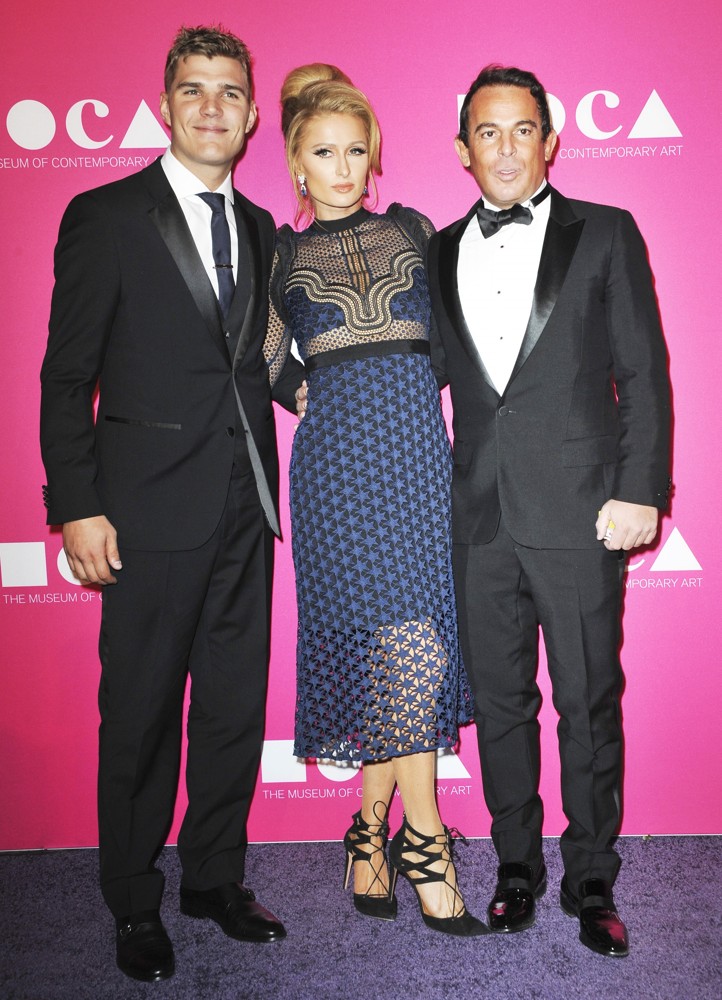
Chris Zylka
MOCA Gala 2017
Apr 29, 2017

Lucas Zwirner
21 Bridges Screening
Nov 19, 2019

Lucas Zwirner
The 72nd Annual Writers Guild Awards
Feb 1, 2020



⭐Featured Celebrities