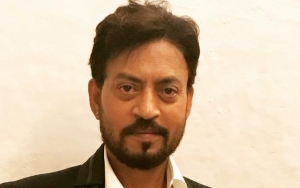
Irrfan Khan
Sahabzade Irfan Ali Khan, known to the world as Irrfan Khan, was an Indian actor of unparalleled depth and versatility, whose career served as a powerful bridge between Indian cinema and Hollywood. Born on 7 January 1967, he rose from humble beginnings to become one of the most respected and internationally recognized figures in world cinema, leaving behind a legacy of richly nuanced performances before his untimely death on 29 April 2020. Khan’s journey was one of quiet determination, marked by a profound ability to inhabit a vast array of characters, from the ordinary man to the complex anti-hero, earning him the admiration of audiences and critics across the globe.
Khan’s early life was shaped by a passion for the arts, which led him to study at the National School of Drama in New Delhi. His film debut came with a small role in Salaam Bombay! (1988), and the subsequent years were a period of struggle in the Indian film industry, where he took on minor parts in films like Drishti (1990) and Ek Doctor Ki Maut (1990). His patience and persistence began to pay off when he landed a leading role in the British film The Warrior (2001), which brought him international attention. The true turning point in his Hindi cinema career came with his breakthrough performances in Haasil (2003) and Maqbool (2004), a modern adaptation of Macbeth that showcased his formidable talent for portraying morally complex characters.
Khan’s work in the mid-2000s cemented his reputation as a serious actor of immense range. He delivered a critically acclaimed performance in The Namesake (2006), for which he earned an Independent Spirit Award nomination, and starred in the ensemble drama Life in a... Metro (2007). His portrayal of the titular athlete in Paan Singh Tomar (2011) was a landmark achievement, winning him the National Film Award for Best Actor. Simultaneously, he became a familiar face in Hollywood, playing a police officer in Slumdog Millionaire (2008), a park owner in Jurassic World (2015), and delivering a memorable turn as a stern father in Life of Pi (2012). He also took on a supporting role in the superhero blockbuster The Amazing Spider-Man (2012) and appeared in Ron Howard’s Inferno (2016).
The final phase of Khan’s career was defined by a string of deeply humanistic and commercially successful films in India. He starred in the beloved romantic drama The Lunchbox (2013), the family comedy Piku (2015) alongside Deepika Padukone and Amitabh Bachchan, and the gripping crime drama Talvar (2015). His highest-grossing Hindi film was the comedy-drama Hindi Medium (2017), a satire on the education system that won him the Filmfare Award for Best Actor. In March 2018, Khan was diagnosed with a rare form of neuroendocrine cancer, a battle he faced with characteristic grace and privacy. He returned to work for the sequel, Angrezi Medium (2020), which was released just before his death and posthumously earned him another Filmfare Award for Best Actor. In 2011, he was honored with the Padma Shri, India’s fourth highest civilian award, and he was remembered in the ‘In Memoriam’ segment of the 93rd Academy Awards. Irrfan Khan’s body of work, grossing over $3.6 billion worldwide, remains a testament to his belief that the most powerful stories are found in the quiet corners of the human experience.