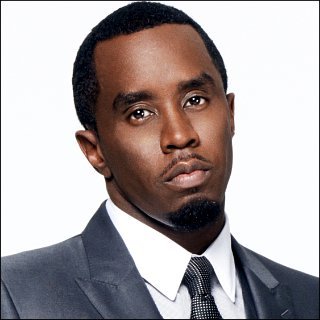
Born in Japan, Hirotsugu Kawasaki is a multifaceted figure whose contributions to the entertainment industry have spanned several decades, though he remains a relatively enigmatic presence to international audiences. Kawasaki first garnered attention in the late 1980s as a film director and screenwriter, carving out a niche for himself within the Japanese independent cinema scene. His early work was characterized by a distinct visual style and a deep exploration of human relationships, which quickly set him apart from his contemporaries. He is perhaps best known for his 1993 film The River of No Return, a haunting drama that won critical acclaim at several Asian film festivals and established him as a director of considerable emotional depth. The film’s success led to collaborations with notable Japanese actors, including K?ji Yakusho and Mieko Harada, whose performances under Kawasaki’s direction were widely praised for their raw intensity.
Following the momentum of his early directorial efforts, Kawasaki expanded his career into television, where he directed multiple episodes of the long-running Japanese drama series The Great White Tower. His work on the show demonstrated a versatility that allowed him to transition seamlessly between the big screen and the small screen, earning him respect among peers and critics alike. In the mid-2000s, Kawasaki took a step back from directing to focus on screenwriting, penning scripts for several major Japanese productions. One of his most notable works from this period was the screenplay for The Hidden Blade, a samurai epic directed by Y?ji Yamada, which won the Japan Academy Prize for Best Screenplay in 2005. This achievement cemented his reputation as a master storyteller capable of weaving intricate historical narratives with universal themes of honor and sacrifice.
In recent years, Kawasaki has returned to directing, though his output has become more selective. He has also ventured into academia, teaching film studies at the Tokyo University of the Arts, where he mentors a new generation of Japanese filmmakers. Despite his relatively low public profile, Kawasaki remains a revered figure in Japanese cinema, known for his meticulous attention to detail and his ability to elicit powerful performances from his cast. His influence can be seen in the work of younger directors like Hirokazu Kore-eda, who have cited Kawasaki’s early films as inspirational. As of the present day, Kawasaki continues to develop new projects, with a rumored collaboration with Ken Watanabe in the works, though details remain scarce. His legacy as a quiet but formidable force in the Japanese entertainment landscape endures, marked by a body of work that prioritizes substance over spectacle.