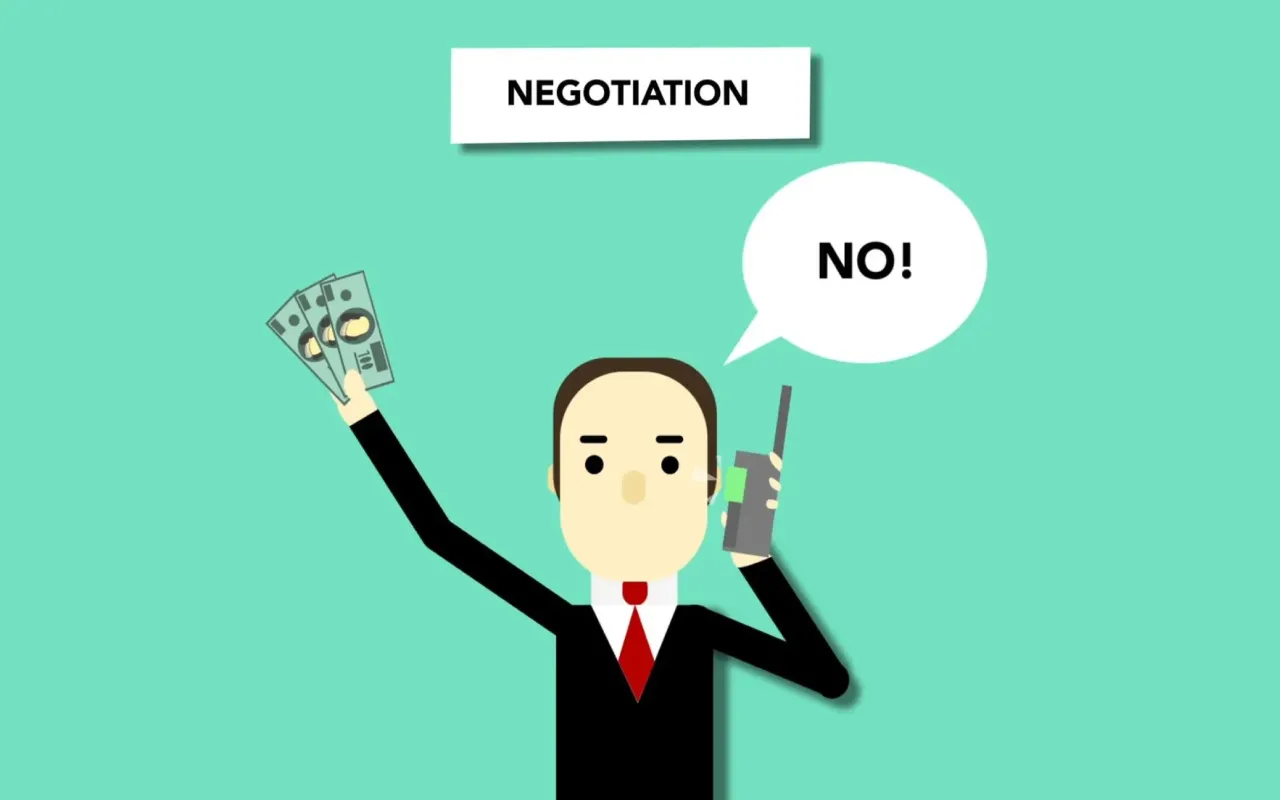
Learn practical, research-backed salary negotiation strategies that get you more money without damaging relationships with your boss or HR.
- August 22, 2026
AceShowbiz - You've just received a job offer, and the number on the screen feels like a gut punch. It's not terrible, but it's not what you're worth. Your heart races. Do you accept it and resent yourself for the next two years? Or do you push back and risk looking greedy? Here's the uncomfortable truth: 84% of workers who negotiated a higher starting salary got more money, according to a 2026 survey by the career site Ladders. Yet most of us still stay silent. We stay silent because we're afraid of the awkward conversation, afraid of losing the offer, or afraid we'll seem difficult before we've even started. But here's what the data also shows: less than 5% of offers are actually withdrawn because a candidate negotiated. The fear is mostly in your head. This guide will walk you through exactly how to negotiate your salary with confidence, tact, and a strategy that protects the relationship while getting you paid what you deserve.
Know Your Market Value Before You Say a Word
You can't negotiate effectively if you don't know what you're actually worth. This isn't about what you want to make or what your friend at another company makes. It's about the specific market rate for your role, your experience level, your geographic location, and your industry. If you're a marketing manager in Austin, Texas, you're worth a different number than a marketing manager in San Francisco, even if your job duties are identical. Your first step is to gather three to five data points from reliable sources like Glassdoor, Payscale, or Levels.fyi for tech roles. Don't rely on a single website, because they all use different methodologies and can be wildly inaccurate.
Here's a strategy that works: look for job postings that list salary ranges for similar roles, then cross-reference that with current employee data on sites like Blind or Fishbowl. If you're currently employed, you can also talk to recruiters who contact you on LinkedIn. Ask them directly, "What's the budget range for this role?" You'd be surprised how often they'll tell you. Once you have your range, calculate your target number. Your target should be at the higher end of the range, or slightly above it, because you're going to anchor high. Research from Columbia Business School found that the person who makes the first offer in a negotiation ends up with a better outcome. So when you do get to the table, you want your opening number to be backed by data, not a random guess.
The actionable takeaway here is to create a simple spreadsheet with three columns: source, salary range, and your notes. Spend 45 minutes on this before you even think about responding to an offer. When you have your data, write down your "walk away number" — the minimum you'd accept without feeling resentful. This number is for you, not for the employer. You'll need it to keep your emotions in check during the conversation.
Time Your Ask Perfectly (And Never Rush)
Timing is everything in salary negotiation, and most people botch it by either asking too early or waiting too long. If you're negotiating a new job offer, the best time is after you've received the written offer but before you've signed anything. Once you sign, your leverage evaporates. If you're asking for a raise at your current job, the timing shifts to your performance review cycle, or right after you've completed a major project that put you in a positive spotlight. Asking for a raise right after you've made a public mistake or during a company-wide budget freeze is a recipe for rejection, no matter how good your argument is.
Another critical timing rule: never negotiate over email if you can avoid it. Email is fine for the initial request to set up a conversation, but the actual negotiation should happen live — over the phone or, ideally, on a video call. Tone is easily misread in text. A simple sentence like "I was hoping for a bit more" can sound whiny or demanding in writing, but in person, you can deliver it with confidence and a smile. Additionally, live conversations allow for back-and-forth dialogue. You can read the other person's body language and adjust your approach in real time. When you negotiate in writing, you're playing a game of chess where you can only see one move ahead.
Here's a practical tip: if you receive an offer on a Friday afternoon, don't respond until Monday morning. Use the weekend to think clearly, do your research, and prepare your talking points. There's no rule that says you have to answer immediately. In fact, taking 24 to 48 hours to respond signals that you're thoughtful and deliberate, not desperate. When you do respond, simply say, "Thanks so much for the offer. I'm really excited about the role. I'd love to schedule a quick call to discuss the compensation package before I make a decision." That's it. You've opened the door without being aggressive.
Master the "Flip" — Let Them Name a Number First
If you're applying for a new job and the employer asks, "What are your salary expectations?" in the first interview, resist the urge to give a specific number. This is a classic trap designed to anchor you low. If you say $90,000 and their budget was $110,000, you just gave away $20,000. Instead, use what negotiation experts call the "flip." You politely deflect the question and ask them for their range. A great script is: "I'm flexible depending on the full scope of the role and the benefits package. Could you share the budgeted range for this position? That will help me see if we're in the same ballpark."
This tactic feels uncomfortable at first, but it works. The employer already has a number in mind — they might as well share it first. If they push back and insist on a number from you, give them a wide range that's anchored high, not a single point. Say, "Based on my research and experience, I'm looking in the $95,000 to $110,000 range." The lower end of your range should be slightly above the number you'd actually be happy with. This gives you room to negotiate down while still landing above your target. If they come back with $92,000, you can say, "That's a bit below my range, but I'm open to discussing it. Is there flexibility on the base salary, or could we look at a signing bonus to bridge the gap?"
The actionable takeaway is to practice this flip out loud before your interview. Write down your script and rehearse it until it sounds natural. The more you practice, the less robotic you'll sound. Remember, you're not being difficult — you're being professional. Employers respect candidates who know their worth and can handle a tough conversation. It's a signal that you'll be able to handle client negotiations or vendor discussions on their behalf.
Negotiate the Whole Package, Not Just the Base Salary
Here's a mistake that even experienced professionals make: they fixate on the base salary and forget that there's a whole package of value on the table. When an employer says, "We can't go higher than $85,000," they might still have room on other line items. Performance bonuses, signing bonuses, stock options, additional vacation days, remote work flexibility, professional development budgets, and a later start date all have real monetary value. A $5,000 signing bonus is equivalent to a $2.50 per hour raise on a 40-hour work week, but it's often easier for a hiring manager to approve because it's a one-time cost that doesn't affect the ongoing payroll budget.
Think about the total compensation package as a pizza. The base salary is the biggest slice, but there are other slices you can claim. If the base salary is firm, ask about a performance review at 6 months instead of 12 months. That means you'll get a shot at a raise sooner. Ask about a guaranteed bonus structure written into your offer letter. Ask about tuition reimbursement or conference attendance. For many companies, these perks are cheaper for them than cash, so they're more willing to say yes. A 2022 study from the Society for Human Resource Management found that 70% of employers are willing to negotiate non-salary components, but only 15% of candidates actually ask.
Here's your practical tip: create a "wishlist" of five things you want beyond base salary before you enter the negotiation. Rank them from most to least important. During the conversation, if the salary number stalls, pivot to item number two on your list. Say, "I understand the base salary is capped. Would you be open to adding a $5,000 signing bonus and an extra week of vacation?" You'll be surprised how often the answer is yes. The employer wants to close you, and they'll often find creative ways to sweeten the deal if you give them the opportunity.
Handle the "No" Gracefully and Keep the Relationship Intact
You've made your case, you've presented your data, and the employer still says no. What do you do? First, don't panic. A "no" on one element doesn't mean the whole negotiation is over. Ask a clarifying question: "I appreciate you sharing that. Is the base salary completely firm, or is there any flexibility on other components like the bonus or vacation time?" This keeps the conversation open without being pushy. If the answer is genuinely "no" to everything, you have a decision to make. Do you accept the offer as-is, or do you walk away? This is where your walk-away number comes in. If the offer is below that number, you need to be prepared to politely decline.
If you do decide to walk away, do it with grace. Send a short, professional email thanking them for their time and the offer, and explain that while you're flattered, the compensation package doesn't align with your current needs. Leave the door open for the future. A well-written decline can turn a "no" into a future opportunity. Companies remember candidates who handle rejection with class. You might get a call six months later when a more senior role opens up with a bigger budget. And if you're negotiating a raise at your current job and get a "no," don't storm out. Ask your manager, "What would I need to accomplish over the next six months to make a stronger case for a raise at my next review?" This turns the rejection into a roadmap for future success.
Your actionable takeaway: write a script for handling the "no" before you even start negotiating. Decide in advance what you'll say if they decline your request. This prevents you from making an emotional decision in the moment. Remember, the goal of negotiation isn't just to get more money — it's to establish a foundation of mutual respect. If you negotiate well, your new employer will respect you more, not less. And if you negotiate a raise at your current job, you're showing your manager that you're ambitious and self-aware. Those are the employees who get promoted.