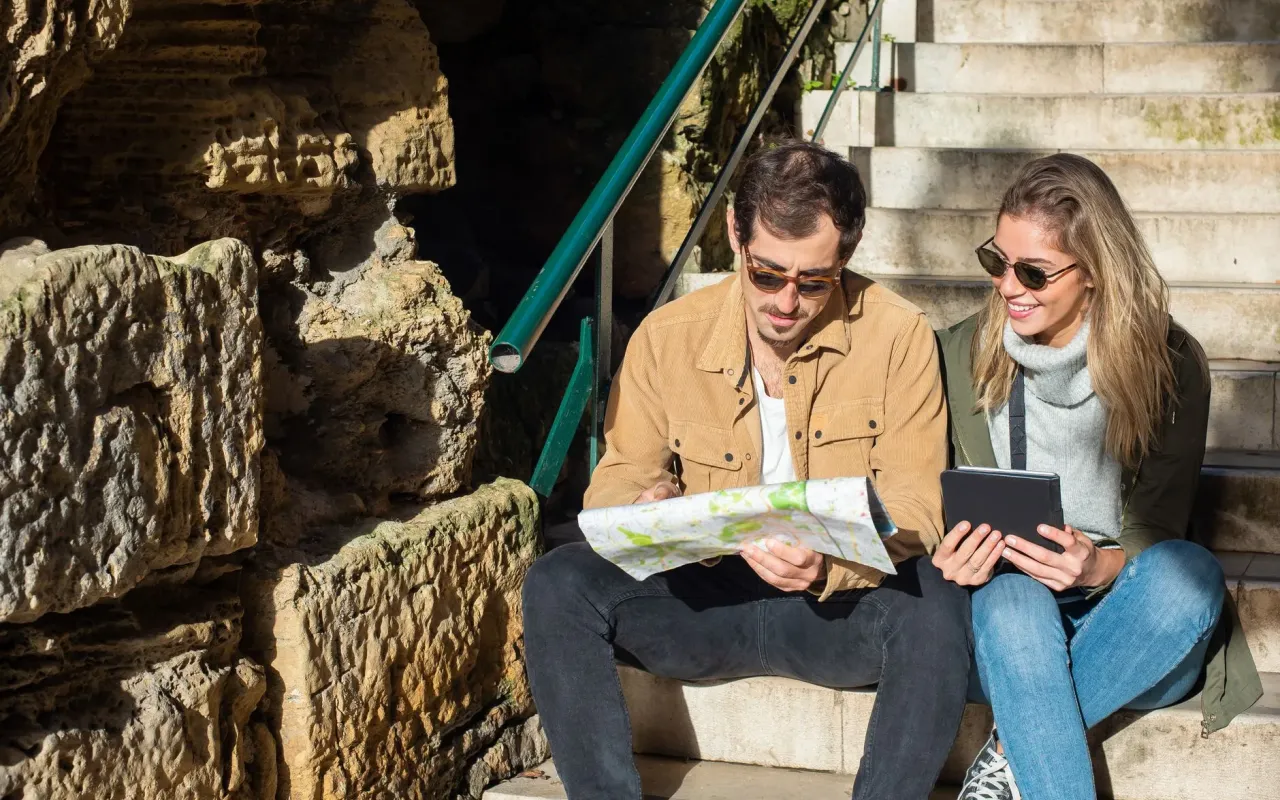
Dreaming of a last-minute escape? Learn how to plan a spontaneous weekend getaway without the stress—picking destinations, packing smart, and saving money.
- August 14, 2026
AceShowbiz - You know that feeling. It's Thursday afternoon, your inbox is a war zone, and the thought of repeating the same Friday night ritual—takeout, TV, doomscrolling—makes your skin crawl. You want to go somewhere. Anywhere. But the clock is ticking, and the logistics feel like a mountain you don't have the energy to climb. So you stay put, convincing yourself that spontaneity is for people with trust funds and no pets.
Here's the truth: a spontaneous weekend getaway isn't about throwing a dart at a map and hoping for the best. It's a skill. It's about making smart, fast decisions that prioritize experience over perfection. Research shows that anticipation of a trip boosts happiness for weeks, but the act of *planning* it can be a stressor. The fix? A streamlined system that gets you out the door in under three hours. Let's build that system together, right now.
Step 1: The Two-Hour Rule for Destination Selection
The biggest killer of spontaneity is the "where do we go?" debate. You and your partner or friends will circle the drain for hours, scrolling through Instagram, vetoing each other's ideas, and eventually settling on "the usual spot." To break this loop, implement the Two-Hour Rule. This isn't about driving time; it's about decision time. Give yourself exactly 120 minutes after work on Friday to lock in a destination. No exceptions.
Start by setting hard constraints. What's your budget? (More on that later). How far are you willing to drive? Do you need a pet sitter or a house sitter? If you have kids, are they coming along? Write these three answers down. Then, open a map app and draw a radius around your home—say, 150 miles. Look at the towns and small cities inside that circle. Pick one you've never visited. Not the one with the famous theme park, but the one with the quirky downtown or the lake you've always driven past.
Here's a pro tip: use the "Last Minute Deals" filter on hotel apps like HotelTonight or the "Explore" feature on Google Flights. These tools are designed for exactly this scenario. You might find a boutique hotel in a nearby college town for 40% off because they have empty rooms. The goal isn't to find the "best" place; it's to find a *good enough* place that offers a different energy than your living room. The specific location matters less than the act of leaving.
Finally, commit out loud. Text a friend. Tell your mom. Once you've said the name of the town out loud, you're committed. This psychological trick prevents the "should we change our minds?" spiral that eats up your Friday evening. You are going to Asheville, or Traverse City, or that weird roadside motel with the neon sign. Done. Decision made.
Step 2: The "One-Bag" Packing Strategy That Saves You 45 Minutes
Packing for a weekend trip should take fifteen minutes, not an hour and a half. The problem is that we pack for *possibilities* instead of *probabilities*. You don't need three pairs of shoes for a 48-hour trip. You need one comfortable pair for walking and one nicer pair for dinner. That's it. The One-Bag strategy forces you to be ruthless about what actually matters.
Start with a carry-on spinner or a large duffel bag—nothing bigger. Lay out your outfit for the drive (jeans, t-shirt, sneakers). Then, pack one "nice" outfit for Saturday night. That's two outfits. Add a versatile layer, like a denim jacket or a cardigan, that works for both. Underwear and socks? Pack three pairs each, just in case. Toiletries go in a separate zip-lock bag. Electronics? Just the charger and a portable battery. Leave the laptop at home. Seriously, leave it. This is a break, not a work trip.
Here's the secret sauce: pack your bag *before* you go to sleep on Thursday. Even if you don't have a destination yet, throw your toiletries and chargers in a bag. This removes a huge mental barrier on Friday. When you get home from work, you just need to add clothes. You're not starting from zero; you're starting from 80% done. This small action reduces the friction of leaving by a massive margin.
What about the "what if it rains?" panic? Check the weather on your phone for the specific town you chose. If it says 40% chance of showers, throw a cheap poncho in the side pocket. Don't pack a full raincoat and umbrella. A poncho is lighter, cheaper, and takes up zero space. This is about being pragmatic, not being a Boy Scout. If you forget something, you can buy it there. That's part of the adventure, and it supports the local economy.
Step 3: How to Book Lodging Without Getting Ripped Off
The fear of overpaying for a mediocre room is a real barrier to spontaneity. We've all been burned by a "charming" bed and breakfast that turned out to be a dusty house with a creepy host. To avoid this, you need a two-pronged approach: use the apps for last-minute deals, but also be willing to call the front desk directly.
Start your search on aggregator apps to see what's available. Look for hotels with a rating above 4.0 stars, but filter for "recently reviewed." A hotel with 500 reviews from 2026 but none from this month might be closed or under new management. Read the most recent three reviews. If they mention noise or cleanliness issues, move on. You don't have time to read 100 reviews; you have time to read three.
Here's the trick most people don't know: once you find a room on an app, call the hotel directly. Ask for the "front desk rate" or mention you saw a price on an app. Often, they will match or beat that price because they don't have to pay a commission to the booking site. This can save you $30-$50, which is a nice dinner or a round of drinks. It also gives you a chance to ask about parking fees (which can be brutal in cities) and check-in times.
If you're feeling truly adventurous, skip the hotel entirely. Look at "last minute" listings on Airbnb or VRBO for a cabin or an apartment. The key is to look for "Instant Book" and "Self Check-in." You don't want to coordinate a key handoff with a host at 10 PM. You want to arrive, punch in a code, and collapse. Also, consider staying slightly outside the main tourist zone. A hotel 15 minutes from the downtown core can be half the price and often has free parking, making the total cost significantly lower.
Step 4: The "No-Reservation" Dining Game Plan
You've arrived. You're hungry. It'7 PM on a Saturday in a town you've never been to. Every restaurant has a 45-minute wait. This is the moment where spontaneous trips usually crumble into hangry arguments. The solution isn't to make reservations ahead of time (that kills the spontaneity); it's to have a strategic approach to eating.
First, eat a late lunch. Around 2:30 PM, find a local diner or food truck and have a big, hearty meal. This shifts your hunger clock. Instead of being starving at 6 PM, you won't be hungry until 8:30 or 9 PM. By that time, the initial rush of the 6 PM dinner crowd has thinned out. You can walk into most restaurants without a wait. This is the most effective hack for eating well on a spontaneous trip.
Second, avoid the "Main Street" tourist traps. Walk one block over, or two blocks over. The restaurants that can afford the rent on the main drag are usually chains or overpriced. The mom-and-pop places on the side streets are where the locals eat. Look for a place with a chalkboard sign outside or a handwritten specials board. These places are usually cheaper and have better food.
Third, embrace the "grocery store picnic." On your way into town, stop at a local supermarket or farmers market. Grab a baguette, some good cheese, a bottle of wine (or soda), and some fruit. This is your backup plan. If you can't find a good restaurant, or if you just want to sit in a park and watch the sunset, you have a delicious, cheap meal ready to go. This isn't a downgrade; it's a deliberate choice that often ends up being the highlight of the trip.
Step 5: Budgeting for the Unexpected (and the Expected)
Money is the #1 reason people say "we can't afford to be spontaneous." But a weekend getaway doesn't have to cost $1,000. The key is to set a hard budget number before you leave, and then allocate it specifically. Let's say your budget is $400 for the weekend. That's roughly $150 for gas, $150 for a hotel (if you use the direct-call trick), and $100 for food and fun.
To make this work, you have to be smart about the "extras." The hotel minibar is a trap. The overpriced coffee shop near the hotel is a trap. Instead, stop at a gas station or a Target on the way and grab a case of water, some snacks, and a bag of coffee. If your room has a coffee maker, use it. This saves you $20-$30 a day, which adds up to almost your entire gas budget.
For activities, prioritize free or cheap experiences. Hiking trails are free. State parks have small entry fees. A walking tour of a historic district costs nothing but your time. Look for local events—many small towns have free music in the park on summer evenings or art walks on the first Friday of the month. A quick Google search for "[Town Name] events this weekend" will give you a list of options.
Finally, set aside a "spontaneity fund" of $50. This is for the random thing you didn't plan for—a paddleboat rental, a quirky museum, a great bottle of local hot sauce. This fund is what makes the trip feel *special*. It's the difference between just sleeping in a different bed and actually having an adventure. When you spend this money, you're not being irresponsible; you're investing in a memory. And that's the entire point of this exercise.
Step 6: Handling the "What If" Anxiety (The Mental Game)
Even with a plan, your brain will try to talk you out of it. "What if the hotel is gross? What if we get bored? What if we regret spending the money?" This anxiety is normal, but you need a mental framework to push through it. The "what if" game is a losing game because you can always imagine a worse scenario.
Flip the script. Ask "What if we have an amazing time?" What if you find a hidden gem of a restaurant? What if you meet interesting people at a bar? What if you see a sunset that makes you forget your work stress? The potential for a positive experience is just as high as the potential for a negative one. You are choosing to bet on the positive.
Also, remember that you are not committing to a week in a foreign country. You are committing to 48 hours. Even if the trip is a complete disaster—the hotel is bad, the food is worse—you will have a story to tell. You will have proven to yourself that you can do hard things. That resilience is more valuable than the $200 you spent.
And if you really need a safety net, just remember the "escape hatch." You have a car. You have a home. If it's truly miserable, you can drive back in three hours. Knowing you have an exit strategy makes it easier to take the leap. The worst-case scenario isn't being trapped; it's a slightly longer drive home. That's a risk worth taking.
Step 7: The Sunday Reset—Returning Without the Monday Blues
The trip isn't over when you pull into your driveway on Sunday evening. The final step is managing your re-entry into reality. The goal is to return feeling refreshed, not exhausted. This means you need to plan your Sunday to be a wind-down day, not a cram-everything-in day.
Aim to be home by 4 PM on Sunday. This gives you time to unpack, do a load of laundry, and order a simple dinner. You can watch a movie and go to bed at a reasonable hour. This prevents the dreaded "Sunday Scaries" where you're frantically preparing for Monday while still in vacation mode. A calm evening at home is part of the vacation.
Before you unpack, take a photo of your receipts or the hotel key card. This is a memento. Put it on your fridge or in a notebook. This visual cue will remind you that you *can* be spontaneous. It's proof that you don't need a three-month planning cycle to have a good time. This small act makes the next spontaneous trip easier to justify.
Finally, text your travel buddy or your partner a "highlight reel" of the trip. "Remember that weird burger place?" "Can't believe we saw that deer." This solidifies the positive memories and builds a shared history. This is the "so what?" of the entire trip. It's not about the destination; it's about the feeling of aliveness that comes from breaking your routine. You're not just buying a hotel room; you're buying a memory that will make you smile on a random Tuesday three months from now.
So, look at your calendar. Is there a weekend in the next month that looks empty? Good. Don't fill it with chores. Fill it with a possibility. You have the system now. You know how to pick a spot, pack a bag, and book a room. The only thing left to do is unlock the car door and go. The adventure is waiting, and it's closer than you think.