Jealousy doesn't have to destroy your relationship. Learn the real reasons it flares up, how to communicate it without blame, and how to rebuild trust.
- August 13, 2026
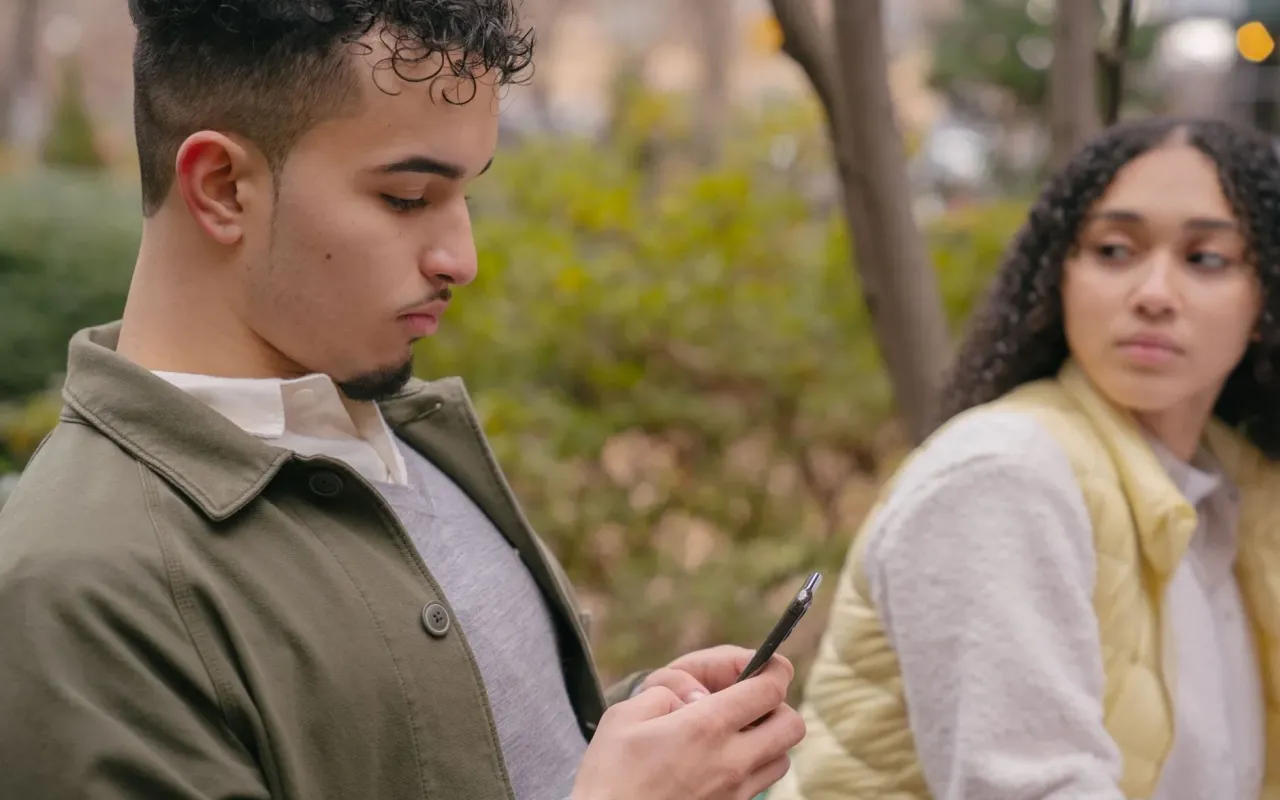
AceShowbiz - You're scrolling through your partner's phone photos from their weekend trip, and there she is again—that "work friend" who always seems to be in the frame. Your stomach tightens. Your mind starts racing through a montage of every late-night Slack message and inside joke you've overheard. Before you know it, you've asked three probing questions in a tone you don't even recognize as your own. Sound familiar? You're not broken, and you're not alone. Research suggests that jealousy is one of the most common reasons couples seek therapy, and a 2021 study in the Journal of Social and Personal Relationships found that nearly 80% of people admit to feeling jealous at some point in their current relationship. The difference between a relationship that survives jealousy and one that crumbles isn't the absence of the feeling—it's what you do with it.
Here's the uncomfortable truth: jealousy is often less about your partner and more about the story you're telling yourself. It's a primal alarm system that gets triggered by a perceived threat to something you value deeply. But just because the alarm goes off doesn't mean there's a fire. Learning to pause, investigate, and communicate effectively can transform jealousy from a relationship-killer into a signal that tells you exactly what you need to feel secure.
Understanding What Jealousy Is Really Telling You
Before you can manage jealousy, you have to decode it. Psychologists often distinguish between reactive jealousy (a response to a real, concrete threat, like finding out your partner cheated) and suspicious jealousy (which arises without clear evidence, often fueled by anxiety or past trauma). Most of the jealousy that wreaks havoc in day-to-day life is the suspicious kind—and it's rarely about the other person. It's about your own insecurities, unmet needs, or unresolved wounds from previous relationships.
Think about the last time you felt a pang of jealousy. Did you feel inadequate? Unattractive? Afraid of being replaced? These feelings often point to a deeper fear of abandonment or a shaky sense of self-worth. One powerful exercise is to ask yourself: "If I weren't afraid of losing this person, what would I be feeling right now?" The answer is often sadness, loneliness, or a desire for more reassurance. Naming that underlying emotion is the first step toward addressing it constructively instead of unleashing accusations on your partner.
Actionable takeaway: Keep a "jealousy journal" for one week. Every time you feel a twinge, write down the trigger, the physical sensation in your body, and the worst-case scenario your mind conjures. Don't edit yourself. After a few days, you'll start to see patterns—maybe it's always when you're tired, or when you've been scrolling social media, or when your partner is excited about a colleague. That data is gold.
The Social Media Trap: Why Your Phone Makes It Worse
Here's a scenario that's probably painfully familiar: you see your partner "liked" a photo of their attractive ex on Instagram. Suddenly, you're down a rabbit hole, analyzing their follow list, their comment history, and the timestamp on a post from three years ago. You feel a wave of nausea and a surge of anger, all from a single tap on a screen. Social media has fundamentally changed the landscape of jealousy because it provides an endless stream of perceived threats that would have never crossed your radar a decade ago.
A 2020 study from the Journal of Cyberpsychology, Behavior, and Social Networking found that higher levels of social media use are directly correlated with increased jealousy in romantic relationships. The issue isn't that your partner is doing anything wrong—it's that these platforms are designed to trigger comparison and insecurity. They show you curated highlights, not the messy reality. That "liked" photo doesn't mean your partner wishes they were with someone else; it often just means they were mindlessly scrolling at 11 p.m. and their thumb slipped.
So, what do you do? First, set boundaries with yourself before you set them with your partner. If you find that your mood tanks after a social media deep-dive, that's your cue to stop. You can also make a mutual agreement with your partner about what's off-limits—maybe you both agree not to follow exes, or you commit to not "liking" photos that you know would make the other uncomfortable. But here's the catch: these agreements only work if they're about respect, not control. The goal is to protect your peace, not to police your partner's behavior.
Actionable takeaway: Implement a "no doom-scrolling before bed" rule for yourself. When you feel the urge to check your partner's activity, pause and ask: "Is this action making me feel more connected or more disconnected from my partner?" If the answer is "more disconnected," put the phone down and go do something else—read a book, call a friend, or just go to sleep.
How to Talk About Jealousy Without Sounding Accusatory
This is the hardest part. When jealousy hits, the typical response is to lash out with "Why were you talking to them for so long?" or "I saw you smile at that person." These statements are almost always heard as accusations, which immediately puts your partner on the defensive. Their brain goes into fight-or-flight mode, and instead of having a conversation, you end up in a full-blown argument about who is more unreasonable. To break this cycle, you need to shift the focus from your partner's behavior to your own internal experience.
The most effective tool here is the "I feel" statement, but not the canned, robotic version you've heard before. Instead of saying, "I feel jealous when you talk to her," try something more vulnerable and specific: "I noticed I felt a wave of insecurity when I saw you two laughing together. I want to be honest with you because I know it's my issue, but I'd love some reassurance." This approach is disarming because it does three things: it takes ownership of the feeling, it avoids blaming, and it explicitly asks for what you need.
Timing is also crucial. Never start this conversation in the heat of the moment or, even worse, at 1 a.m. when you're exhausted. Schedule a time to talk when you're both calm and undistracted. Frame it as a team effort to strengthen your relationship, not as an interrogation. And be prepared to listen. Your partner might have a completely different perspective on the situation, and hearing them out without interrupting can be more healing than any apology you might receive.
Actionable takeaway: Before you bring up your jealousy, write down exactly what you want to say. Read it out loud to yourself. If you hear any words like "always," "never," or "you make me," rewrite it. The goal is to express your feelings without making your partner feel like they have to defend their character.
When Your Partner Is the Jealous One
Being on the receiving end of jealousy is exhausting. It can feel like you're walking on eggshells, constantly having to justify innocent interactions or hide parts of your life to keep the peace. If your partner is frequently jealous, your first instinct might be to get angry or to give in to their demands. Both are traps. Anger fuels the fire, and giving in reinforces the idea that their jealousy is justified—which it usually isn't.
What your jealous partner needs is not your obedience; they need emotional safety. When they express jealousy, they are often feeling terrified of losing you. If you respond with defensiveness or contempt, you're confirming their worst fear. Instead, try to respond with empathy for the underlying fear, even if you don't agree with the premise. You might say, "I can see this is really scary for you. I'm not going anywhere, and I want to understand what's making you feel insecure." This doesn't mean you accept the jealousy as fact; it means you acknowledge their pain.
However, you must also set firm, loving boundaries. If their jealousy leads to controlling behavior—like demanding your passwords, checking your location constantly, or forbidding you from seeing friends—that's a red flag that crosses the line from insecurity to abuse. In healthy relationships, jealousy is a feeling to be managed, not a justification for control. You can be compassionate about their feelings while simultaneously holding the line that you will not be monitored or restricted.
Actionable takeaway: If your partner is jealous, ask them a direct question: "What would make you feel more secure in our relationship right now?" Their answer might be "more quality time" or "a text when you get home safely." These are reasonable requests. If their answer is "I need you to delete your Instagram" or "I need to see your texts," that's a boundary you need to hold. Offer the reasonable thing, and gently but firmly refuse the unreasonable thing.
Rebuilding Trust After a Real Betrayal
Sometimes jealousy isn't irrational—it's a logical response to a genuine betrayal like infidelity or a significant emotional affair. In these cases, the jealousy is a symptom of a much deeper wound: broken trust. You can't just "talk through" this kind of jealousy and expect it to disappear. It requires a systematic, patient effort to rebuild the foundation of the relationship, often with the help of a professional couples therapist.
If you're the one who broke the trust, you need to understand that your partner's jealousy is now a form of post-traumatic stress. Their brain is scanning for danger because the danger was real. Your job is to be radically transparent for a period of time. This might mean sharing your location without being asked, being completely open with your phone, and proactively checking in about your whereabouts. This isn't about being punished; it's about providing the evidence needed to help their brain calm down. Research on betrayal trauma shows that consistent, predictable behavior over a long period is the only thing that can rewire a partner's threat-detection system.
If you're the one who was betrayed, you have to be honest with yourself about whether you can truly forgive and move forward. Forgiveness doesn't mean forgetting or giving the green light to repeat the behavior—it means releasing the need for revenge and deciding that you're willing to try again. But you also have to accept that the jealousy might not fully go away. You might have triggers for years. The goal isn't to never feel jealous again; it's to feel it, recognize it as a scar from the past, and not let it dictate your present actions.
Actionable takeaway: If you're rebuilding trust, create a "reassurance ritual." This could be a 10-minute check-in every evening where you both talk about your day, your fears, and what you need from the other tomorrow. It's a small, predictable structure that can provide a sense of safety in a world that suddenly feels very unstable.
Turning Jealousy Into a Tool for Growth
Here's the reframe that can change everything: jealousy isn't just a poison to be eliminated; it's a mirror reflecting what you value and what you fear. If you never felt jealous, it might mean you didn't care that much. The feeling is actually a testament to how much you love and want to protect your relationship. The problem isn't the feeling itself; it's how we let it dictate our behavior. When you stop trying to suppress jealousy and start getting curious about it, you can learn things about yourself that you never knew.
For example, jealousy often highlights a gap between what you want and what you feel you're getting. If you feel jealous when your partner is successful at work, maybe you're feeling unfulfilled in your own career. If you feel jealous when they spend time with friends, maybe you're feeling lonely or craving more social connection yourself. Addressing the root cause—your own unmet needs—is far more effective than trying to shrink your partner's world to fit your comfort zone.
Ultimately, the goal is to become a person who can experience jealousy without being controlled by it. This is a skill, and like any skill, it requires practice. It means tolerating the discomfort of the feeling without acting on it impulsively. It means choosing vulnerability over defensiveness, and curiosity over accusation. The couples who make it—the ones who look back on a jealous episode and feel closer because of it—are the ones who treat the experience as an opportunity to deepen their understanding of each other, rather than a battle to be won.
Actionable takeaway: The next time you feel jealous, wait 24 hours before you bring it up to your partner. Use that time to sit with the feeling, journal about it, and try to figure out what it's really about. In most cases, you'll either realize it was a minor blip not worth mentioning, or you'll have a much clearer, calmer way to articulate your need. That pause is where your power lies.