Turn your tiny backyard into a play paradise with these creative, low-cost ideas that keep kids active and engaged all year long.
- August 11, 2026
AceShowbiz - You know that feeling when you open the back door, let your kids loose, and they stare at the grass like it's a blank page they have no idea how to fill? It's not their fault. When we picture outdoor play, we picture sprawling lawns, jungle gyms, and room to run. But the reality for millions of families is a postage-stamp patch of concrete or a narrow strip of grass that barely fits a barbecue. The good news? Kids don't need acreage to have epic adventures. They need the right prompts, a little bit of setup, and permission to get messy.
In fact, research from the University of Tennessee suggests that the quality of outdoor play spaces matters far more than the quantity of square footage. A well-designed small space can foster just as much creativity and physical activity as a large one, precisely because it forces kids to use their imagination. So, if you've been scrolling through Pinterest feeling inadequate because your yard looks like a shoebox, stop right there. Here are seven creative, practical, and budget-friendly ways to turn your limited outdoor space into a launchpad for adventure.
1. The Vertical Climbing Wall (Yes, On a Fence)
When you can't build out, you build up. That solid wooden fence or brick wall that's just sitting there? It's a blank canvas. A DIY climbing wall doesn't require a massive renovation. You can purchase climbing holds online for a few dollars each and screw them into a sturdy, pressure-treated plywood board that you attach to your fence or wall. For kids aged 4-10, a wall that's just six feet high and four feet wide is more than enough to provide a serious physical challenge.
But don't just slap the holds on in a straight line. Create a "route" with different colored holds—like a mini rock gym. Tell your kids that the red holds are the "easy path" and the blue ones are the "expert route." This turns a physical activity into a problem-solving game. My neighbor did this for her two boys, and I've seen them spend 45 minutes just trying to cross from one side to the other without touching the ground. That's a lifetime in toddler years.
Actionable Tip: Safety first. Always use a thick rubber playground mat or a layer of wood chips at the base. And check the weight rating on your fence—if it wobbles, reinforce it with brackets before you hang anything.
What About the Fear Factor?
Don't force it. If your child is hesitant, start with holds placed very close together. Let them ‘fall' onto the mat from a low height to build trust. The goal is confidence, not a circus act. Once they master the low section, they'll naturally want to go higher.
2. The "Sensory Path" That Costs Almost Nothing
Forget expensive play sets. A sensory path is a sequence of different textures and movements that kids follow with their feet and hands. You can create one using chalk on a concrete patio, or with cheap materials like old tires, stepping stones, and fabric scraps on grass. The idea is to create a circuit: "Hop on the flat stones, balance on the beam, crawl through the tunnel, jump over the cracks."
Why does this matter? Sensory play is critical for brain development. It helps children process the world around them and improves motor skills. In a small space, you can't run a 100-meter dash, but you can create a circuit that takes a child 10 minutes to navigate. That's 10 minutes of focused, physical engagement. I've seen a simple path made of a few pavers, a rope laid on the ground, and a cardboard box tunnel keep a group of kids occupied for an entire afternoon.
Actionable Tip: Use chalk to draw arrows and numbers on the ground. This adds a cognitive layer. "Step on the number 1, then spin around, then hop to the number 2." It's a game, a workout, and a math lesson rolled into one.
Seasonal Swaps
Keep it fresh. In the summer, add a water station (a bucket and a sponge). In the fall, rake leaves into the path for a crunchy texture change. The path doesn't have to be permanent—it just has to be adaptable.
3. The "Construction Zone" Sandpit
If you have a corner that's, frankly, a dirt patch, don't fight it—embrace it. A sandpit is the single best investment for a small yard. You don't need a huge wooden box. You can use a plastic kiddie pool, a large galvanized steel trough, or even a repurposed tire (if you can find one big enough). Fill it with play sand (not construction sand, which stains clothes) and add some tools.
The magic of sand is its open-ended nature. There's no "right" way to play with it. One day it's a construction site for diggers; the next it's a kitchen for mud pies. This unstructured play is vital. The American Academy of Pediatrics has long advocated for unstructured play because it reduces stress and builds executive function skills like planning and negotiation. In a small yard, the sandpit becomes the social hub—the place where kids learn to share and collaborate.
Actionable Tip: Buy a cheap tarp to cover the sandpit when not in use. This keeps out rain (which makes it a muddy mess) and, more importantly, keeps out neighborhood cats who might mistake it for a litter box. Trust me on this one. A cover is non-negotiable.
Tools of the Trade
Don't buy the cheap plastic beach sets. They break in a week. Go to a hardware store and buy a few real metal spoons, a small trowel, and a measuring cup. Kids love using "real" tools, and they last much longer.
4. The "Secret Base" (Use What You Have)
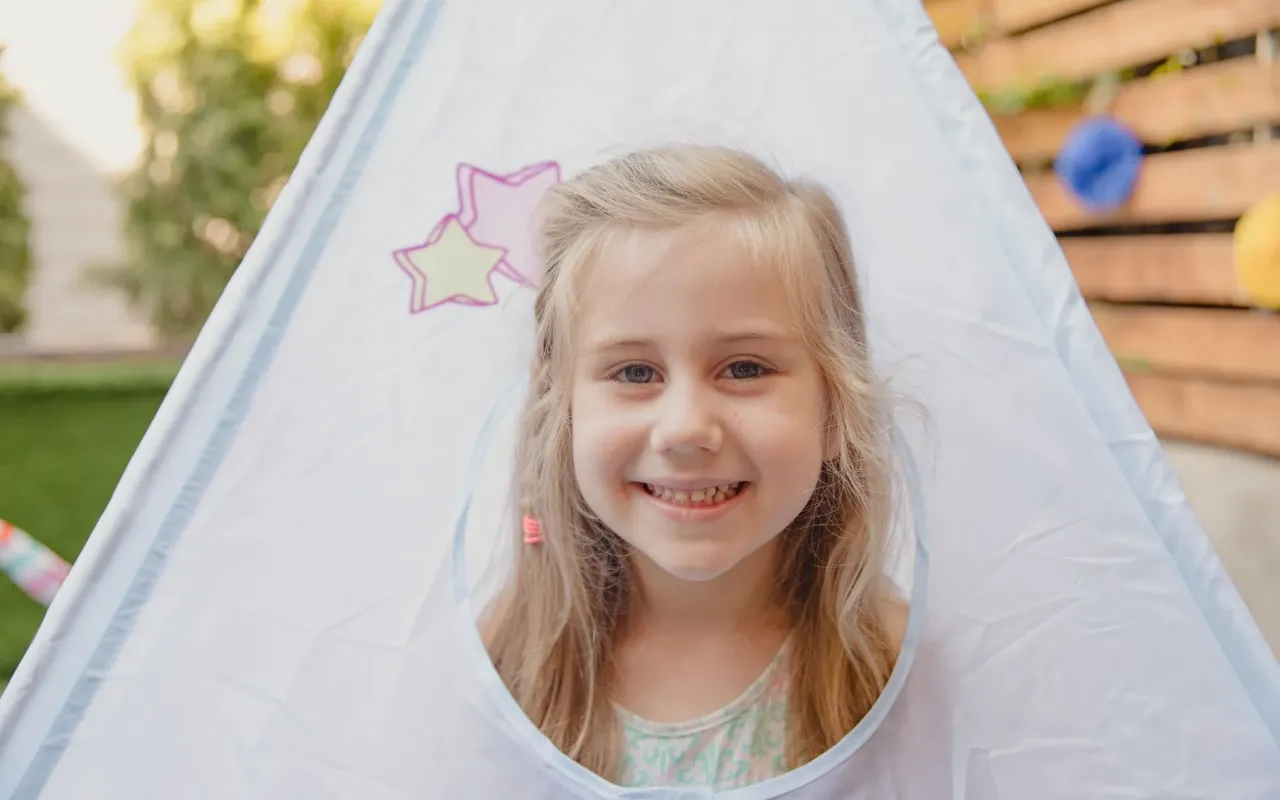
Kids love hiding. It's a biological instinct—a need for a space that is entirely their own. In a small yard, you don't have room for a massive playhouse, but you can create a "secret base" using simple materials. Drape a heavy-duty tarp or an old bedsheet over a clothesline or between two trees. Or, if you have a sturdy table, throw a blanket over it and pile up some pillows.
The key is to make it feel secret. Let your kids decorate the inside. Give them a string of battery-operated fairy lights, some clip-on flashlights, and a few cushions. This becomes their refuge. It's where they go to read, to plot, or to just take a break from the sun. It's not about the structure itself; it's about the autonomy they feel when they are in charge of their own space.
Actionable Tip: Add a "doorbell" (a set of wind chimes or a bell) outside the base. This gives kids a sense of ownership and control over who enters. It also gives you a warning system to know when they are moving in and out.
Don't Forget the Ceiling
If you have a pergola or a tree branch, hang a hammock chair or a swing. A single swing in a small yard is a huge draw. It provides vestibular input (that sense of balance and movement) that is calming for many kids. It's also a great spot for a parent to sit and supervise while sipping coffee.
5. The Water Works (No Pool Required)
Forget the inflatable pool that takes 30 minutes to blow up and 20 minutes to drain. Water play in a small space is about the transfer of water, not swimming. Set up a "water wall" using PVC pipes, funnels, and bottles attached to a fence or a board. Kids pour water at the top and watch it cascade down through the various levels.
This is pure science in action. They are learning about gravity, flow, and volume. Add a few buckets at the bottom and a stack of plastic cups, and you have an activity that can easily last an hour. The best part? It's incredibly cheap to make. You can find PVC pipes at any hardware store for pennies, and you likely have old bottles and funnels in your recycling bin.
Actionable Tip: Fill a large cooler with water and let the kids use cups to fill the top of the wall. This prevents them from running back and forth to the house and dragging mud inside. Also, put a towel down by the back door—you'll thank me later.
The Cleanup Factor
Yes, it gets wet. Yes, the kids get soaked. But remember: they are outside. They can air dry. The water that spills just waters your plants or evaporates. It's one of the lowest-mess activities you can do, despite appearances.
6. The "Obstacle Course" in a Box
You don't need a permanent Ninja Warrior course. You need a storage bin full of random items that can be transformed into an obstacle course in five minutes. Think pool noodles, jump ropes, hula hoops, chalk, and old cardboard boxes. The challenge isn't the course itself—it's the creation of the course.
Give your kids a timer and a mission: "Build a course that goes from the back door to the fence and back, using three things from the box." You'll be amazed at what they come up with. A pool noodle becomes a balance beam. A jump rope becomes a snake to jump over. A cardboard box becomes a tunnel to crawl through. This activity builds collaboration, spatial awareness, and gross motor skills simultaneously.
Actionable Tip: For younger kids, you build the course. For older kids (6+), let them build it for you. Then, you run the course while they time you. The role reversal is hilarious and empowering for them.
Why This Works
It's the novelty factor. A static playset gets boring. A box of random junk that can become anything never gets boring because it's always different. It also teaches resilience—when the cardboard tunnel collapses, they have to figure out how to fix it or adapt.
7. The "Night Explorer" Kit
Your backyard isn't just for daytime. Once the sun goes down, the space transforms. Invest in a few cheap LED headlamps and a magnifying glass. Go outside with your kids and look for bugs, listen for owls, or just watch the stars. This is a totally different experience than daytime play, and it makes the small space feel mysterious and vast.
This is especially good for older kids (7-12) who might think they've "outgrown" the backyard. The dark adds a thrill factor that a small space lacks during the day. You can set up a simple scavenger hunt with glow sticks hidden around the yard. Or, just lie on a blanket and look up. In a city with light pollution, even seeing a few stars from your backyard can be a magical moment.
Actionable Tip: Keep the "Night Explorer" kit (headlamps, bug jar, flashlight) in a specific spot near the back door. If it's easy to grab, you're more likely to actually do it. Don't over-plan it. Spontaneity is the key here.
The Parental Bonus
This is the one activity where you can genuinely relax. You're not worried about them running off or falling off something. You're just sitting there, looking at the sky, talking. It's a great way to end the day and connect with your kids without the distractions of screens or chores.
Look, the size of your yard is a constraint, not a limitation. The most important ingredient in outdoor play isn't space—it's your attention and enthusiasm. If you show up, get involved, and treat that tiny patch of ground like it's a wilderness, your kids will believe you. They don't know what they're missing; they only know what you show them. So, grab some chalk, a bucket of water, or just a blanket, and go outside. The adventure is waiting, even if it's only ten feet from the back door.