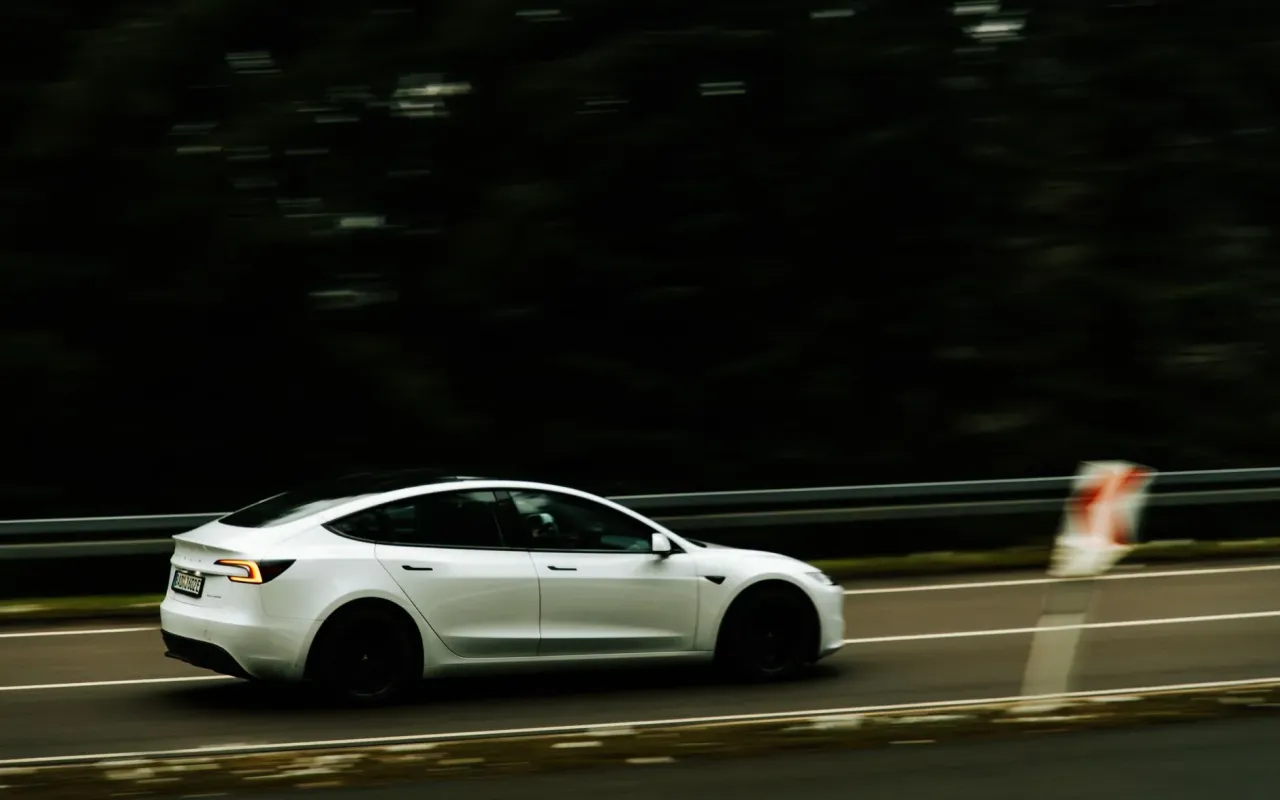
Forget the horror stories. Here's exactly how to plan your EV road trip route, find reliable charging stations, and pack smart so you actually enjoy the drive.
- June 19, 2026
AceShowbiz - I'll never forget the first time I took my electric car on a long drive. I was smug, rolling out of Portland with a full battery and a playlist queued up. Three hundred miles later, I was sweating in a Walmart parking lot, staring at a broken fast-charger, with 8% range left. My partner, who had been skeptical about buying an EV, didn't say a word. He didn't have to. The silence was louder than any "I told you so."
That trip taught me that a road trip in an electric vehicle isn't impossible—it just requires a different kind of planning than you'd do with a gas car. You can't just glance at the fuel gauge and roll the dice. But once you learn the system, I actually prefer it. Here's the real, no-fluff playbook I use now, every single time.
Route Planning Isn't Optional—It's Your New Best Friend
In a gas car, you can just point the hood toward the highway and figure out fuel stops as you go. In an EV, that approach will leave you stranded or waiting for a Level 2 charger for four hours. You need to map your route around charging stations, not the other way around.
I use A Better Route Planner (ABRP) for every trip. Plug in your car model, battery percentage, and even the weather forecast. The app calculates exactly where you'll need to stop, how long to charge, and what your battery level will be when you arrive. It even accounts for elevation changes—climbing mountains eats battery faster than you'd think. On a recent trip from Denver to Moab, ABRP warned me I'd arrive with only 12% if I didn't charge an extra 10 minutes in Grand Junction. That saved me from a tense final stretch.
Actionable tip: Don't just rely on the car's built-in navigation. Cross-reference ABRP with PlugShare to check recent user reviews on charger reliability. A station that shows "available" might be broken or blocked by a gas-guzzling pickup truck. Always have a backup charger within 20 miles of your planned stop.
Why You Should Pre-Condition Your Battery
Here's something most new EV owners don't know: your battery charges fastest when it's warm. If you plug into a DC fast charger with a cold battery (say, below 50°F), you'll be waiting 40 minutes instead of 20. Most modern EVs have a "pre-conditioning" feature that warms the battery as you approach a charger.
On my car, I set the navigation to the charging stop even if I already know the route. The car automatically starts heating the battery about 20 minutes before arrival. It's a small step, but it shaved 15 minutes off a charging stop on a winter trip through Oregon. Check your owner's manual—some cars do this automatically, others require you to manually select a fast-charger as your destination.
Charging Station Strategy: Where and When to Stop
Not all chargers are created equal. You'll encounter Level 2 chargers (slow, good for overnight) and DC Fast Chargers (the kind you want on a road trip). The most common fast-charging networks in the U.S. are Electrify America, EVgo, and Tesla Superchargers (which are opening to non-Teslas in 2026, slowly).
I've learned to avoid charging at 100%. It's a rookie mistake. The last 20% of a battery charges painfully slow—sometimes as slow as the first 80% combined. On a road trip, you're better off charging to 80% and moving on. That gets you back on the road faster, and you can top off at the next stop. For example, charging from 10% to 80% might take 25 minutes, but going from 80% to 100% can take another 35 minutes. That's time you could spend driving.
Actionable tip: Aim to arrive at chargers with 10-15% battery remaining. That gives you a buffer if the first charger is broken, and it keeps you in the "fast charging zone" (below 80%) for the quickest top-up. Also, download the apps for the networks you'll use before you leave. Nothing kills the vibe like fumbling with payment at a cold, windy charger at 11 p.m.
What to Do During Charging Stops
You're going to have 20- to 40-minute breaks. Don't just sit in the car doom-scrolling. Treat these like mini adventures. I pack a small cooler with snacks and a thermos of coffee. I also bring a book or a Bluetooth speaker for a quick podcast episode. On one trip, I discovered a great taco truck next to an Electrify America station in Bakersfield. Now I plan my stops around good food.
If you have kids or a partner, use the time to stretch your legs, walk the dog, or play a quick game. I've found that these forced breaks actually make road trips less exhausting. You arrive more refreshed than you would after a six-hour gas-car marathon with only a bathroom break.
Packing for Efficiency: Weight and Weather Matter
Here's a hard truth: every extra pound in your car eats range. A fully loaded roof box can reduce your range by 20% or more. On a 300-mile trip, that's 60 miles you'll lose. If you're driving through mountains or into a headwind, that number climbs higher.
I learned this the hard way when I packed my car to the roof for a camping trip. I had a cooler, camping gear, a bike rack, and two suitcases. My range estimate dropped from 280 miles to 210 after I loaded up. I had to add an extra charging stop I hadn't planned for. Now, I pack light. I use a soft cargo bag on the roof instead of a hard box (less drag), and I only bring what I really need. For a week-long trip, that means one duffel bag per person, a small cooler, and minimal extras.
Actionable tip: If you're carrying a roof box or bike rack, check your range estimate before you leave. Drive a few miles and see how the estimate changes. Then adjust your charging stops accordingly. And always inflate your tires to the recommended pressure—under-inflated tires increase rolling resistance and drain battery faster.
Cold Weather and Range: The Real Numbers
Cold weather is the enemy of range. Lithium-ion batteries lose efficiency in low temperatures. You can expect a 15-30% range reduction when it's below 40°F. On a trip from Seattle to Spokane in January, I saw my range drop by 25% just because of the cold. Add in snow tires (which also increase drag), and you're looking at a significant hit.
To combat this, pre-heat your car while it's still plugged in. That way, the battery and cabin are warm before you start driving, and you're not using battery power to heat the car from zero. I set my car to start pre-conditioning 30 minutes before I leave. It's a small habit that saves 10-15 miles of range on a cold morning.
Know Your Battery and Your Driving Style
Your car's display shows a range estimate, but that number is a guess based on your recent driving. If you've been driving around town at 35 mph, the car will assume you'll keep doing that and give you a generous estimate. Hit the highway at 75 mph, and that number will drop like a rock. The difference between 65 mph and 75 mph can cost you 15-20% of your range.
I use the "percentage" display instead of "miles remaining." It's less stressful. I know my car gets about 3.5 miles per kWh on the highway in good weather. So if I have 50% battery and a 100-mile leg, I do the math: 50% of 80 kWh is 40 kWh, times 3.5 miles per kWh equals 140 miles. I'm good. But if I'm driving into a headwind or uphill, I adjust my speed. Dropping from 75 mph to 65 mph can recover 10% of your range.
Actionable tip: Use cruise control on flat highways. It's more efficient than your foot, which tends to accelerate and decelerate unconsciously. Also, learn to use regenerative braking effectively. In stop-and-go traffic, one-pedal driving can recover a surprising amount of energy. On a trip through the Rockies, I gained 5% battery just from regenerative braking on a 20-mile descent.
Regen Braking: Your Secret Weapon
Most EVs let you adjust the level of regenerative braking. On a road trip, set it to the highest level. Every time you lift off the accelerator, the car slows down and captures energy. It takes a few minutes to get used to, but once you do, you'll find yourself braking less and coasting more. On a long downhill stretch, it's like getting free miles. I've seen my range estimate actually increase on descents in the Smoky Mountains.
Emergency Backup Plans: What If a Charger Is Down?
This is the fear that keeps people from buying EVs. And it's valid. Chargers break. They get vandalized. They're blocked by ice or snow. I've had it happen three times in two years. The key is to have a plan B and a plan C.
First, always carry a Level 1 charger (the one that plugs into a regular wall outlet) in your trunk. It's slow—about 3-5 miles of range per hour—but it can be a lifeline. If you're stranded near a hotel, campground, or even a friendly stranger's house, you can plug in overnight. I've used this trick at a motel in rural Montana where the nearest fast charger was 80 miles away. I plugged in at 8 p.m., and by 8 a.m., I had enough range to reach the next station.
Second, join online EV communities. I'm in a few Facebook groups for my car model. People post real-time updates about which chargers are down or overcrowded. On a trip through the Midwest, someone warned the group that a busy Electrify America station in Kansas City had a 30-minute wait. I rerouted to a less popular station and saved an hour.
Actionable tip: Before you leave, download the apps for PlugShare, ChargePoint, and Electrify America. PlugShare is the best for user reviews and real-time status. Also, carry a J1772 adapter if you drive a Tesla or a CHAdeMO adapter if your car supports it. Adapters let you use more charging stations, which gives you more options in a pinch.
What About Towing and RVs?
If you're towing a trailer or an RV, your range will drop by 50% or more. That's not a typo. I towed a small utility trailer with a kayak on top, and my range went from 280 miles to 140. Plan for double the charging stops. And don't trust the car's range estimate. It doesn't know you're towing. Use ABRP and manually adjust for the extra load.
The Bottom Line: You Can Do This
I'm not going to pretend EV road trips are as seamless as gas car trips. They require more thought up front. But the payoff is real: lower fuel costs, a quieter ride, and the satisfaction of never visiting a gas station. Plus, the charging stops force you to slow down and actually experience the journey instead of just rushing to the destination.
My last EV road trip was from Portland to San Francisco. I stopped at a charger in a small coastal town I'd never visited before. While my car charged, I walked to a local bakery and ate the best croissant of my life. That's not something that happens when you're pumping gas for five minutes. So plan ahead, pack smart, and give yourself permission to enjoy the ride. You've got this.