Learn why boundaries are essential for healthy relationships, plus practical steps to set them without guilt or conflict. Start protecting your peace now.
- May 23, 2026
AceShowbiz - You know that sinking feeling when you say "yes" to something your partner asks, but every cell in your body is screaming "no"? Maybe it's agreeing to another weekend with their family when you're exhausted, or letting them borrow money again even though they haven't paid you back from last time. You swallow the discomfort, smile, and tell yourself it's fine. But it's not fine. That knot in your stomach? That's your boundary—or rather, the absence of one.
Here's the truth that nobody tells you: boundaries aren't about keeping people out. They're about letting the right people in—on terms that actually work for you. And if you're like most 25-to-40-year-olds, you've probably been taught that setting boundaries is selfish, rude, or a sign that you don't care enough. That's a lie, and it's costing you your peace, your energy, and sometimes even your relationships.
What Boundaries Actually Are (And What They're Not)
Let's clear up the biggest misconception first. A boundary is not a wall you build to isolate yourself. It's not a threat like "if you do that again, I'm leaving." And it's definitely not a way to control someone else's behavior. Boundaries are simply the guidelines you set for how you want to be treated. They define where you end and someone else begins—emotionally, physically, and mentally.
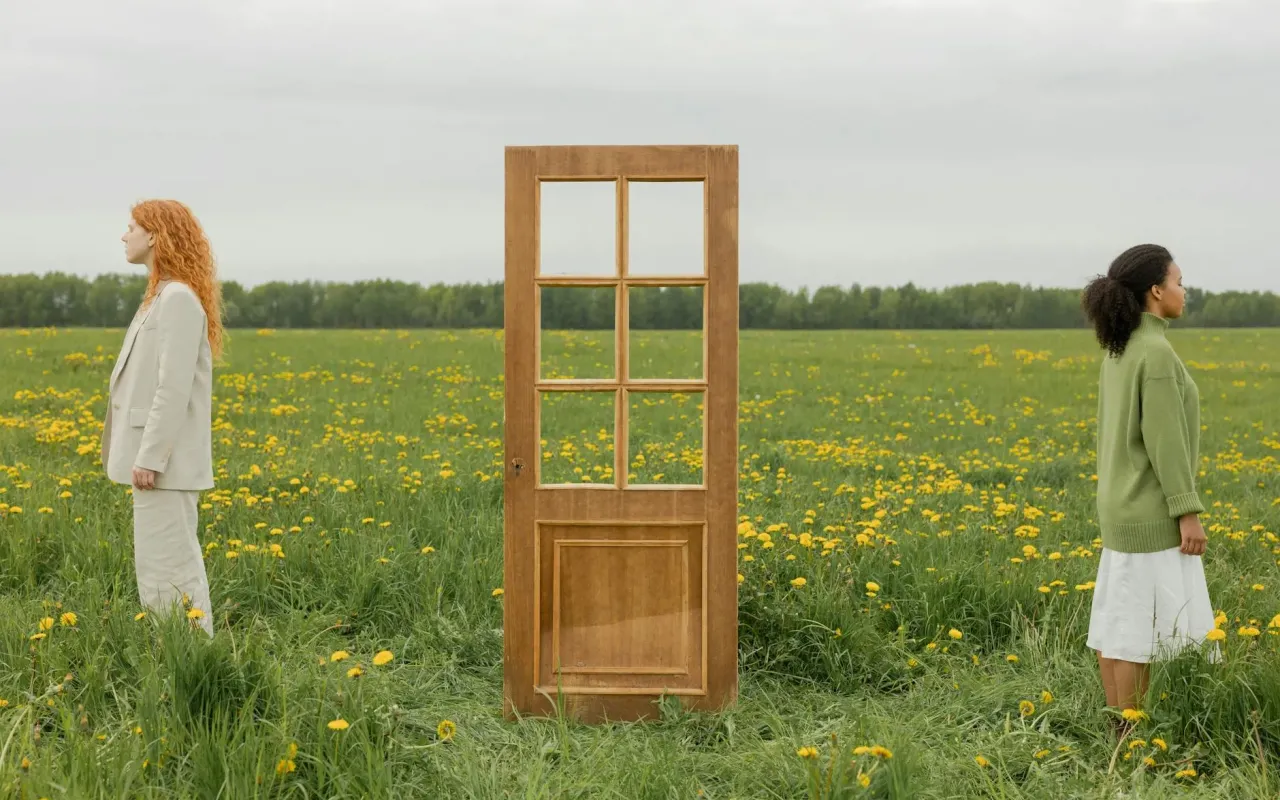
Think of boundaries like the fence around your house. You don't build a fence to keep everyone out forever. You build it so that you can decide who gets to come into your yard, when, and under what conditions. Without that fence, people wander in whenever they want, trample your garden, and leave the gate open. You end up resentful, exhausted, and wondering why you feel so drained after every interaction.
Research from the Journal of Social and Personal Relationships shows that people who struggle with boundary-setting report significantly higher levels of anxiety and burnout in their romantic partnerships. That's not a coincidence. When you don't have clear boundaries, you're constantly in a state of low-grade stress, trying to anticipate what others need from you rather than honoring what you need for yourself.
So let's stop treating boundaries like a luxury you can't afford. They're a necessity—as essential as sleep and water for maintaining a healthy relationship.
The Hidden Cost of Weak Boundaries
How People-Pleasing Erodes Your Relationship
You might think that saying "yes" to everything keeps the peace. In the short term, it does. Your partner is happy, there's no conflict, and you feel like a good person. But here's the dark side: every time you suppress your own needs to accommodate someone else, you're building a reservoir of resentment. And that reservoir eventually overflows, often in ways that surprise everyone—including you.
I've seen this play out countless times. A friend of mine spent three years agreeing to a weekly dinner with her boyfriend's parents, even though she was introverted and exhausted from her high-stress job. She never said anything because she didn't want to seem difficult. Then one night, after a particularly draining week, she snapped. She screamed at her boyfriend that she hated his parents and never wanted to see them again. He was blindsided, hurt, and confused. Their relationship never fully recovered.
The problem wasn't the dinners. The problem was that she never set a boundary early on. She could have said, "I love your parents, but I need one weekend per month to recharge. Let's plan for twice a month instead." That's not selfish. That's self-preservation.
The Resentment Spiral
Weak boundaries create a predictable cycle. You say yes when you mean no. You feel used. You start pulling away emotionally. Your partner notices and feels rejected. They push harder to get back to the "old you." You push back with anger or silence. The relationship becomes a tug-of-war where nobody wins.
According to a 2022 survey by the Gottman Institute, couples who report chronic boundary violations are 67% more likely to experience emotional disconnection within the first two years of marriage. That's a staggering number, and it shows just how foundational boundaries are to long-term relationship health.
The good news? You can break this cycle. But it starts with understanding your own needs first, not your partner's reaction to them.
How to Identify Your Own Boundaries
The Body Knows Before Your Brain Does
Before you can communicate a boundary, you have to know what it is. And your body is actually the best guide. Pay attention to the physical signals that tell you a boundary has been crossed. Do your shoulders tense up? Does your chest feel tight? Do you feel a sudden urge to change the subject or leave the room? That's your nervous system waving a red flag.
Try this: for one week, keep a simple log. Every time you feel a flicker of discomfort in an interaction, write it down. Don't judge it. Just note the situation and how your body reacted. You might discover patterns you never noticed before. Maybe you feel drained every time your partner criticizes your driving. Or you feel resentful when they interrupt you during a conversation. These are clues to where your boundaries need to be.
For example, you might realize that you need a 15-minute buffer after work before talking about serious topics. Or that you need your partner to ask before they use your phone. These aren't big, dramatic requests. They're small adjustments that protect your emotional energy and prevent resentment from building.
Use the "Energy Check" Method
Here's a practical tool that works: after any interaction with your partner, ask yourself one question: "Did that conversation leave me feeling energized or depleted?" If you consistently feel depleted after a certain type of interaction, that's a boundary signal. It doesn't mean your partner is bad or wrong. It means you need to adjust how you show up in that situation.
For instance, if every discussion about finances leaves you feeling anxious and small, your boundary might be: "We can talk about money, but I need us to use a neutral tone and stick to facts, not blame." Or if your partner vents about work for an hour and you feel emotionally exhausted, your boundary might be: "I can listen for 20 minutes, but then I need a break. Can we set a time limit?"
These boundaries aren't rejections. They're requests for a different kind of connection—one that respects both people's limits.
How to Communicate Boundaries Without Starting a Fight
Use "I" Statements, Not "You" Accusations
The way you phrase a boundary can make or break how it's received. If you say, "You always interrupt me and it's so disrespectful," you've just started a fight. Your partner will get defensive, and the conversation will spiral into blame and counter-blame. But if you say, "I feel unheard when I'm interrupted. I need us to take turns speaking," you've stated a fact about your experience without attacking their character.
The formula is simple: "I feel [emotion] when [specific behavior]. I need [specific action]." Practice it out loud until it feels natural. You might feel awkward at first, especially if you're used to avoiding conflict. But awkwardness is temporary. Resentment is permanent.
Anticipate Pushback (And Don't Back Down)
Let's be real: not everyone will celebrate your new boundaries. If your partner is used to you always saying yes, your "no" might feel like a personal attack to them. They might accuse you of being selfish, cold, or changing for the worse. That's not a sign that your boundary is wrong. It's a sign that your boundary is working.
When you face pushback, stay calm and repeat your boundary without over-explaining. Over-explaining is a common trap—you think if you just give enough reasons, they'll understand and accept it. But boundaries aren't up for debate. You don't need to justify your need for alone time, your preference for how you're spoken to, or your decision to say no to something that drains you.
Try saying something like: "I understand this is hard to hear. I'm not trying to hurt you. I'm trying to take care of myself so I can show up better in this relationship." That's firm, kind, and leaves no room for negotiation.
Boundaries in Different Relationship Scenarios
Emotional Boundaries: Protecting Your Inner World
Emotional boundaries are about separating your feelings from your partner's. You can be supportive without absorbing their stress. You can listen without fixing. You can care without drowning. This is especially hard for people who are natural caretakers. You might feel responsible for your partner's happiness, but that's not your job. Their emotions are theirs to manage, just like yours are yours.
An example: your partner comes home in a bad mood and starts snapping at you. An emotional boundary might be: "I can see you're upset, and I want to be here for you. But I won't be spoken to that way. Let's take 10 minutes to cool down and then talk." That's not cold. That's protecting your peace while still being available.
Time and Energy Boundaries: Reclaiming Your Schedule
This is where many couples struggle. One person wants to spend all weekend together; the other needs time alone. Neither is wrong, but without a boundary, resentment builds. A practical time boundary might be: "I need Saturday mornings to myself to recharge. Let's plan our time together for Saturday afternoons and Sundays."
Data from the American Time Use Survey shows that couples who report having adequate personal time are 40% more satisfied in their relationships. That's because absence really does make the heart grow fonder—but only when the absence is chosen, not forced.
Digital Boundaries: The Modern Relationship Challenge
We live in an age of constant connection, which means constant boundary violations. Does your partner expect you to reply to texts within minutes? Do they scroll through your phone without asking? Do they call you during work hours for non-emergencies? These are digital boundaries that need clear rules.
Try setting a boundary like: "I won't check my phone during dinner. If it's an emergency, call twice and I'll answer. Otherwise, I'll respond after we're done eating." Or: "I'm not comfortable with you using my phone. If you need to borrow it, please ask first." These rules might feel petty to some, but they're essential for maintaining trust and respect in a digital world.
What to Do When Your Boundaries Are Tested
Consistency Is Key
The first time you set a boundary, your partner might test it—consciously or not. They might "forget" that you need Saturday mornings alone. They might interrupt you again after you asked them not to. This isn't necessarily malicious. It's just habit. And habits take time to break.
Your job is to enforce the boundary consistently, without anger or drama. If your partner interrupts you, say calmly: "I asked you not to interrupt me. Please let me finish." If they show up on Saturday morning despite your boundary, say: "I need my alone time this morning. Let's connect this afternoon." Each time you hold the line, you're teaching them that your boundaries are real and non-negotiable.
Know When It's a Dealbreaker
Not all boundary violations are equal. If your partner repeatedly disrespects a clear, reasonable boundary after you've communicated it multiple times, that's not a misunderstanding. That's a choice. And you have to decide whether you can stay in a relationship where your needs are consistently ignored.
This is the hardest part of boundary work. It might mean ending a relationship that's otherwise "good" but fundamentally disrespectful to your limits. But here's the truth: a relationship that can't survive your boundaries isn't a relationship worth keeping. You deserve someone who respects your "no" as much as they appreciate your "yes."
Final Thought: Boundaries Are the Foundation of Love
Here's the paradox that changes everything: setting boundaries actually makes love stronger, not weaker. When you say "no" to what drains you, you free up energy for what fills you. When you protect your time, you show up more fully when you're together. When you honor your own needs, you give your partner permission to honor theirs too.
Boundaries don't push people away. They create the safety that allows real intimacy to grow. Without them, you're just two people performing love while secretly resenting each other. With them, you have a chance at something real.
So start small. Pick one boundary you've been avoiding and communicate it this week. It might feel terrifying. Do it anyway. Your future self—and your relationship—will thank you.