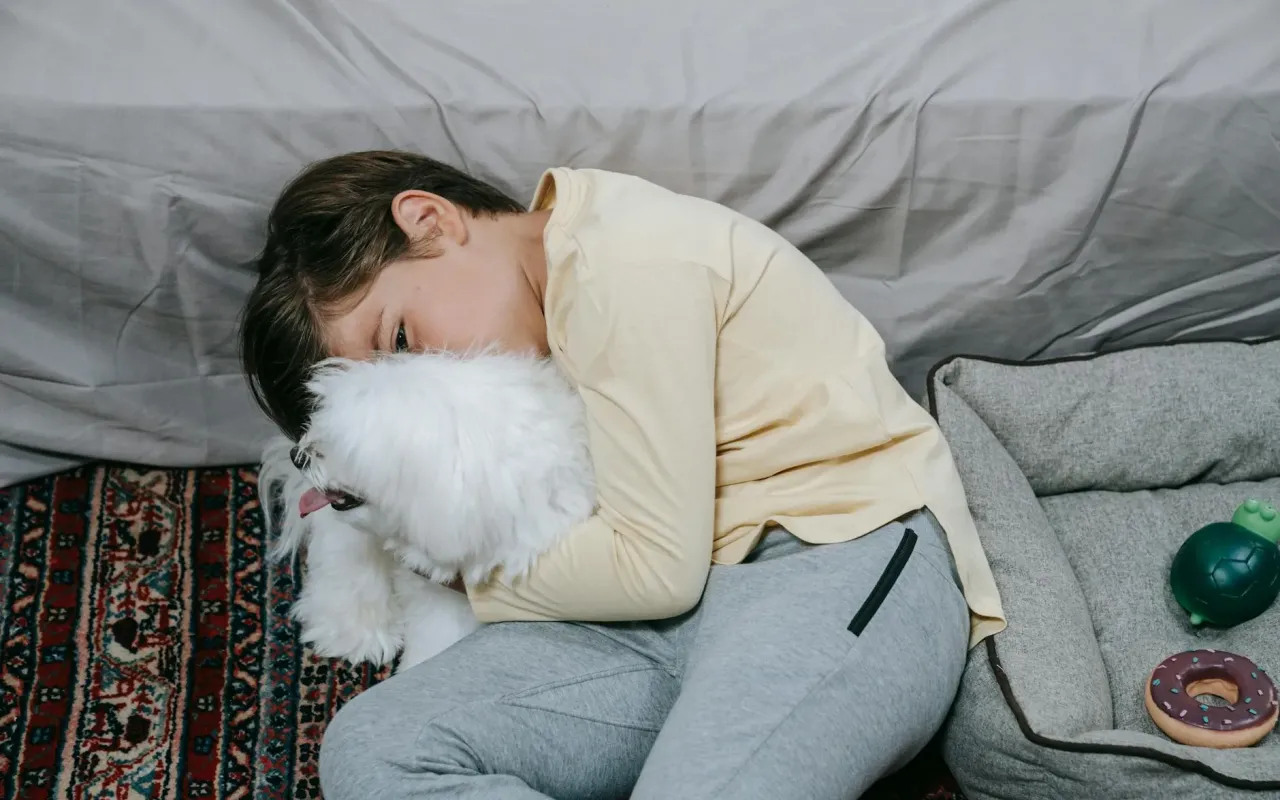
Stop guessing with your anxious pet. From thunder phobia to separation stress, discover practical, science-backed solutions that actually calm a nervous dog or cat.
- May 9, 2026
The First Time I Saw My Dog Lose His Mind
It was a Tuesday afternoon. A garbage truck backfired two blocks away, and my normally chill Labrador, Gus, shot off the couch like a missile. He spent the next forty minutes trembling behind the toilet, refusing treats, and staring at the ceiling as if the ceiling was plotting against him. I felt completely useless. I tried petting him, which made it worse. I tried talking softly, and he just tucked his tail harder. That day, I realized that pet anxiety isn't just a quirk—it's a medical and emotional crisis that demands real strategies, not just a pat on the head.
Anxiety in dogs and cats is more common than most owners realize. According to a 2020 study published in Scientific Reports, roughly 72.5% of dogs display at least one anxiety-related behavior, with noise sensitivity being the most common. For cats, estimates suggest that up to 40% of domestic felines suffer from some form of stress or anxiety, often manifesting as inappropriate urination or hiding. If your pet is struggling, you are not alone, and more importantly, you can actually fix this.
The key takeaway here is that anxiety in pets is not a character flaw or a training failure. It is a physiological response to a perceived threat. Your job is not to punish the behavior but to change the environment and the pet's internal state. Let's break down the most effective solutions so you can stop guessing and start helping.
Why Your Pet Is Anxious in the First Place
You cannot treat anxiety effectively if you don't understand its root cause. Most pet anxiety falls into one of four categories: environmental triggers (like fireworks or visitors), separation from the owner, medical issues (pain or thyroid problems), or past trauma. A dog who was rescued from a hoarding situation may panic at the sight of a broom because of a past negative association. A cat who hides when you have guests may simply lack safe vertical spaces.
One of the most overlooked causes is chronic low-grade pain. For example, a dog with undiagnosed hip dysplasia may seem "anxious" before walks because the act of standing up hurts. Once you treat the pain, the anxiety often vanishes. Always start with a vet visit before trying behavioral interventions. Bloodwork can rule out thyroid imbalances, and a physical exam can catch joint issues or dental pain that mimics anxiety.
Another major factor is predictability. Animals thrive on routines. When a pet's schedule is erratic—different feeding times, inconsistent walks, or sudden changes in household members—their stress hormones spike. I once had a client whose cat started peeing on her bed every time she traveled for work. The cat wasn't spiteful; she was confused by the sudden absence and the unfamiliar travel bag. The fix was a consistent feeding schedule and leaving an unwashed T-shirt on the bed.
Actionable takeaway: Keep a two-week log of your pet's anxious episodes. Note the time, what happened right before, and what you were doing. Patterns will emerge. That log is your roadmap to the real solution.
The Difference Between Fear, Anxiety, and Phobia
These terms get thrown around loosely, but they are distinct. Fear is an immediate reaction to a real threat—like a dog growling at a stranger who lunges at them. Anxiety is the anticipation of a future threat—like a dog panting and pacing before a storm even starts. Phobia is an extreme, persistent fear of a specific stimulus that is out of proportion to the actual danger, such as a dog who panics at the sight of a single raindrop. Understanding this helps you choose the right intervention. Phobias often require professional help, while mild anxiety can often be managed at home.
Environmental Modifications That Cost Almost Nothing
Before you spend money on supplements, thunder shirts, or behaviorists, look at your pet's physical space. The environment is the single most powerful lever you can pull. For dogs, this means creating a "safe zone" that is quiet, dark, and insulated from noise. A crate covered with a heavy blanket in a back bedroom works wonders. Put a white noise machine or a fan near the crate to drown out unpredictable sounds. For cats, the solution is vertical space. A tall cat tree or wall shelves allow them to observe from above, which reduces their stress significantly.
I had a friend whose cat, Milo, was constantly hiding under the bed and hissing at her boyfriend. She bought a $40 cat tree and placed it near a window. Within three days, Milo was sleeping on the top platform, watching the boyfriend from a distance without fear. The boyfriend became "safe" because Milo had an escape route. The principle is simple: anxiety decreases when an animal has control over its environment. Give them a place to retreat that you cannot access.
Actionable takeaway: Assess your home from your pet's eye level. Get down on the floor. Are there places they can hide that are not blocked? Are there loud appliances near their food bowl? Is the TV too loud during thunderstorms? Make three small changes this week and track the difference.
Behavioral Training That Actually Sticks
Training an anxious pet is different from training a confident one. You cannot use punishment or correction—it will amplify the fear. The gold standard is counterconditioning and desensitization. This means exposing your pet to the trigger at a very low intensity (like playing a recording of fireworks at a whisper) and pairing it with something amazing (like steak or liverwurst). Over time, you increase the volume, but only as fast as your pet can handle without panicking.
Let me give you a concrete example. My dog Gus was terrified of the vacuum cleaner. I started by placing the unplugged vacuum in the corner of the living room for a week. Every time he walked near it, I tossed him a high-value treat. Then I moved it to the center of the room. Then I touched it. Then I rolled it one foot while he was in another room. The entire process took three weeks. Now, he actually gets excited when I bring out the vacuum because he knows it means cheese. The key is going slow enough that your pet never hits their panic threshold.
For separation anxiety, the approach is different. You need to teach your pet that your departure predicts good things, not abandonment. Start by doing "fake departures"—put on your shoes, grab your keys, and sit back down. Do this twenty times a day until your pet stops reacting to those cues. Then step outside for one second and return. Gradually increase the time. Never make a big fuss when you leave or return; keep it boring. The goal is to make your leaving a non-event.
Actionable takeaway: Pick ONE trigger your pet struggles with. Write down the smallest possible version of that trigger (e.g., the sound at 10% volume, or the object at 10 feet away). Pair it with a treat ten times. If your pet shows any stress, you went too fast. Back up and try again tomorrow.
When to Call a Professional
Some cases require more than home training. If your pet is injuring themselves (chewing through doors, breaking teeth on crates) or if the anxiety has caused aggression, you need a certified veterinary behaviorist or a fear-free trainer. This is not a luxury; it is a safety issue. Look for credentials like DACVB (Diplomate of the American College of Veterinary Behaviorists) or IAABC (International Association of Animal Behavior Consultants). Avoid trainers who use shock collars, prong collars, or "dominance" theory—those will make anxiety worse.
Supplements, Medications, and Gadgets That Actually Work
The supplement market for pet anxiety is a wild west of marketing hype. Here is what the evidence supports. L-theanine (found in products like Anxitane or Composure) is an amino acid that promotes relaxation without sedation. It works best for mild to moderate anxiety and takes about 30 minutes to kick in. Another option is alpha-casozepine (found in Zylkene), a milk protein derivative that has a mild calming effect, similar to how a baby feels calm after nursing. For noise phobias specifically, a synthetic pheromone diffuser like Adaptil (for dogs) or Feliway (for cats) can reduce stress by mimicking calming maternal signals.
When supplements are not enough, medication is not a failure. It is a tool. Trazodone and gabapentin are commonly prescribed for situational anxiety like vet visits or fireworks. They are safe when used correctly. For chronic anxiety, SSRIs like fluoxetine (Prozac) can be life-changing. I have seen dogs who were on the verge of being surrendered become happy, relaxed pets within weeks of starting Prozac. The stigma around psychiatric medication for animals needs to die. If your dog is suffering, medication is a humane and effective option.
As for gadgets, thunder shirts (pressure wraps) have mixed evidence. Some dogs find them comforting; others find them restrictive. The only way to know is to try one for fifteen minutes during a mild stressor. Weighted blankets for dogs are trending, but there is no solid research yet. Avoid ultrasonic devices that claim to "calm" dogs—they can actually increase anxiety by adding an annoying noise to the environment.
Actionable takeaway: Talk to your vet about a trial of L-theanine or Adaptil before your pet's next known stressor (like the Fourth of July). If you see even a 20% improvement, that is a win. If not, ask about a short-acting prescription medication.
The One Thing Most Owners Get Wrong
Here is the hard truth: your own anxiety makes it worse. Pets are masters of reading human emotional states. If you tense up when you hear thunder, your dog feels that tension and interprets it as a threat. If you hover over your anxious cat and try to comfort them with a worried voice, you are actually validating their fear. I know this because I did it myself. The moment I stopped treating Gus like a fragile mess and started acting calm and confident, he improved dramatically.
The solution is to project calm, not pity. During a stressful event, do not stare at your pet. Do not speak in a high-pitched, soothing voice. Instead, act as if nothing is happening. Go about your business. Read a book. Make a sandwich. Your pet will think, "If my human is not worried, I don't need to be worried either." This is called social referencing, and it is a powerful tool. If you cannot stay calm yourself, step into another room, take five deep breaths, and then come back.
Another common mistake is giving attention only when the pet is anxious. If your dog is shaking during a storm and you pet them and talk to them, you are reinforcing the shaking. Instead, wait for a moment of calm—even two seconds—and then reward that calm with a quiet treat. Over time, your pet learns that calm pays better than panic. This is called differential reinforcement of alternative behavior, and it works.
Actionable takeaway: The next time your pet shows anxiety, check your own body language. Are your shoulders tight? Is your voice high? Breathe slowly, lower your shoulders, and say nothing. Wait for one second of calm, then drop a treat silently. Repeat.
Final Words on the Long Game
Treating pet anxiety is rarely a one-week fix. It is a process of incremental gains. You might see no improvement for two weeks, then a sudden breakthrough on day fifteen. The key is consistency and patience. Do not switch methods every few days. Pick one strategy, stick with it for at least a month, and measure progress by looking at the frequency and intensity of anxious episodes, not by expecting a perfectly calm pet. The goal is not to eliminate anxiety entirely—that is unrealistic. The goal is to reduce suffering and increase your pet's quality of life.
If you feel overwhelmed, remember that you are already doing the most important thing: you are paying attention and trying to help. That alone puts you ahead of most owners. Your pet does not need a perfect human. They need a human who shows up, learns, and adapts. You can do that. Start with one small change today.