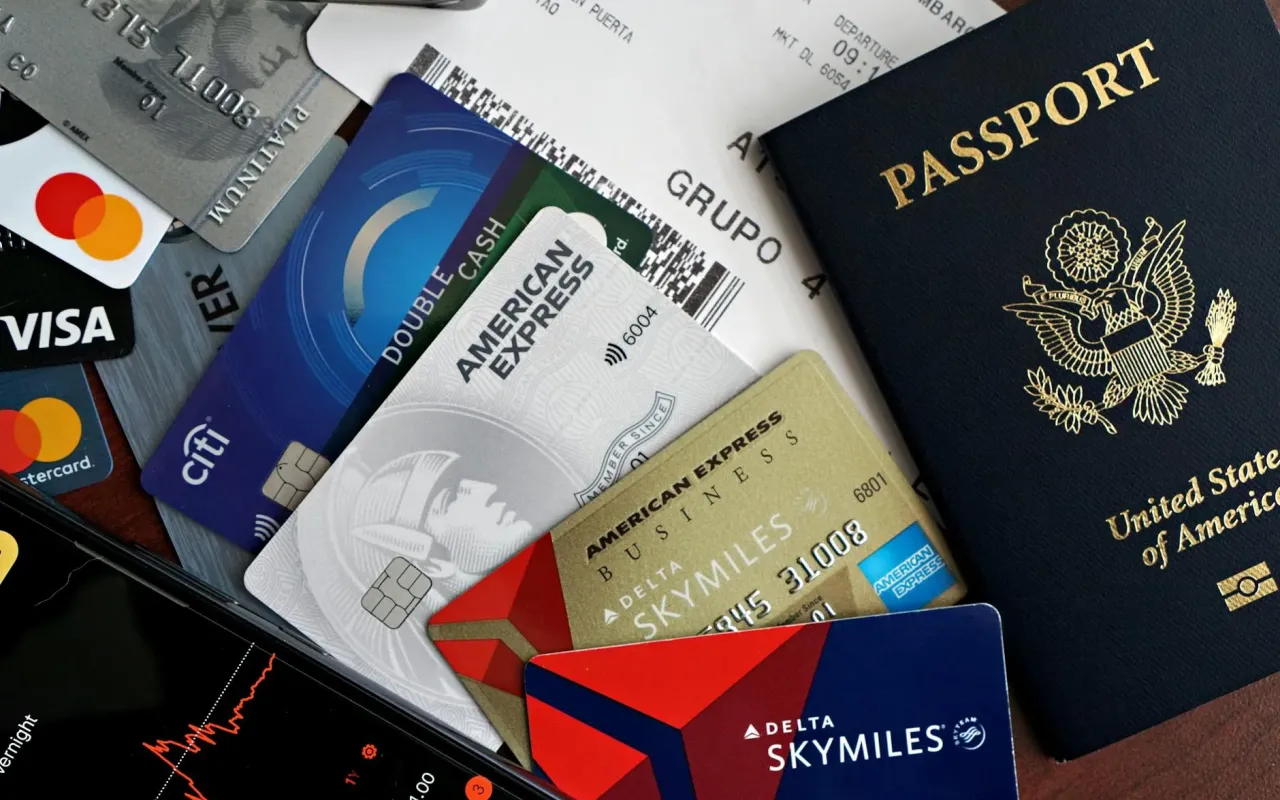
Stop hoarding points you'll never use. We compare Chase, Amex, Capital One, and airline cards to find which rewards program earns you real free flights.
- May 6, 2026
AceShowbiz - You swipe your card at the coffee shop, the grocery store, and that overpriced parking garage downtown. Every time, you earn a few points—maybe a mile or two. And every time, you tell yourself, "This is going to pay for my trip to Japan next year."
But then you open your rewards dashboard and see 47,000 points sitting there, and you have no idea what they're actually worth. Is that enough for a round-trip ticket? A one-way to a neighboring state? Or just a tote bag you'll never use?
Here's the uncomfortable truth: not all travel rewards programs are created equal. Some will get you to Tokyo in business class. Others will leave you stranded with a $12.50 "processing fee" and a headache. If you fly even twice a year, the difference between the right and wrong program could be hundreds of dollars—or a free trip you actually take.
Why Most Travel Rewards Programs Are Designed to Confuse You
Let's start with a hard reality: loyalty programs are not built to help you travel for free. They're built to make you spend more money on their partners, forget about your points until they expire, and settle for mediocre redemptions because the good ones feel impossible to book.
I learned this the hard way. For three years, I hoarded Delta SkyMiles like they were precious gems. I had 90,000 miles—enough, I thought, for a solid business-class ticket to Europe. When I finally tried to book, the cheapest option was 185,000 miles plus $400 in taxes and fees. The same flight on a different airline? $650 cash. My "free" ticket would have cost me more in lost earning potential than just buying the ticket outright.
Here's what actually matters when comparing programs: transferable points versus airline-specific miles. Transferable points (like Chase Ultimate Rewards, American Express Membership Rewards, and Capital One Miles) let you move your points to multiple airlines. Airline-specific miles (like Delta SkyMiles or United MileagePlus) lock you into one carrier and its partners. In my experience, transferable points give you at least 30% more flexibility, which translates directly into more free flights.
If you're just starting out, skip the airline-branded cards entirely. Get a card that earns transferable points. You'll thank yourself when you want to switch airlines because of a schedule change or a better deal.
Chase Ultimate Rewards: The Gold Standard for Casual and Frequent Flyers Alike
Chase Ultimate Rewards has been the darling of the travel rewards world for years, and for good reason. The program offers a 1:1 transfer ratio to partners like United Airlines, Hyatt, and Southwest, and the points are incredibly easy to earn through cards like the Chase Sapphire Preferred® and Chase Sapphire Reserve®.
What makes Chase stand out is its transfer partners. Hyatt alone is a game-changer. A standard room at the Hyatt Regency Tokyo might cost 12,000 points per night. The same room in cash? $350–$500. That's a value of nearly 3 cents per point, which is well above the industry average of 1.5–2 cents. For flights, transferring to United Airlines frequently unlocks "Saver" awards that cost as little as 30,000 miles round-trip to Europe in economy.
But Chase has a catch: you need to have one of their premium cards to transfer points to partners. If you have the Chase Freedom Unlimited or Chase Freedom Flex, you can earn points, but you cannot transfer them to airlines or hotels without also holding the Sapphire Preferred or Reserve. This is a deliberate strategy to push you toward their higher-annual-fee cards. The Sapphire Preferred costs $95 per year, and the Reserve costs $550. For most people, the Preferred is the sweet spot—you get the transfer ability without the hefty fee.
Actionable tip: If you already have a Chase Freedom card, don't cash out your points for statement credits. Instead, apply for the Sapphire Preferred, combine your points, and then transfer to Hyatt or United. That simple move can double or triple the value of points you've already earned.
American Express Membership Rewards: Higher Earning Potential, Higher Complexity
American Express Membership Rewards is the heavyweight contender. With cards like The Platinum Card® from American Express and the American Express® Gold Card, you can earn points at rates that outpace Chase in certain categories—especially dining and flights. The Gold Card, for example, earns 4x points at restaurants and supermarkets, which is unmatched by any Chase card.
The transfer partners are where Amex really shines. You can move points to Delta, British Airways, Aeroplan (Air Canada), and even international gems like ANA and Singapore Airlines. If you're willing to do a little research, these partners can unlock incredible deals. For instance, transferring Amex points to ANA and booking a round-trip business-class ticket to Japan can cost as little as 75,000 points plus taxes. A cash ticket for the same seat? Often $4,000 or more.
But here's the rub: Amex points are harder to use than Chase points. Many of the best redemptions require booking through partner airlines, which means you need to understand award charts, stopover rules, and fuel surcharges. British Airways, for example, tacks on hundreds of dollars in fees on flights departing from London. If you're not careful, you could end up paying more in taxes than the cash price of an economy ticket.
Actionable tip: If you're new to Amex, start with the Gold Card ($250 annual fee) and focus on transferring to Delta for domestic flights or Aeroplan for international. Avoid transferring to British Airways unless you're booking short-haul flights (like New York to Toronto) where the fees are lower.
Capital One Miles: The Underdog That's Quietly Winning
Capital One entered the transferable points game late, but they've made up for lost time with aggressive improvements. Their Venture X card ($395 annual fee) offers a 2x miles rate on every purchase, plus a $300 annual travel credit and 10,000 bonus miles on your anniversary. That effectively brings the annual fee down to $95, making it one of the best value premium travel cards on the market.
The transfer partners are smaller than Chase or Amex, but they include useful airlines like Air Canada Aeroplan, Etihad, and Turkish Airlines. Turkish Airlines, in particular, is a hidden gem: you can book a round-trip to Europe in economy for just 45,000 miles, and the taxes and fees are often under $100. That's a steal compared to the 60,000–70,000 miles you'd need with United or Delta.
Where Capital One falls short is hotel partners. They have very few hotel transfer options—no Hyatt, no Marriott, no Hilton. If you're a hotel loyalist, this might be a dealbreaker. But if you primarily care about flights, Capital One Miles are surprisingly competitive, especially when you factor in the Venture X's low effective annual fee.
Actionable tip: Use the Capital One "Purchase Eraser" feature only as a last resort. It redeems miles at 1 cent each, which is fine for small purchases but terrible for big redemptions. Always transfer to partners first—you'll typically get 1.5–2.5 cents per mile in value.
Airline-Specific Programs: When They Make Sense (And When They Don't)
I've been harsh on airline-specific programs, but they're not all bad. If you live near a major hub for a single airline—say, Atlanta for Delta or Houston for United—and you fly that airline at least 6–8 times per year, an airline-specific card can be worth it. The free checked bag, priority boarding, and lounge access (on premium cards) can save you hundreds of dollars annually.
But here's the problem: airline miles have been devalued aggressively over the last decade. Delta SkyMiles, for example, no longer publishes an award chart. The number of miles required for a flight can change from one day to the next, and dynamic pricing means you might need 100,000 miles for a ticket that cost 35,000 miles two years ago. United and American have followed suit, making it harder to predict what your miles are worth.
The exception is Southwest Airlines. Their Rapid Rewards program is refreshingly transparent: points are worth roughly 1.4 cents each, and you can book any available seat with points. There are no blackout dates, and if you cancel a flight, your points go right back into your account. If you fly domestically and want simplicity, Southwest is the clear winner among airline-specific programs.
Actionable tip: If you're considering an airline-specific card, do the math on the annual fee. A $99 fee plus a free checked bag is only worth it if you check bags at least twice a year. If you're a carry-on-only traveler, skip the airline card and stick with a transferable points card.
How to Choose the Right Program for Your Actual Travel Habits
I've given you a lot of information, so let's simplify it into a decision framework. Ask yourself three questions:
- How often do you fly? If you fly 2–4 times per year, a Chase Sapphire Preferred or Capital One Venture X will serve you better than any airline card. The flexibility of transferable points will save you from being locked into one carrier.
- Where do you want to go? If you're dreaming of international business class, Amex Membership Rewards offers the best value through partners like ANA and Aeroplan. If you're mostly flying domestic, Chase Ultimate Rewards and Southwest Rapid Rewards are simpler and more reliable.
- How much complexity can you handle? Transferable points require some research. You need to check transfer bonuses, understand partner award charts, and be flexible with dates. If that sounds exhausting, stick with a cash-back card or a simple program like Southwest. There's no shame in simplicity—it's better than hoarding points you never use.
Here's a real-world example: Last year, my friend Sarah wanted to fly from New York to Tokyo. She had 80,000 Chase points from her Sapphire Preferred. She transferred them to United Airlines and booked a round-trip economy ticket for 70,000 miles plus $22 in taxes. The cash price for the same flight was $1,100. She effectively got 1.57 cents per point—solid, but not spectacular. If she had transferred to Virgin Atlantic instead, she could have booked the same flight on ANA for 60,000 miles round-trip, saving 10,000 miles. That's the kind of optimization that turns good redemptions into great ones.
The bottom line: the best travel rewards program is the one you actually use. It's better to earn a modest amount of points and redeem them consistently than to chase the "best" program and let your points rot in a dashboard. Pick one program—preferably a transferable points program like Chase or Amex—and commit to it for at least a year. Learn its quirks, master its transfer partners, and book your first free flight. Once you do, you'll never look at a credit card the same way again.