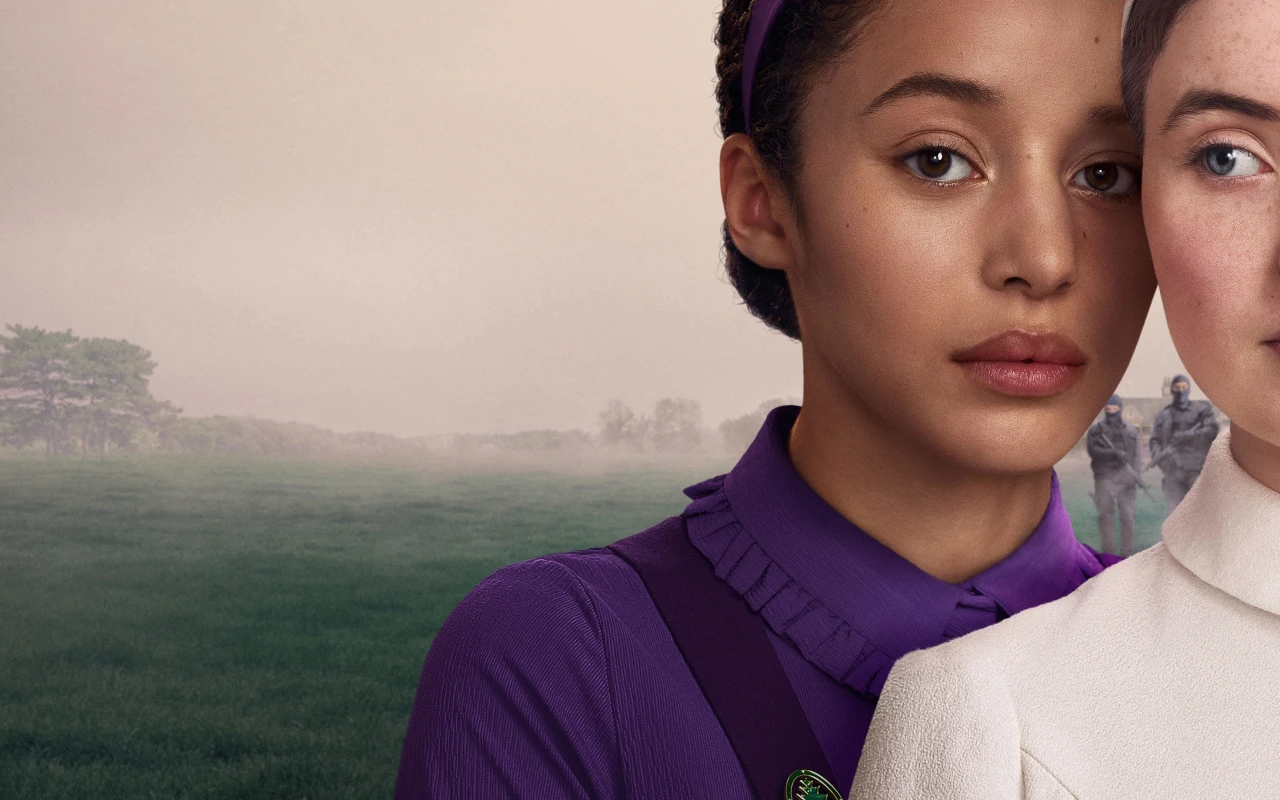
The Testaments Season 1, Episode 5 "Ball" contrasts adolescent innocence with Gilead's oppressive control, delving into the girls' ages and the high-stakes a...
- April 28, 2026
AceShowbiz - The Testaments Season 1, Episode 5, titled "Ball," dives deep into the harrowing experience of the girls preparing for their cotillion night in the dystopian world of Gilead. This episode starkly contrasts the innocence of adolescence with the oppressive, totalitarian control surrounding them, making it a difficult yet compelling watch.
The ages of the girls in Gilead are a critical, unsettling detail. While most girls typically experience their first period between ages 10 and 15, with some as early as 8, the girls in this world face a troubling reality. Gilead suffers from rampant infertility and declining birth rates, suggesting that delayed or absent menstruation (amenorrhea) is a significant problem. This context helps explain the intense anxiety among the Plums about reaching menarche, implying these girls might be closer to 15, 16, or even 17 when attending the cotillion ball.
Interestingly, the actors playing these young women are much older than their characters: Chase Infiniti, portraying Agnes, is 25, and Lucy Halliday, playing Daisy, is 22. This age gap is somewhat merciful because imagining these girls as actual teenagers—awkward, acne-ridden, and wearing braces—makes the scenes all the more excruciating. The unsettling nature of the ball is heightened by this knowledge, as the girls are forced into a world dominated by much older men, the Commanders, who are their intended husbands in this grim society.
The episode takes us back into Agnes’s perspective, capturing the turmoil she experiences the morning after an emergency dentist appointment. Her confusion and shame over a hazy, unconscious encounter reveal the brutal reality of her upbringing. Agnes lacks the tools to fully understand or process what happened, embodying the confusion and ignorance that mark her adolescence in Gilead. This ignorance is not bliss; it is a dangerous void into which she is rapidly falling, shaping her future relationships with men.
The Testaments excels when it draws clear parallels between its fictional world and our own. At the ball, Paula and Rosa gush over Agnes’s grown-up appearance in her prom dress, mirroring the common experience of mothers admiring their daughters on similar occasions. Paula’s advice to Agnes about handling potentially spiked punch is telling: while these girls were raised to be angels in Gilead’s strict moral framework, the men they must attract belong to a different, less innocent world. Agnes is counseled to protest lightly but ultimately accept the drink, to be demure rather than rigid. This advice reveals the performative nature of Gilead’s societal roles—Commanders do not truly want to marry the girls they have raised.
One of the most intimate moments comes as the girls prepare for the ball, touching up their clean, organic makeup amid bubbling nerves, jealousy, and subtle rivalries. Agnes refuses to laugh at Becka’s jokes, while Shu openly envies her friends' fortunes. Aunt Estée reminds the girls that their future husbands are just a room away, painting a fairy tale picture of prom kings that belies the grim reality. Agnes, however, understands the truth. In a voice-over, she confides—perhaps to Daisy or to the absent mother figure she mentioned earlier—that love is not expected. In Gilead, the order is first you receive a husband, then you learn to love him because he is yours. This harsh system effectively crushes teenage curiosity and the hope of genuine affection.
The ball itself begins with a Bridgerton-style choreographed dance performed by the Greens, Plums, and Pinks, creating a kaleidoscopic display for the Commanders watching from above. The father-daughter dance follows, but Agnes shudders at the sight of Dr. Grove dancing with Becka, too horrified to touch even her own father. The episode leaves viewers wondering what the fathers think as they participate in this grotesque ritual.
During the evening, the girls initially dance with younger Commanders who are not prospects for marriage but placeholders while more senior Commanders select their wives later. Agnes’s first partner appears kind and relatable, quoting the movie Jaws, though Agnes has never seen any films. Becka’s date is less promising; she reveals her passion for playing old English folk songs on the hammered dulcimer—an instrument unfamiliar to many viewers, underscoring how isolated these girls are from normal social experiences. Aunt Lydia has clearly not prepared them for casual conversation.
When the older Commanders join the dance floor, the mood darkens. The girls from the most prestigious families anticipate being matched with the most powerful Commanders, though each secretly hopes to be the exception, like their friend Penny, who was matched with Commander Judd, only two or three times her age. Agnes’s partner, an elderly Commander, is abruptly called away to urgent business in the War Room, and Garth steps in to fill the void. Agnes heart-wrenchingly observes, "This is what it’s supposed to feel like," marking the painful contrast between her ideal and reality.
Despite Garth being a more suitable companion, Agnes remains distant and unrelatable. She awkwardly asks what it’s like to shoot someone, and Garth flirts, teasing that other Guards must be jealous. Their eyes meet often throughout the night, but both know the fantasy will soon end. The brief chance for adolescent connection is over faster than a slow dance.
Overall, “Ball” is a powerful episode that captures the painful intersection of adolescence and totalitarian oppression in The Testaments. It highlights how Gilead’s brutal regime strips away teenage innocence, replacing it with a chilling performance of forced maturity and submission. The episode’s careful attention to emotional nuance and social dynamics makes it one of the series’ most affecting chapters yet.