A rare glimpse into the artistry of legendary production designer Dean Tavoularis, from Disney to The Godfather, as remembered by a close colleague.
- April 26, 2026
AceShowbiz - It is a rare occasion when a film craftsman transcends the role of technician to become a true artist in their field. Even rarer still is the opportunity to spend extensive time alongside such an individual, learning firsthand the secrets behind their creative mastery. This was the privilege I had with Dean Tavoularis, the legendary production designer who passed away recently at 93.
Dean Tavoularis’s career spanned decades, beginning with his upbringing as the child of Greek immigrants during the Great Depression. He navigated through the post-war years and the 1950s as an aspiring animator and assistant art director at Walt Disney, occasionally working directly with the famously chain-smoking Walt Disney himself. His career peaked in the late 1960s and 1970s with iconic films such as Bonnie and Clyde, The Godfather trilogy, and Apocalypse Now.
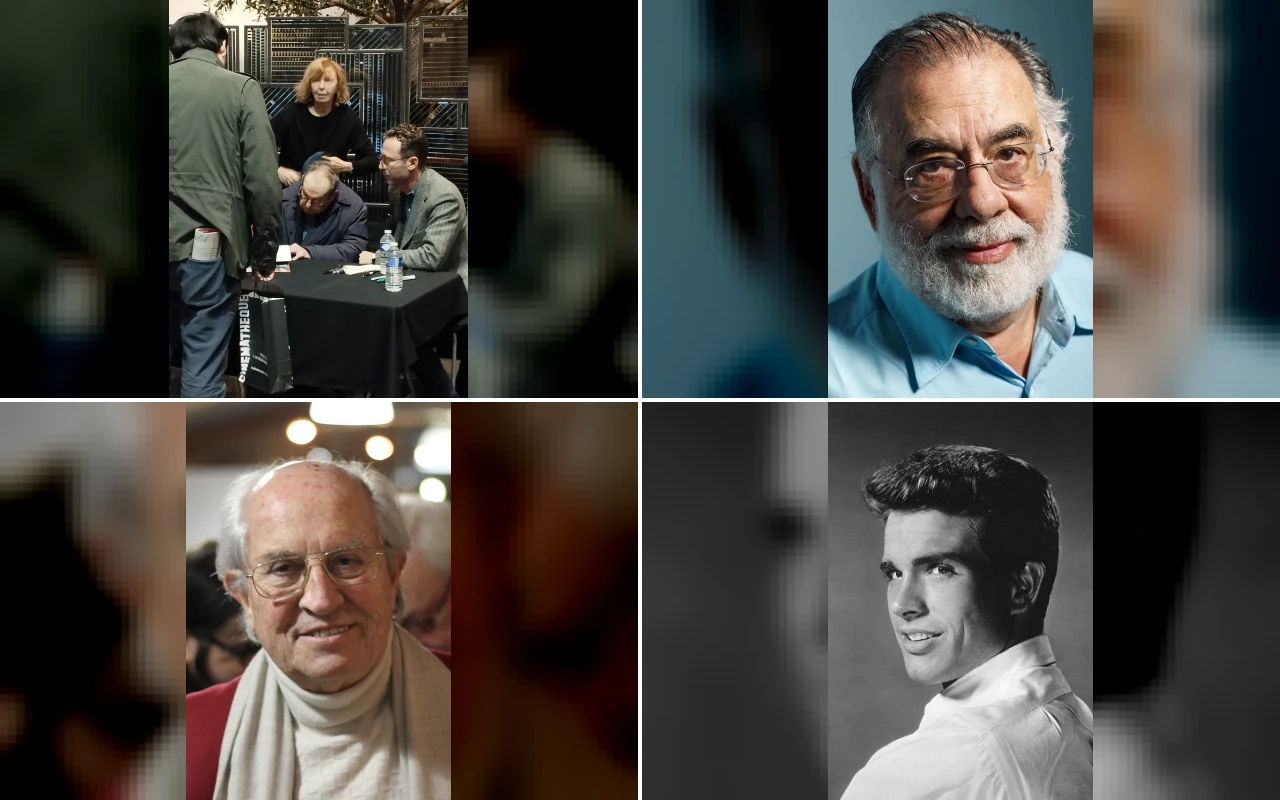
Our conversations, which extended over many hours and eventually formed the basis of a book, included insights not only from Dean but also from his celebrated collaborators such as Francis Ford Coppola, Warren Beatty, the cinematographer Vittorio Storaro, and costume designer Milena Canonero. All these artists held Dean in the highest regard for his transformative visual contributions.
Rather than reiterate the book’s content, I want to share reflections from our extended talks, which continued even after the book’s publication and up until just a few weeks ago.
When I first met Dean Tavoularis in 2020, he had recently relocated from his beautiful Hancock Park home to Paris with his wife, actress Aurore Clément, whom he met during the filming of Apocalypse Now. It was during this time that I proposed a brief interview for the French magazine So Film. Our talk lasted less than an hour, but it inspired me to pitch a book project to my publisher, David Frenkel, who agreed immediately. We began work the very next week.
Our many discussions took place in Dean’s converted artist studio, a tranquil ground-floor apartment in Paris’s quiet 17th arrondissement. This space became his creative haven after completing his last film project, Roman Polanski’s Carnage. Interestingly, the film’s setting—a Brooklyn condo—was meticulously recreated on a Paris soundstage under Dean’s supervision.
To illustrate Dean’s obsessive attention to detail, every piece of furniture on the Carnage set, down to the doorknobs, light fixtures, and electrical outlets, was shipped from the U.S. The appliances, designed for American electrical circuits, required Dean to have the entire set rewired to accommodate them. This painstaking effort was motivated by a single scene involving Jodie Foster’s character possibly using a hairdryer in the bathroom.
During our months of conversation, Dean would sit surrounded by his tools of the trade: tubes of paint, turpentine jars, brushes, canvases, rolls of masking tape used for collages, and often a bottle of scotch with a bucket of ice. “I’m living the dream I had in my teens: painting my days away in a studio in Paris,” he said between sips of whiskey, even in his late 80s.
When discussing his work, Dean chose his words with care. Every phrase mattered, reflecting his methodical approach to production design. He would develop a strong core idea and pursue it relentlessly until fully realized. This approach defined both his craft and his creative process.
Dean once explained, “The job is roughly 20% creativity and 80% logistics.” He emphasized that an idea is only as brilliant as its execution, which he considered the more challenging component. Yet it was Dean’s visionary concepts that shaped his legacy, alongside contemporaries like Richard Sylbert, known for Chinatown. Together, they were conceptual artists who revolutionized American cinema by shifting its visual language from studio-created illusions to street-level realism, marking a transition from old Hollywood to New Hollywood.
Recalling his early days as an assistant art director in the 1950s, Dean criticized the exaggerated and artificial look of classic studio sets. “I asked an art director why the décor was so beefed up, why everything looked so big and fake,” he recounted. He cited mouldings, which were much larger on sets than in real life. The reply was that smaller details wouldn’t register on camera, a justification Dean dismissed as “100% bullshit.” This anecdote illustrated the outdated mindset he sought to challenge.
When Warren Beatty and Arthur Penn hired Dean for his first production designer role (then credited as art director) on Bonnie and Clyde, Dean actively sought to dismantle the artificiality he had witnessed. To the frustration of Warner Bros. studio head Jack Warner, the film was shot entirely on location in Texas towns where the real-life criminals operated. Dean personally visited and photographed these locations, fulfilling the dual role of production designer and location scout.
For interior scenes, Dean designed spaces that felt authentic and lived-in. He deliberately chose low ceilings to create a sense of claustrophobia, reflecting the characters’ growing entrapment. The characters stayed in shabby hotels with small, confining rooms, crafting an atmosphere that resonated with the film’s themes.
Our conversations often took place with Dean pouring another glass of scotch, accompanied by a bag of Fritos—snacks he’d have visitors bring from the U.S., a habit that endured despite his Parisian surroundings. “Dean,” I’d say, “it’s only three in the afternoon. If I drink another whiskey, I won’t be able to work.” He’d grin slyly and reply after a pause, “How do you think we made all these movies we’re talking about?”
Beyond the humor and the drinks, I learned invaluable lessons from Dean about the art and craft of production design. Francis Ford Coppola once told me, “Everything that people see in a movie, as opposed to hear, comes from a collaboration with the production designer.” Over time, I came to appreciate how much Dean not only realized the visions of auteurs like Coppola—collaborating on 13 films together—but also infused his own artistic vision into every project.
This vision was realized through months of intense research, an unwavering commitment to detail, and a willingness to experiment with new ideas. Dean’s work was described by Coppola as creating “brilliant visual ideas of illusion,” blending realism and artistry in ways that left audiences captivated.
One particularly memorable example was the slow-motion explosion sequence in Michelangelo Antonioni’s Zabriskie Point, showcasing Dean’s flair for innovative visual storytelling. These experiments demonstrated his ability to push cinematic boundaries while remaining anchored in the narrative’s emotional core.
Dean Tavoularis’s legacy is one of a relentless pursuit of authenticity and artistry. His work reshaped the visual language of American cinema, bridging the gap between fantasy and reality, and setting new standards for production design. His influence continues to resonate, inspiring generations of filmmakers and designers who seek to marry meticulous craftsmanship with bold creative vision.
Reflecting on our time together, I am reminded of the rare gift it was to witness an artist at work, to hear stories from the frontlines of film history, and to understand the depth and dedication behind some of cinema’s most iconic imagery. Dean Tavoularis was not just a craftsman; he was a visionary whose art will endure.