Explore Michael Jackson's meteoric rise in this heartfelt biopic, focusing on his early career and artistry while sidestepping later controversies.
- April 22, 2026
AceShowbiz - Director Antoine Fuqua and screenwriter John Logan deliver Michael, a biographical drama that steers clear of controversy to explore the early career of pop icon Michael Jackson. While the film avoids addressing the child sexual abuse allegations that have long shadowed Jackson’s legacy, it offers an unexpectedly heartfelt glimpse into the artist’s rise from a child star to a global sensation.
The film deliberately focuses on Jackson’s beginnings, concluding with the 1988 Bad World Tour in London, well before any public accusations emerged. An epilogue card stating "His story continues" hints at possible future installments, though the current film’s approach suggests that even if a sequel is made, the more contentious aspects of Jackson’s life may remain unexamined.
Despite this sanitization, Michael taps into the melancholy beneath Jackson’s meteoric success, crafting a narrative that is more soulful than one might expect from a family-sanctioned biopic. The involvement of Jackson’s family likely influenced the film’s decision to highlight triumph over turmoil, delivering a story that celebrates his achievements rather than dwelling on scandal.
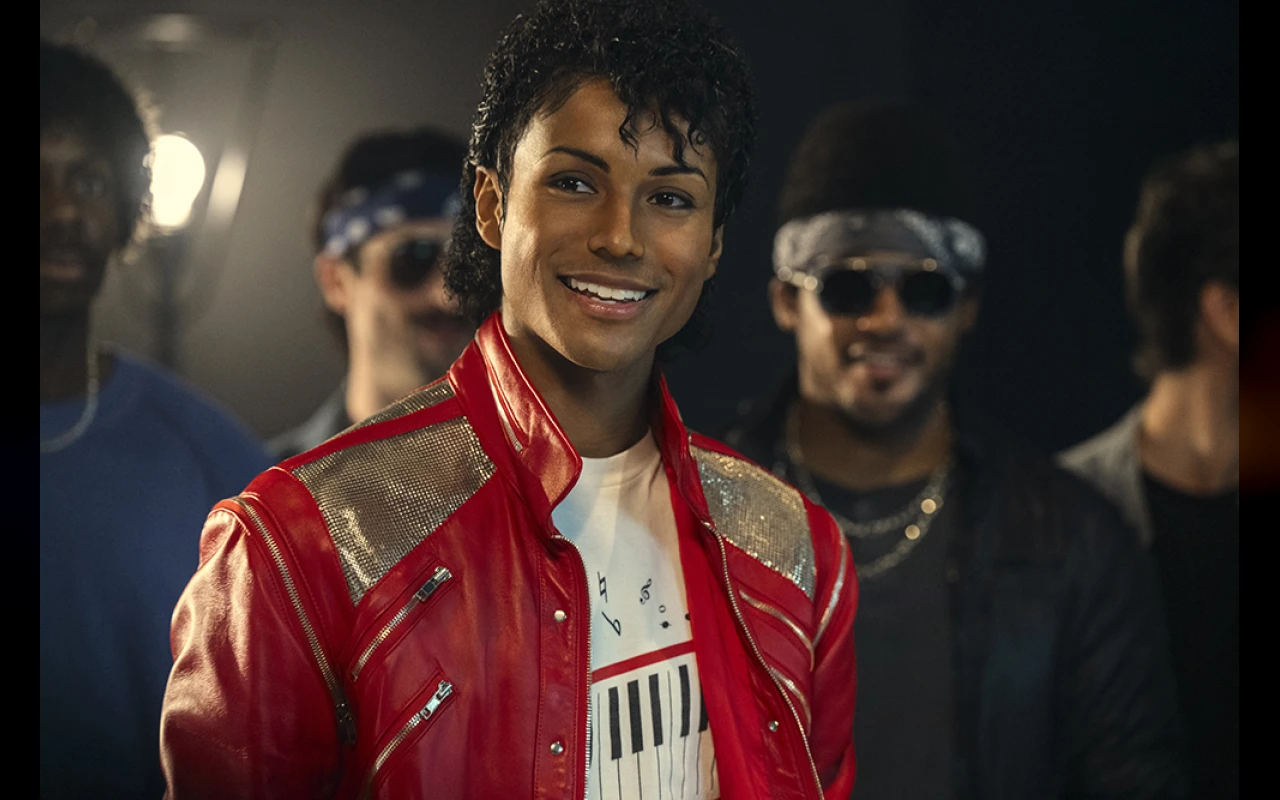
The film’s release on April 24 features an ensemble cast led by Jaafar Jackson, who is the son of Michael’s older brother Jermaine. Other notable performances come from Colman Domingo as Joe Jackson, Nia Long as Katherine Jackson, and appearances by Juliano Valdi, KeiLyn Durrel Jones, Laura Harrier, Jessica Sula, Miles Teller, Larenz Tate, and Kendrick Sampson.
Rated PG-13 and running for 2 hours and 9 minutes, the film targets fans eager to revisit the era when Jackson’s music dominated pop culture. From his days as the charismatic lead of the Jackson 5 to his solo superstardom with landmark albums produced by Quincy Jones—Off the Wall, Thriller, and Bad—the movie highlights the legendary streak that cemented Jackson’s place in music history.
For those influenced by the tabloid controversies or documentaries like HBO’s 2019 Leaving Neverland, Michael may not shift perceptions. However, for audiences nostalgic for Jackson’s ubiquitous presence on charts, dance floors, and radio waves, the film offers a warm, immersive experience that celebrates the artist’s impact.
The movie captures Jackson’s musical genius and clear vision from a young age, portraying his early years with the Jackson 5 through Juliano Valdi’s portrayal of a precocious and charming child star. His evolution into a solo artist with a keen sense for material, choreography, and innovative music videos is also explored, though not in exhaustive detail.
In a memorable cameo, Mike Myers plays CBS Records president Walter Yetnikoff, who famously threatened to pull major artists from MTV unless the channel played "Billie Jean" in regular rotation. This moment underscores Jackson’s groundbreaking role as the first Black artist to receive such exposure on the network.
While the film does not delve deeply into the development of Jackson’s iconic look, dance style, or songwriting process—as seen in works like Spike Lee’s 2012 documentary Bad 25—it does touch on creative inspirations. For instance, it shows Jackson drawing from a Vincent Price horror movie for the "Thriller" video and incorporating gang tensions seen on TV into "Beat It."
The standout aspect of the film is Jaafar Jackson’s performance, where he convincingly embodies his famous uncle. The filmmakers wisely retain the original vocals blended with Jaafar’s and Juliano Valdi’s singing voices, while Jaafar’s dance execution captures not only signature moves like the Moonwalk and Toe Stand but also the unique blend of fluidity and sharpness that defined Jackson’s stage presence.
Jaafar also channels the softer, more vulnerable side of Jackson, whose childlike innocence in public interactions contrasts with the intense focus and drive that propelled his career. The film shows his genuine warmth during fan meetings and hospital visits, highlighting a man who connected deeply with children.
The central conflict in Michael arises from the relationship between Jackson and his father, Joe Jackson, portrayed with formidable intensity by Colman Domingo. Joe is presented as a demanding and often harsh figure who pushes his sons relentlessly, sometimes resorting to physical punishment when Michael protests. Even after Michael’s solo success eclipsed that of his brothers, Joe’s controlling nature persists, insisting his son continue touring with the group despite his superstar status.
The film also emphasizes the stabilizing love of Michael’s mother, Katherine Jackson, played with emotional depth by Nia Long. Her role is portrayed with warmth and subtle strength, showing the toll exacted by her husband’s harshness and her efforts to protect Michael within the constraints of her marriage. Her heartbreak is palpable during a scene where medics inform Joe about Michael’s recovery from severe burns sustained in a Pepsi commercial accident, and he impatiently demands when the star can return to performing.
Michael concludes before exploring Jackson’s later life complexities, including his reclusion, eccentricities, multiple cosmetic surgeries—only the initial rhinoplasty is depicted—and the controversies that often overshadowed his legacy. Instead, the film paints a portrait of a man whose professional brilliance and gentle nature were in constant tension.
The movie touches on Jackson’s fascination with Peter Pan and Neverland Ranch, as well as his unusual collection of exotic animals like a llama, snake, giraffe, and Bubbles the chimpanzee, suggesting these quirks reflected a self-protective retreat into childhood. This infantilization may have roots in Motown chief Berry Gordy’s insistence that Jackson lower his official age from 10 to 8, reinforcing his special status and isolation.
From childhood, Jackson was told he was extraordinary, a message that seemingly hindered his ability to form peer friendships, leading him to describe his animals as companions. Among his few close friendships depicted is his bond with longtime bodyguard Bill Bray, played by KeiLyn Durrel Jones, who provides a steady presence in Michael’s often turbulent world.
Overall, Michael offers a respectful and intimate look at one of pop music’s most influential figures, emphasizing the artistry and personal struggles that shaped his early years. While it sidesteps the more controversial aspects of his life, the film succeeds in portraying the human side of a legend whose story continues to captivate fans worldwide.