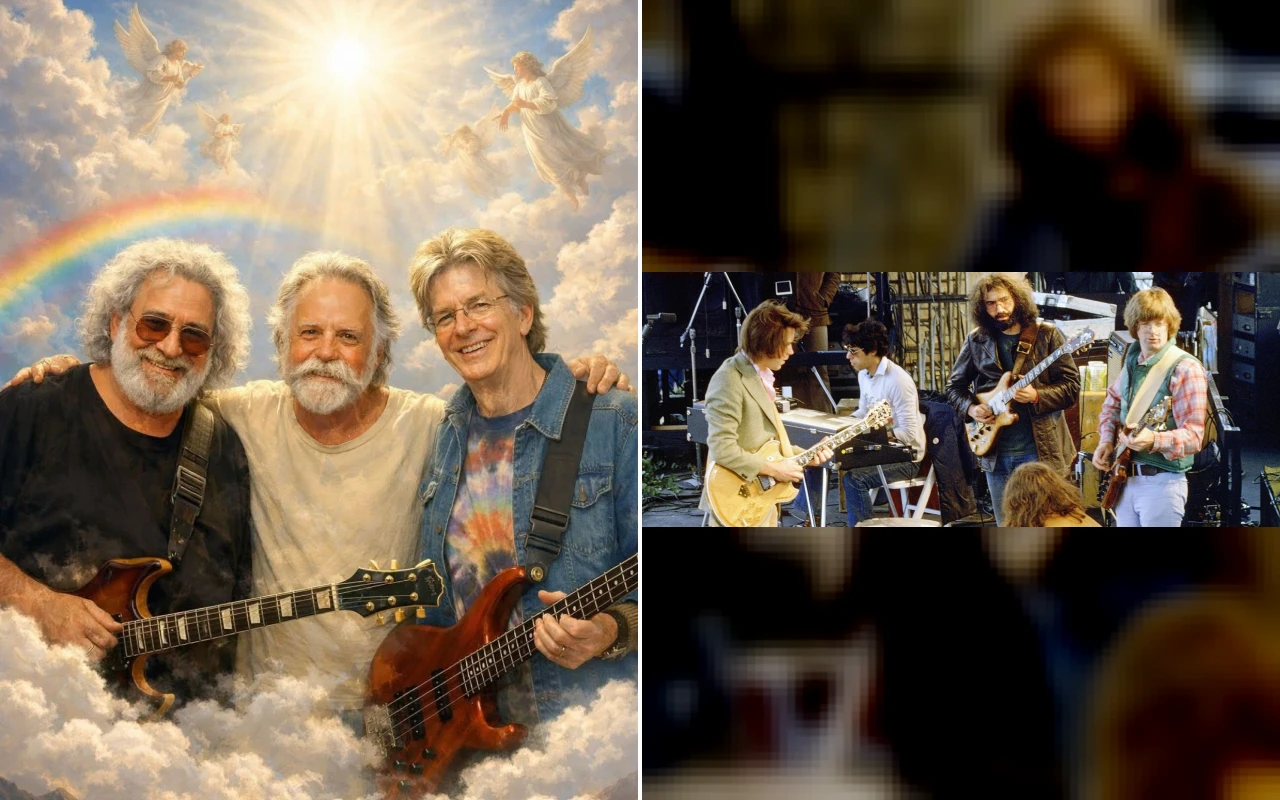
Explore the Deadhead journey from tape trading to streaming. Dive into Grateful Dead's legendary live vault with the new Play Dead app on nugs.
- April 19, 2026
AceShowbiz - For decades, fans of Grateful, affectionately known as Deadheads, have dedicated themselves to collecting live recordings from the band’s extensive 30-year career. Starting with tape-trading in the 1980s and evolving through the digital age of torrenting and file sharing, their passion for capturing the band's live sound has remained steadfast.
In the early 1990s, the band began officially releasing archival live recordings, a process that has grown substantially over time. This effort has helped Grateful Dead break chart records even decades after the passing of their iconic frontman, Jerry Garcia, and well beyond the band’s 60 years of existence.
Now, Grateful Dead fans have a new way to immerse themselves in the band’s legendary live performances. On Thursday, April 16, the live-music streaming platform nugs will introduce Play Dead, a dedicated app offering high-resolution streaming of the band’s vast vault of live recordings. Nugs is already known for hosting archival recordings from artists such as Bruce Springsteen, Phish, and Pearl Jam.
Authorized by Grateful Dead Productions and developed alongside Rhino Entertainment—which has held exclusive rights to the band’s intellectual property since 2006—Play Dead will provide streaming access to all archival releases previously issued by the band. This includes approximately 300 concerts, many of which were previously available only as physical releases, such as the 58-volume quarterly series Dave's Picks, launched in 2012.
The subscription pricing for Play Dead will be set at $9.99 per month or $99.99 annually. The service will also offer special pricing for current nugs subscribers and new users interested in bundling both platforms.
Rhino’s ongoing physical release schedule for Grateful Dead recordings will continue without interruption, with every new release also made available on Play Dead. In addition, the app will offer two brand-new vault releases every week indefinitely, exponentially increasing the amount of archival material accessible to Deadheads. To mark the launch, 20 previously unreleased vault recordings will be made available immediately on the platform.
Brad Serling, the founder and CEO of nugs and a longtime Deadhead himself, described the project as a lifelong mission. “This is my life’s work,” he said. “I was born to do this. So here we are—it’s finally happening.”
Serling’s relationship with the band on this kind of project dates back to 2000, when the Grateful Dead hired him to develop a digital distribution plan called Project Bandwagon. It was an ambitious, early-Internet-era idea to create an online platform for music distribution, merchandise, and ticket sales for bands including the Dead, Dave Matthews Band, Phish, and Pearl Jam. At the time, without subscription apps, smartphones, or social media, the band even considered selling hard drives preloaded with concert recordings. Serling called the project “a very pie-in-the-sky, very 2000, dotcom-era idea.”
Though Project Bandwagon did not come to fruition, the concept planted a seed. Over the next two decades, as the Grateful Dead’s business operations evolved, Serling frequently discussed digitizing the band’s vault with key players such as Rhino Entertainment president Mark Pinkus and the band’s legacy manager and audio archivist David Lemieux. In January 2020, during Dead & Company’s Mexican destination festival Playing In The Sand, Serling and Pinkus began drafting the framework for what would become Play Dead.
When asked why the project took so long to launch, Serling explained that it involves “the largest tape transfer project in the history of rock and roll, as far as I know, at least for any single band.” The Grateful Dead vault contains thousands of tapes—including multitracks, reel-to-reels, and DATs—with some shows having between two and a dozen different tape sources. Each tape requires meticulous digitization and restoration.
A decade ago, nugs partnered with Sonicraft to digitize Bruce Springsteen’s archives, but the Dead project is significantly more complex and time-intensive. “We thought we were going to be ready to launch it prior to the 60th [anniversary] shows,” said Pinkus, referencing the Dead & Company concerts scheduled for August 2025 in Golden Gate Park celebrating the band’s 60 years. “As with most things in life, it takes a while to do them right.”
Play Dead aims to provide a listening experience that far surpasses what fans can find on the internet or via bootleg recordings. While countless unauthorized recordings of the band’s more than 2,300 concerts exist, the platform follows the band’s archival philosophy of using expert mastering techniques to deliver audio quality superior to anything available unofficially.
David Lemieux emphasized the care taken with the audio quality, stating, “This is not, ‘Let’s do quick transfers and spit them out.’” He assured fans that the fidelity is “really unlike anything you’ve heard.”
In fact, Play Dead will even raise the bar on audio quality compared to previous archival releases. The service requires a minimum audio quality of 24-bit, 48kHz, which exceeds the fidelity possible on a standard CD. Moreover, the team, led by mastering expert David Glasser, is revisiting earlier archival releases to optimize them for streaming, ensuring that even longtime listeners who have worn out their CD copies of Dave’s Picks will notice improved sound quality on Play Dead.
Mark Pinkus highlighted the difference in presentation, saying, “The music’s all over the place on the internet, but it’s not in good enough quality, and it’s not presented in a thoughtful way. Play Dead is going to give it to you in high-res, sounding better than you’ll find it anywhere on the internet, and it’s going to be in a logical, thoughtful, fun way to listen to and interact with.”
Beyond high-resolution audio, the platform offers several features designed to enhance user experience. Fans will be able to create and share playlists and enjoy curated selections from Lemieux and other respected Deadheads. The app’s interface is designed to make navigating the vast catalog of recordings manageable and enjoyable.
Play Dead will also support offline listening and dynamically adjust bit rates and sample rates to accommodate available bandwidth, ensuring uninterrupted playback.
Pinkus said the app will provide “a completely different experience than the joy that one gets from these physical releases,” signaling a new chapter in how fans consume the band’s extensive live archive.
For those accustomed to the band’s traditional physical releases and the collection of live recordings available on mainstream streaming platforms like Apple Music and Spotify, there is no need to worry. “Play Dead will be additive,” Pinkus assured. The band’s physical releases will continue as usual, and their music will remain available across other streaming services. However, Pinkus emphasized that no other platform will match the superior audio fidelity that Play Dead offers.
With the Grateful Dead entering their 60th year and continuing to captivate audiences, Play Dead promises to be an invaluable resource for fans eager to explore the band’s legendary live performances in unprecedented quality and convenience.