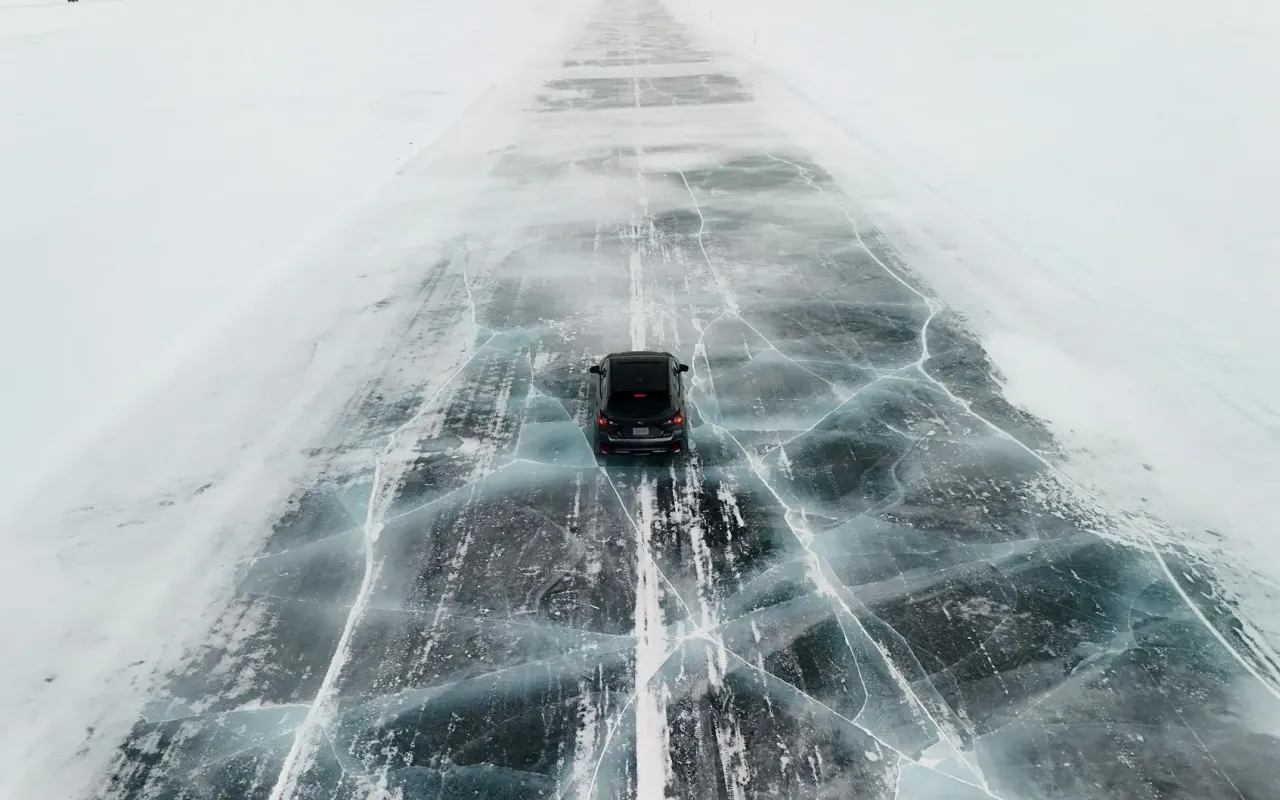
Your instinct is wrong. Learn the counterintuitive moves that can save you from a skid on an icy road, explained clearly without the jargon.
- April 12, 2026
That Heart-Dropping Moment: You're Skidding
You're driving home, the road looks a little wet, and you're being careful. Then you touch the brakes for a gentle curve or a slight change in speed, and suddenly the steering wheel feels light. The back of the car starts to swing out, or the front tires seem to ignore your commands entirely. Your stomach lurches, and every muscle tenses. This isn't just a scare; it's a complete loss of control, and what you do in the next two seconds matters more than anything you did in the hour before.
Most drivers will experience a skid at some point, especially in regions with winter weather. The terrifying truth is that our natural instincts—to slam on the brakes and jerk the wheel—are precisely what will make the situation worse. This article isn't about generic "be careful" advice. It's a clear, actionable breakdown of the physics and techniques you need to regain control when your car decides to go its own way on ice.
We'll move beyond the oversimplified "steer into the skid" mantra and explain exactly what that means for different types of skids, what your feet should be doing (hint: it's probably not braking), and how to practice these skills safely. Because when that moment comes, you won't have time to think. You need to have trained your reactions.
Why Your Car Skids: Losing the Grip Battle
Before we can fix a skid, we need to understand why it happens. It all comes down to traction, or more specifically, the loss of it. Your tires can only do so many things at once. Engineers call this the "traction circle" or "friction circle." Imagine a small, finite amount of grip available. That grip can be used for accelerating, braking, or cornering. When you demand more than what's available—like braking hard while turning—you exceed the limit and the tires start to slide.
On ice, this available grip is dramatically reduced. Black ice, in particular, is a nightmare because it offers virtually no texture for the tire rubber to bite into. A skid occurs when the forces you're asking from the tires (through steering, braking, or acceleration) overcome the friction between the tire and the road surface. It's not magic or bad luck; it's simple physics.
The type of skid you experience depends on which tires lose grip first. This is crucial because the recovery technique differs. A front-wheel skid (understeer) happens when the front tires lose grip. You turn the wheel, but the car plows straight ahead. A rear-wheel skid (oversteer) is when the back tires lose grip, causing the tail to swing out. Most modern front-wheel-drive cars are prone to understeer, while rear-wheel-drive vehicles can more easily oversteer, especially under acceleration.
Understanding this sets the stage for effective recovery. You're not just randomly sliding; you're managing a specific failure of grip at a specific axle. Your job is to reduce the demand on those overloaded tires to let them regain traction.
The Universal First Step: Stay Calm and Look Where You Want to Go
This sounds like a platitude, but it's the most critical and difficult skill. Panic triggers a flood of adrenaline, which sharpens some senses but destroys fine motor control. Your natural reaction will be a white-knuckle grip on the wheel and a stomp on the brake pedal. You must fight this. Take a sharp, quick breath. Acknowledge the skid, and consciously tell yourself to relax your death grip on the wheel.
More important than your hands are your eyes. Your body has a powerful tendency to steer where you look. In a skid, you'll be tempted to stare at the ditch, the guardrail, or the oncoming car you're terrified of hitting. This is a guaranteed way to drive directly into that obstacle. You must force your eyes to look at the path you want the car to travel—the open lane, the clear space, your intended direction of travel.
This is called "target fixation" avoidance. By looking at your escape route, you subconsciously make smaller, more corrective steering inputs. Your hands will follow your eyes. Practice this even in non-emergencies: when changing lanes, look at the lane, not the car next to you. Building this habit makes it more likely to kick in during a crisis.
Your immediate physical action should be to smoothly and quickly lift off everything. This means take your foot completely off the accelerator and, critically, off the brake pedal if you're on it. You need to momentarily "unload" the tires to stop them from sliding and allow them to start rolling again. Rolling tires can regain grip; locked, sliding tires cannot.
What Your Feet Should Do (The Pedal Dance)
For decades, drivers were taught to "pump the brakes" to avoid locking wheels. This is outdated advice for most modern cars equipped with Anti-lock Braking Systems (ABS). Here's the modern rule: If your car has ABS (almost every car from the last 25 years does), you should apply firm, steady pressure on the brake pedal in a straight-line skid or if you need to stop. You will feel and hear a grinding, pulsating sensation—this is the system working. Do not pump; hold it down and let the computer modulate the brakes for you.
If you do not have ABS, the threshold braking technique is required. This means applying brake pressure right up to the point just before the wheels lock, then easing off slightly if you feel them lock, and reapplying. It's a delicate balance that is very difficult to achieve in a panic on ice, which is why ABS is such a vital safety feature.
In a cornering skid, however, braking is usually the wrong initial move. Braking shifts weight forward, which can unload the rear tires further (worsening an oversteer skid) or overload the front tires (worsening an understeer skid). Your first pedal action should always be to come smoothly off both the gas and brake to let the car settle.
Taming the Specific Beast: Front-Wheel vs. Rear-Wheel Skids
Now let's get specific. A generic "steer into the skid" instruction can be confusing. Let's break it down by skid type so you know exactly what to do with your hands.
Fixing Understeer (Front-Wheel Skid)
You're turning the wheel, but the car is stubbornly continuing straight toward the outside of the curve. This is understeer. Your front tires are sliding. The instinct is to turn the wheel even more sharply. This does nothing but increase the slide.
The correction is counterintuitive. You must gently reduce the steering angle. Ease off the wheel you've turned in. This reduces the lateral demand on the front tires. Simultaneously, lift off the accelerator smoothly. As the front tires slow their sliding and start to roll again, they will regain grip. Once you feel the steering "bite" and the car begin to respond, you can then gently re-apply steering input to guide the car back on your intended path.
Think of it as "unwinding" the wheel to match what the tires can actually handle. It feels like giving up on the turn, but it's the only way to get the front end back under control.
Correcting Oversteer (Rear-Wheel Skid)
The back of the car is stepping out to the left or right. This is oversteer. This is where "steer into the skid" applies most clearly. If the tail is swinging out to the right (you're facing left), you need to steer smoothly and promptly to the right—the same direction the back is going.
The goal is to "catch" the skid by pointing your front wheels in the direction of the slide. This aligns the car's chassis and allows all four wheels to start rolling in the same direction again, which is the precondition for regaining traction. It's a quick, purposeful steering input, not a frantic jerk. Once the car begins to straighten out, you must be ready to counter-steer back the other way to prevent the car from fishtailing in the opposite direction.
For front-wheel-drive cars, a very slight, gentle application of throttle once you've steered into the skid can sometimes help pull the car straight. For rear-wheel drive, keep off the throttle until the car is fully settled.
Beyond the Reaction: How to Prepare and Practice
Knowing these techniques intellectually is one thing. Having them as muscle memory is another. When your amygdala (the brain's fear center) takes over, it bypasses rational thought. You will default to your deepest habits. That's why you need to build the right habits before you need them.
The safest way to practice is in a controlled, empty environment. A vast, empty, snow-covered parking lot with no light poles or curbs is ideal. With permission and ensuring absolute safety, you can intentionally induce a mild skid at very low speed (10-15 mph) to feel what it's like. Practice lifting off the pedals and making the steering corrections. Feel how the car responds. The goal is to make the correct reaction feel familiar, not foreign.
Another key part of preparation is your car itself. Tires are the single most important factor for winter safety. All-season tires harden and lose grip below 45°F. Dedicated winter tires (marked with a mountain/snowflake symbol) are made from a softer compound that stays pliable in the cold and has deep, aggressive tread patterns to bite into snow and slush. They don't just help you go; they dramatically improve braking and cornering grip on ice and cold pavement.
Before winter hits, do a pre-season check. Ensure your tires have adequate tread depth (5/32" is the minimum recommended for winter). Check that all exterior lights work. Top up your windshield washer fluid with a winter-grade formula that won't freeze. These aren't just chores; they are your first and most effective line of defense against ever entering a skid.
The Mindset of Winter Driving: Prevention is Everything
The ultimate skill in handling a skid is avoiding one altogether. This requires a complete shift in your driving mindset when temperatures drop. On ice and snow, you must drive as if you have no brakes and no ability to turn quickly. Everything needs to be done with glacial slowness and immense foresight.
Increase your following distance to at least 8-10 seconds behind the car in front of you, instead of the normal 3-4. This gives you a colossal buffer to slow down gradually without sudden braking. Look far ahead down the road for brake lights, intersections, or curves, and begin your speed reduction early by simply lifting off the gas. Engine braking is your friend.
Make all inputs—steering, accelerating, braking—incredibly smooth and gradual. Jerky motions are what break traction. Imagine there's a cup of hot coffee on your dashboard that you must not spill. This visual forces the smoothness required. Plan your lane changes and turns well in advance, and execute them with minimal steering input.
Finally, if the weather is truly terrible, ask yourself the hard question: Is this trip necessary? The best way to handle a skid on an icy road is to be warm and safe at home, waiting for the plows and salt trucks to do their work. No appointment or errand is worth the risk if conditions are beyond your comfort or your vehicle's capability. Empowerment comes not just from knowing how to react, but from having the wisdom to avoid the danger entirely.