Pixar's Hoppers lets minds inhabit animals. A fun, self-aware adventure for kids about saving nature with Avatar-like tech.
- April 11, 2026
AceShowbiz - Hoppers introduces a fresh but familiar concept: a technology enabling humans to mentally inhabit animal bodies, echoing themes popularized by Avatar. The film’s creators wryly acknowledge this similarity, serving as a rare moment of self-aware humor from the powerhouse Pixar studio, which once led the animation world with groundbreaking originality. While Hoppers doesn’t quite reach those lofty heights, it remains an engaging, modestly entertaining movie that will capture young audiences’ attention.
The story centers on Mabel Tanaka (voiced by Piper Curda), a passionate animal lover who is determined to halt a beltway development threatening the peaceful glade she cherishes. Upon discovering that the local wildlife has vanished — beginning with the beavers — Mabel learns about the secretive "Hopper" technology developed by researchers at her university. This innovation allows her to merge her consciousness with a robotic beaver, granting her access to the animal world.
The premise might seem a bit unwieldy at first, compounded by Mabel’s confrontations with the slick, self-serving Mayor Jerry Generazzo (voiced by Jon Hamm), who supports the controversial development to boost his reelection campaign. However, director Daniel Chong and screenwriter Jesse Andrews handle the narrative with a light touch, making the story flow smoothly. The familiarity of the concept thanks to Avatar also helps audiences acclimate quickly to the “Hopper” idea.
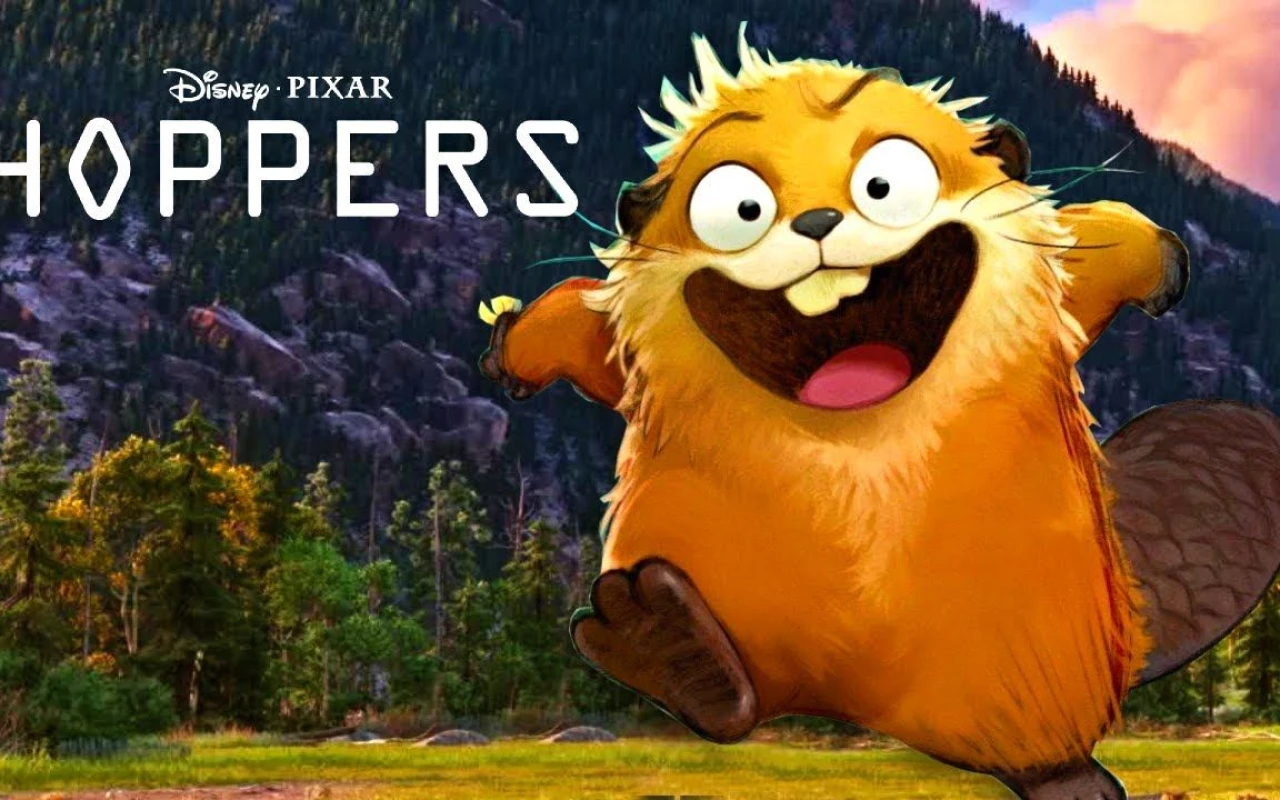
Once the film shifts focus to Mabel’s adventures as an animal, it gains momentum. She encounters King George (voiced by Bobby Moynihan), the benevolent beaver king who has gathered the remaining animals into an overcrowded dam. Through this, viewers learn the “pond rules” that govern the animal kingdom—such as Rule No. 2: “When you’ve got to eat, eat,” a wry nod to the harsh realities of nature. As Mabel delves deeper, she uncovers the sinister reason behind the wildlife’s disappearance, which is tied closely to Mayor Jerry’s schemes.
While Hoppers begins as a tale about environmental destruction, it gradually explores the consequences of activism and extremism. Mabel’s well-intentioned interference unintentionally destabilizes the animal factions, who then fall under the influence of a deranged insect voiced by Dave Franco. Though this plot development hints at dramatic conflict, it serves primarily as a vehicle for slapstick, Looney Tunes-style humor. One standout sequence involves a chaotic car chase featuring a giant flying shark (voiced by Vanessa Bayer) carried by a flock of birds, adding a surreal and playful touch.
The film’s most compelling concept is how it portrays communication across species. When Mabel inhabits her animal form, the creatures’ faces animate with expressive, anthropomorphic emotion, fostering empathy and connection. Yet, in her human form, the animals’ faces become blank and their sounds unintelligible, underscoring the barriers language creates in understanding others. The animation skillfully conveys this contrast, highlighting how language limits our ability to truly care for and comprehend other species. However, as a family movie backed by Disney, the animals remain irresistibly cute in both forms, balancing the message with commercial appeal.
This intriguing idea, though, feels underdeveloped. King George is the only character whose personality shines through vividly enough for the emotional contrast to have significant impact. The rest of the animal cast lacks the distinctive characterizations seen in other recent films with similar themes, such as the 2024 release The Wild Robot, which brought an entire forest of creatures to life with unique identities. Comparisons to Pixar classics like A Bug’s Life and Finding Nemo further illuminate how Hoppers falls short of the studio’s previous storytelling depth and creativity.
Nonetheless, Hoppers remains a lively and charming movie that children will enjoy, even if it doesn’t quite recapture the groundbreaking spirit once associated with Pixar. The film’s modest ambitions and playful tone reflect a studio aware of its current creative limits but still capable of delivering entertaining and heartfelt stories. For longtime fans, it may serve as a bittersweet reminder of Pixar’s evolving journey in animation, illustrating the challenges of sustaining innovation over decades.
In summary, Hoppers offers a fun, accessible story with enough humor and heart to engage young viewers. It touches on important themes like environmental conservation and communication barriers between species, though it stops short of exploring them fully. As a result, the movie stands as a testament to Pixar’s enduring charm even as it navigates a period of creative transition.