Sean Penn's Kubrickian performance as Colonel Lockjaw could win him the Oscar. Discover the key scene echoing Barry Lyndon.
- April 10, 2026
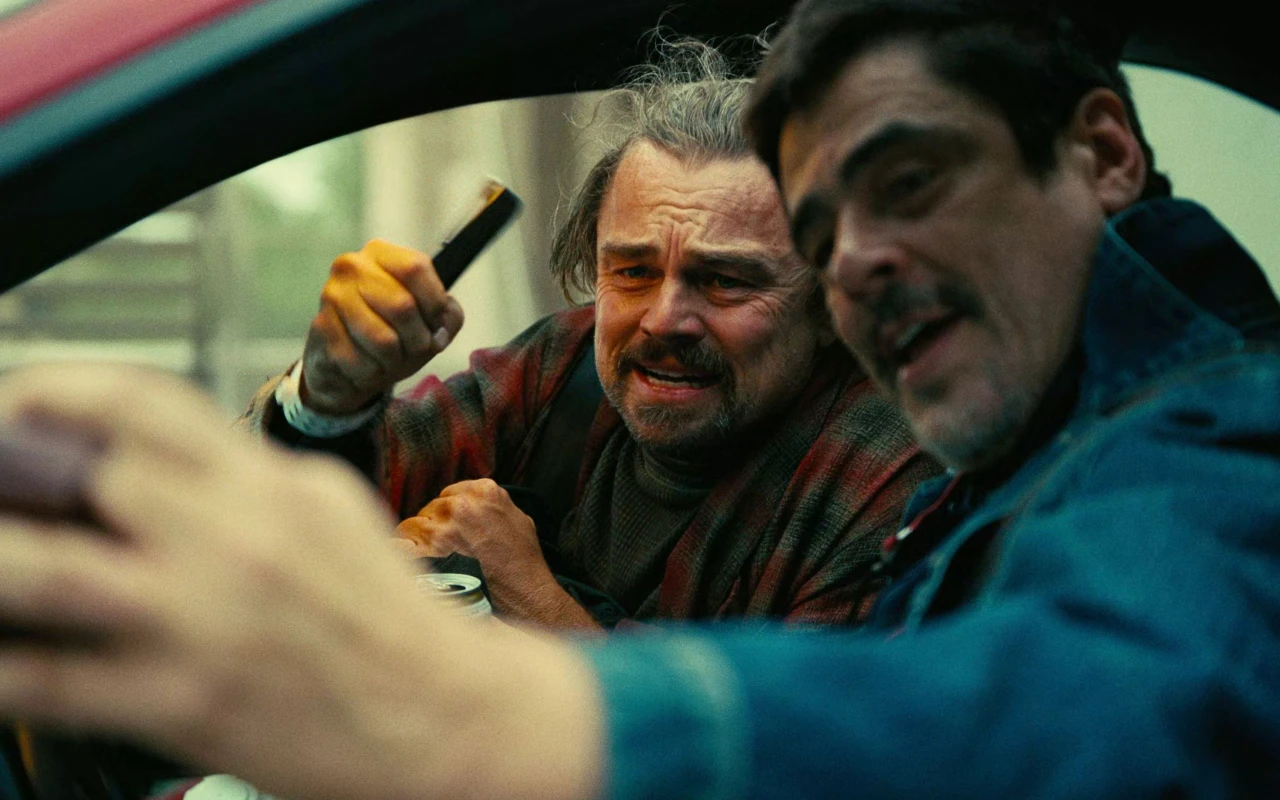
AceShowbiz - One Battle After Another features Sean Penn delivering a performance as the cartoonishly villainous Colonel Steven J. Lockjaw that echoes the distinct style of legendary director Stanley Kubrick. This Kubrickian influence might be a key factor in Penn’s potential to clinch an Oscar for Best Supporting Actor this year.
One of the film’s most striking moments is a speech delivered to Sean Penn’s character, Lockjaw, by another figure in the story about the exclusive Christmas Adventurers Club. The speech emphasizes superiority, not in intelligence or sophistication, but in a vague sense of being “superior to other human beings” with promises of wealth and friendship. The tone and delivery strongly recall a similarly crafted speech from Kubrick’s Barry Lyndon, where Lord Wendover describes his protective role over Redmond Barry. Wendover’s assurance that his friends are unquestionably the “best people” resonates with the manner in which the Christmas Adventurers’ rhetoric is delivered.
Lockjaw’s confrontational outburst later in the film, where he screams at Willa Ferguson, a character played by Chase Infiniti, further channels Kubrick’s cinematic style. The blend of desperation, entitlement, and a clash between professional and personal duties echoes the famous rage of Jack Torrance (Jack Nicholson) toward Wendy (Shelley Duvall) in Kubrick’s The Shining. The shrill, intense delivery captures the same psychotic energy that made Jack Torrance unforgettable, underscoring Lockjaw’s unraveling psyche.
Sean Penn’s Lockjaw even echoes the paranoia and obsession with purity found in Kubrick’s Dr. Strangelove. Lockjaw’s explanation of how he was drugged and taken advantage of during an intimate encounter mirrors the character Colonel Jack D. Ripper’s theory about losing “essence” after sex. The way Lockjaw speaks about his power being drained is a direct thematic nod to Ripper’s fixation on purity and vulnerability to deception.
This strong Kubrickian vibe is reinforced by director Paul Thomas Anderson’s visual and narrative choices. Anderson frames Lockjaw centrally, often using symmetrical shots that recall Kubrick’s meticulous compositions. The camera’s fluid tracking of Lockjaw’s movements signals his dominance, contrasting with the more chaotic camera work following Leonardo DiCaprio’s character, Bob Ferguson. The settings—wood-paneled rooms, antiseptic domestic spaces, and sterile office environments—evoke the unsettling atmospheres of Kubrick’s Eyes Wide Shut and The Shining. The final scenes, where Lockjaw meets his quiet demise, visually recall the eeriness of the Overlook Hotel’s early sequences.
Early in his career, Anderson faced criticism for being derivative, accused of borrowing heavily from masters like Scorsese, Altman, Demme, and especially Kubrick. While those critiques were shortsighted, it is true that Anderson’s cinephilia informs his work. Over time, he has refined his homages into clearer, more integrated references. The Kubrickian elements in One Battle After Another focus mainly on Lockjaw’s story, which is fitting given Kubrick’s fascination with how power structures can mask underlying violence and moral corruption.
Kubrick’s films often feature characters discussing horrific acts with unsettling calmness and rationality. This theme is evident in One Battle After Another, where polite conversations mask cruelty and destruction. Whether it’s a speech calculating nuclear megadeaths in Dr. Strangelove or the cold praise of a marksman in Full Metal Jacket, Kubrick’s outrage at normalized violence permeates the narrative, and Lockjaw fits comfortably within this tradition.
Lockjaw embodies the archetype of the institutionally empowered madman, a figure driven to ascend social and military ranks while desperately trying to secure acceptance among an elite class. His transformation from a macho military officer to a servile follower of wealthy business owners reflects the fascist undertones often explored by Kubrick. This tension humanizes Lockjaw, making him more than a mere cartoon villain. His aspirations to join the Christmas Adventurers, enjoy their camaraderie, and claim a place of honor demonstrate a genuine yearning for belonging.
However, Lockjaw’s ambitions are doomed from the start, a common Kubrickian motif where the very forces that promise success ultimately ensure downfall. His pursuit of a peerage, symbolized by the coveted French 75 cocktail and the Christmas Adventurers’ club, leads to his tragic end. His relentless chase of the Ferguson family leads to his destruction by the same establishment he sought to join, illustrating the double-edged nature of power and ambition.
This layered, Kubrick-inspired characterization makes Penn’s role one of the most compelling in a year filled with exceptional performances. The Best Supporting Actor category at the upcoming Oscars is highly competitive, featuring notable contenders such as Benicio del Toro, Delroy Lindo, Stellan Skarsgård, and Jacob Elordi. Unlike many years, this roster is remarkably strong, with no clear weak link.
Sean Penn’s portrayal of Lockjaw stands out for its deliberate exaggeration and theatricality, which might seem out of place in a film otherwise grounded in realism. Yet this over-the-top approach is intentional, as Anderson constructs a Kubrickian mini-world around Lockjaw. The character’s tight clothing, bombastic speeches, and erratic behavior create a caricature that fits perfectly within the film’s thematic framework.
Ultimately, One Battle After Another is both a tribute and a reinterpretation of Kubrick’s legacy, filtered through Anderson’s unique cinematic voice. For Penn, this means that if he does take home the Oscar, he will owe a debt to the visionary filmmaker whose influence shaped his character’s essence. The Kubrickian spirit—marked by meticulous composition, psychological complexity, and a dark view of power—infuses Penn’s performance, making it a standout in this awards season.
As the Oscar race continues, audiences and critics alike are invited to appreciate the nuanced homage embedded within Sean Penn’s character. Paul Thomas Anderson’s film not only entertains but also challenges viewers to recognize the deep cinematic lineage that informs contemporary storytelling. Whether or not Sean Penn wins, his portrayal of Lockjaw remains a testament to the enduring impact of Stanley Kubrick’s artistry on modern cinema.