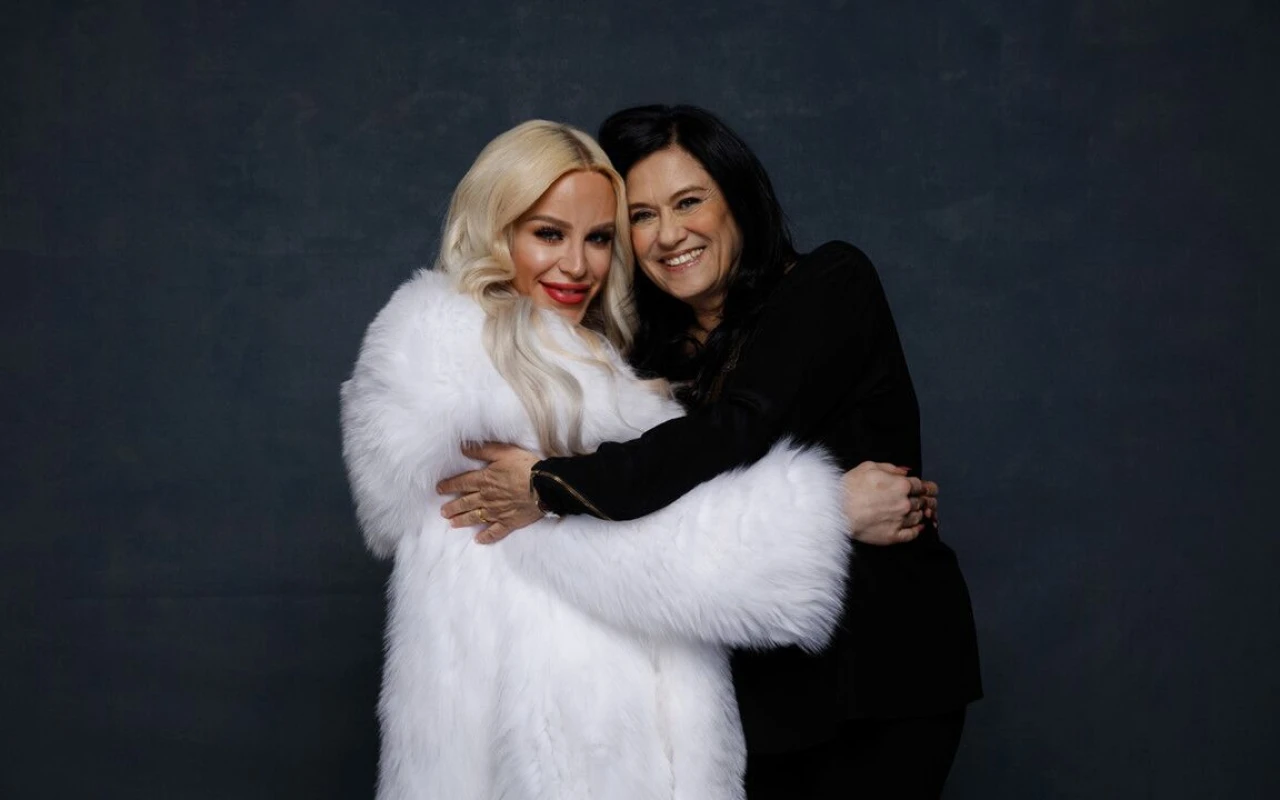
Academy Award-winning filmmaker Barbara Kopple captures the raw struggles of American labor, from the coal mines of Kentucky to the meatpacking plants of Min...
- April 9, 2026
AceShowbiz - Barbara Kopple has built a formidable reputation for capturing the raw realities of labor movements in America, and she is far from finished exploring this vital subject. Known for her groundbreaking documentaries like Harlan County, USA (1976) and American Dream (1990), Kopple’s work has consistently highlighted the struggles of workers fighting for dignity and fair treatment.
Her debut film, Harlan County, USA, chronicled a 13-month strike by coal miners in Kentucky against the Eastover Mining Company. The documentary showed intense scenes, including armed confrontations and violent clashes between miners and management. This film earned her an Academy Award for Best Documentary and set a high standard for labor filmmaking. Years later, she again won the Oscar for American Dream, which depicted the failed 1985-1986 strike by meatpacking workers at a Minnesota Hormel Foods plant, capturing the union’s fracture and the workers’ hardship.
Now, since 2023, Kopple has turned her lens to New York City, weaving together three interconnected labor stories involving delivery workers from major companies such as Amazon, UPS, and food-delivery apps. Her new film focuses on these workers’ ongoing battles for better wages and safer working conditions. Some of these delivery workers are unionized—for example, UPS drivers and part-time loaders belong to the Teamsters, who are also organizing Amazon workers—while others, like the “deliveristas” working through apps, often lack any union representation.
“These are three stories that are New York. It’s not Kentucky, it’s not Minnesota, it’s New York,” Kopple explained in a recent interview ahead of receiving the Sebastopol Documentary Film Festival’s Lens of Power Tribute award on April 9. She also noted the upcoming nationwide release of a new 4K restoration of American Dream by Janus Films on May 1. “And I just wanted to see what was happening, really, with modern-day unionism.”
Her ongoing observations have been eye-opening. Even for someone seasoned in documenting difficult workplaces, Kopple finds the current conditions deeply troubling. She emphasizes the dangers inherent in warehouse work, where falling packages pose serious risks. At Amazon, she describes a workplace culture that implicitly demands workers to “get fired [or] get hurt, keep going.” UPS workers face relentless pressure to increase their pace, often at great physical cost. Employees who request time off for hospital visits are sometimes forced to choose between their job and their family’s health.
Kopple expressed encouragement that the New York City Council passed a 2025 law requiring apps like DoorDash and Uber Eats to provide delivery workers with reasons for deactivation and a chance to appeal. Previously, workers could be terminated arbitrarily—for example, if a liquor store canceled an order, the delivery person might be fired without recourse, left only to “listening to robots on the telephone” to plead their case. This legislation marks a small but meaningful step toward protecting gig workers.
True to her signature style, Kopple employs a cinema verité approach, embedding herself with workers and union organizers to capture authentic, unstaged moments. However, she notes that gaining trust and access is more challenging now than during her earlier projects in Kentucky and Minnesota. The high cost of living in New York makes workers more fearful of losing their jobs, causing them to be less open. “You just really have to be there and struggle to really understand,” Kopple explained. “Even if you’ve been there two years, it’s still hard. You would never want to be a person responsible for getting somebody to lose their job.”
The political climate has also influenced her project. Filming and editing are taking place during the administration of former President Donald Trump, whose White House took a more antagonistic stance toward labor compared to his predecessor, President Joe Biden. In 2025, the Trump administration canceled many National Endowment for the Arts and National Endowment for the Humanities grants, which had been vital sources of support for documentary filmmakers like Kopple. This move has created unease among independent foundations that previously supported such films, discouraging open advocacy.
“They’re scaring the foundations that could help. People are afraid to speak out, to say anything,” Kopple said. “So we’re on our own.” To keep her current project alive, she has relied on funding from individuals who believe in her work. This challenge is not new to her; during the making of American Dream, she partially financed the film by soliciting donations from Catholic groups inspired by a pastoral letter addressing economic crises, plant closings, and wage concessions. “What we were doing fit right in,” she said in a 1992 interview with BOMB magazine.
Distribution presents another obstacle. A recent documentary about a Staten Island Amazon warehouse union drive, titled Union (2024), faced difficulties finding a distributor despite critical acclaim. Its filmmakers, Brett Story and Stephen Maing, ended up self-distributing after some distributors admitted fearing repercussions due to their working relationships with Amazon Studios. Kopple is aware of these challenges but remains determined. “I’m going to do whatever I have to do for distribution,” she said.
Despite the hurdles, Kopple is enthusiastic about returning to the labor beat. She stresses the importance of continuing to tell these stories, especially during what she calls an “anti-union time.” Remaining silent, she believes, would be far worse. “You just have to be out there making films, singing songs, writing pieces that penetrate people’s hearts and souls and continue on,” she said. Her commitment to capturing the voices of workers today reflects a long-standing dedication to labor rights and documentary filmmaking.