Discover the uplifting story of rock critic Robert Christgau in 'The Last Critic.' A celebration of his six-decade career and the enduring power of sharp, wi...
- March 27, 2026
AceShowbiz - When assigned to review a documentary titled The Last Critic, one might expect a bleak portrayal of a fading profession. However, the film offers a surprisingly uplifting portrayal of Robert Christgau, often hailed as "the dean of American rock critics," and his remarkable six-decade career chronicling the highs and lows of popular music.
Rather than a lament on the decline of music criticism, the documentary directed by Matty Wishnow celebrates the enduring quality of criticism when conducted by a dedicated master. Now 83 years old, Christgau continues to write with the same vigor that has defined his career since the early 1960s.
For those familiar with Christgau's work—his distinctive capsule album reviews first appeared prominently in the Village Voice during the 1990s—his prose reads like concise, polished mini-essays. His writing style, a blend of deep knowledge and sharp wit, has made him one of the most respected music writers of his generation.
Christgau has produced tens of thousands of reviews and essays, covering a wide spectrum of genres from rock, pop, soul, and funk to heavy metal, punk, post-punk, techno, house, and hip-hop. Notably, he was an early champion of hip-hop at a time when many critics dismissed it as unworthy of serious consideration.
Matty Wishnow’s documentary captures Christgau in his element, working on his annual Pazz & Jop poll—a music poll he initiated at the Voice in 1971 and continues to publish on his personal website. The film also portrays his partnership with his longtime spouse, journalist Carola Dibbell, who remains a steady presence in his life and work.
The narrative delves into Christgau's modest beginnings in Queens and tracks his early career stints at publications such as Esquire and Newsday before he became a fixture at the Village Voice for three decades. The film situates him alongside other pioneering rock critics like Greil Marcus and Lester Bangs, who helped create the genre of music criticism now recognized as a cornerstone of New Journalism.
Unlike his contemporaries, who often wrote lengthy profiles or cultural essays, Christgau carved out a unique niche with his "Consumer Guide" column. In it, he delivered brief, sharply honed album reviews, often under 100 words, assigning letter grades as if evaluating student work. His blunt and decisive style made him a make-or-break voice in the music world.
Christgau's reviews could be as merciless as they were insightful, celebrating artists like Joni Mitchell, Neil Young, and The Ramones, while criticizing others such as Billy Joel, Pink Floyd, and The Eagles. Despite the brevity of his critiques, he was meticulous, often listening to albums multiple times before rendering his judgment.
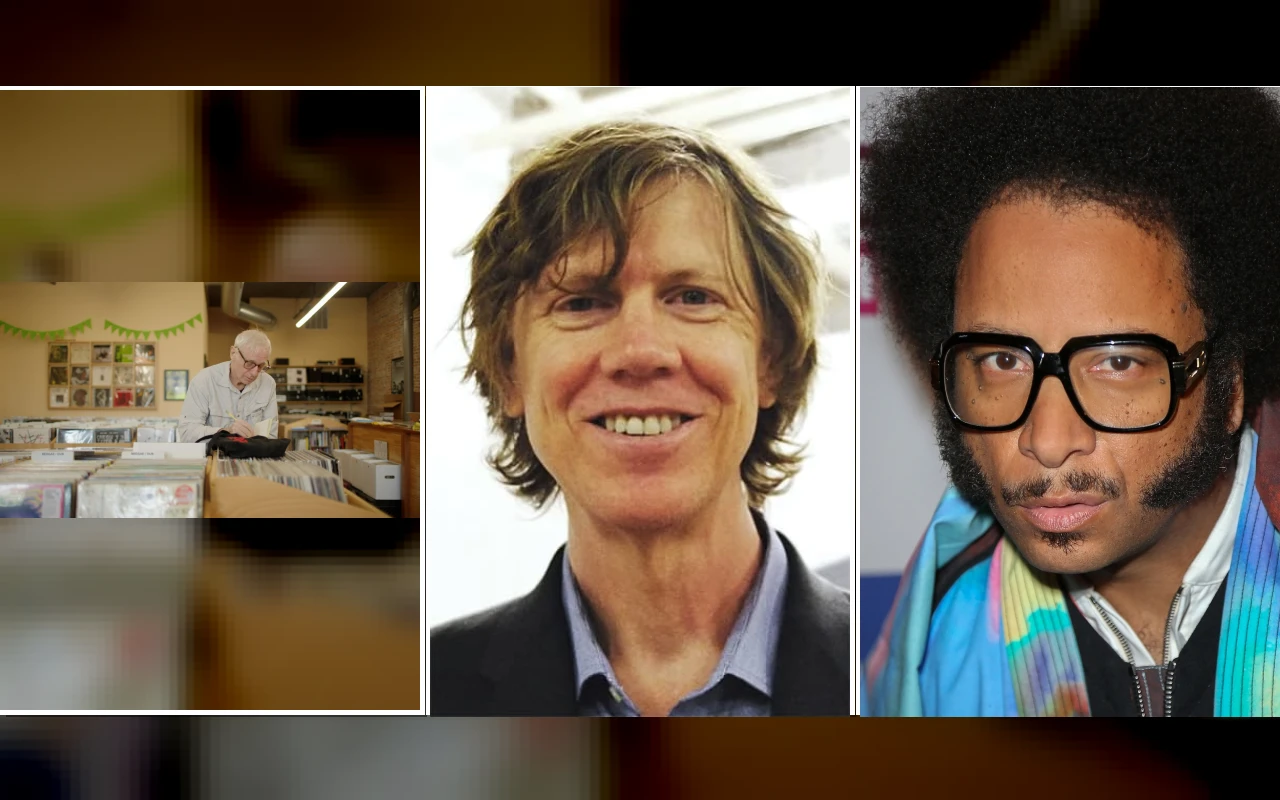
The film offers a glimpse into Christgau's working environment: a Manhattan apartment overflowing with records, CDs, cassettes, books, magazines, and newspapers accumulated over decades. This "pack rat" tendency symbolizes his vast curiosity and encyclopedic knowledge, enabling him to write authoritatively on a range of musical styles, including folk and African music.
In one memorable moment, Christgau tells Wishnow, "There's enough good stuff out there," highlighting his optimistic belief that worthwhile music persists amid much mediocrity. This hopeful outlook contrasts with his archetypal New York curmudgeon persona, humorously described by Christgau as resembling "Woody Allen with long hair."
The documentary also features interviews with several musicians and writers who have been influenced or affected by Christgau's work. Among them are Boots Riley, who appreciated Christgau's early support during his days with The Coup, and Sonic Youth's Thurston Moore, who initially mocked the critic in one of his songs but later earned his respect through subsequent albums.
The film highlights Christgau's significant connections with younger writers and Black journalists who shared his passion for hip-hop during its early years, a genre many critics initially overlooked. Notably, as early as 1981, Christgau ranked the rap compilation album Greatest Rap Hits Vol. 2 as his top record of the year, reflecting his forward-thinking approach.
Yet, despite being a comprehensive tribute, the documentary omits a discussion on the current state and future of music criticism. It does not explore how the landscape has shifted since Christgau's early days—whether professional criticism still holds sway or how the digital age and changing listening habits affect the art of reviewing music.
This absence leaves open questions about how many young people today even engage with albums or read professional reviews. Instead, the film concludes with Christgau typing away on an outdated desktop computer, a snapshot of persistence amid changing times.
The image serves as a reassuring symbol for those who believe that informed artistic critique remains vital to culture. While Christgau may indeed be one of the last remaining voices of his kind, The Last Critic offers hope that critical thought and passionate engagement with music will endure.
Presented at the SXSW Film Festival in the Documentary Feature Competition, The Last Critic is a compelling study of an exceptional critic’s lifelong dedication. Featuring appearances by Robert Christgau, Carola Dibbell, Thurston Moore, Randy Newman, Boots Riley, Colson Whitehead, Ann Powers, Joe Levy, Amanda Petrusich, and Greil Marcus, the film is an insightful homage to a towering figure in music journalism.
With a runtime of 1 hour and 23 minutes, the documentary was produced by Past Prime Productions, with Matty Wishnow directing and executive producing, Paul Lovelace and Ben Wu producing, and Ben Wu handling cinematography. The editing was done by Paul Lovelace, and the score composed by Carmen Elle. Distribution and sales were managed by Submarine Entertainment.
Ultimately, The Last Critic is less a eulogy and more a celebration of a critic who has shaped how generations understand and appreciate music. It reminds viewers of the enduring power of thoughtful criticism and the remarkable legacy of Robert Christgau, who continues to engage with music passionately, proving that great criticism can still thrive in the modern era.