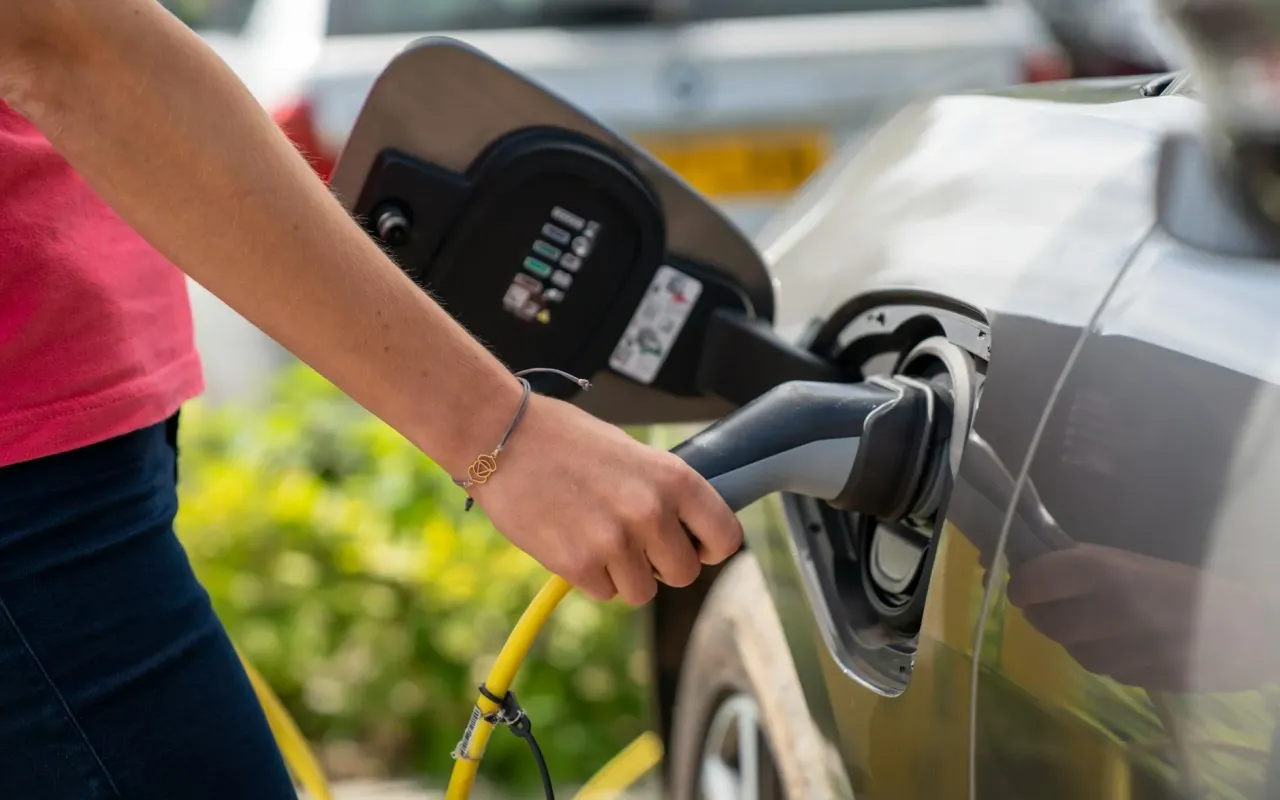
A practical breakdown of home EV charging costs, from your electric bill to installation. Learn how to calculate your savings and avoid surprise expenses.
- March 27, 2026
The Plug-In Promise: More Than Just Gas Savings
You've probably heard the biggest selling point for electric vehicles: they're cheaper to "fuel" than gas cars. It's a compelling idea, especially when you see gas prices spike. But the real question isn't just about being cheaper—it's about understanding what that actually looks like on your monthly budget and your home's electrical system.
Moving from a gas pump to a home outlet shifts your energy costs from a volatile, public commodity to a predictable, private utility. This change gives you far more control, but it also introduces new variables. Your driving habits, your local electricity rates, and even the time of day you plug in become the new factors in your transportation budget.
Let's move beyond the vague promise of savings and get specific. We'll break down the true costs of charging at home, from the kilowatt-hours on your bill to the potential upfront investment in equipment. This isn't just theory; it's about giving you the numbers to make an informed decision and potentially save thousands over the life of your car.
Decoding Your Electric Bill: The Price Per Mile
To understand charging costs, you first need to speak the language of your utility bill. Electricity is sold by the kilowatt-hour (kWh). Think of it like buying gallons of milk, but for power. The national average cost is about 16 cents per kWh, but this varies wildly, from under 10 cents in some states to over 30 cents in others. Your first actionable step is to find your latest bill and note your exact rate.
Next, you need to know your car's efficiency, which is measured in kWh per 100 miles. Unlike gas MPG, a lower number here is better. A very efficient EV, like a Hyundai Ioniq 6, might use around 24 kWh to go 100 miles. A larger electric SUV, like a Ford Mustang Mach-E, might use closer to 33 kWh for the same distance.
Here's the simple math. Let's say you drive 1,000 miles in a month. With an efficient car (24 kWh/100mi) and average electricity (16 cents/kWh), your charging cost is: (1,000 mi / 100) * 24 kWh * $0.16 = $38.40. Compare that to a gas car getting 30 MPG with gas at $3.50/gallon: (1,000 mi / 30 MPG) * $3.50 = $116.67. The monthly savings are substantial, but your exact figures depend entirely on your local rates and your vehicle.
Practical Tip: Use the formula (Miles Driven / 100) * (Your Car's kWh/100mi) * (Your Electricity Rate) = Your Monthly Cost. Plug in your numbers for a personalized estimate.
The Time-of-Use Game Changer
Many utility companies offer Time-of-Use (TOU) rate plans, which can dramatically alter your charging math. Instead of a flat rate, you pay more for electricity during "peak" hours (often 4-9 pm on weekdays) and much less during "off-peak" hours (nights and weekends).
For example, a Southern California TOU plan might charge 45 cents/kWh during peak but only 15 cents/khoW during super off-peak overnight. Charging your car during that expensive peak window could erase your savings. The solution is simple: schedule your charging sessions to start after 9 PM. Most EVs and smart chargers have this functionality built-in.
This shift requires a slight change in habit—plugging in when you get home but letting the car wait to start—but the payoff is huge. You could cut your charging costs by 50% or more just by timing it right. Contact your utility to see if they offer EV-specific TOU plans, which often have even lower overnight rates.
The Hardware Investment: Charger Types & Installation
You can plug any EV into a standard 120-volt household outlet, a method called Level 1 charging. It's slow, adding only about 3-5 miles of range per hour. For many drivers, especially those with shorter commutes, this can be perfectly sufficient if they plug in every night. The cost is essentially zero for equipment.
For faster, more convenient charging, most homeowners install a Level 2 charger. This 240-volt system, similar to what powers an electric dryer, can add 25-40 miles of range per hour. This is where the upfront costs come in. The charger unit itself typically costs between $400 and $800 for a high-quality, smart-enabled model.
The bigger variable is installation. If your electrical panel is in the garage and has spare capacity, a licensed electrician might install a new 240V outlet for $500-$1,000. However, if your panel is far away, full, or needs an upgrade, costs can soar to $2,000-$4,000. You must get at least two itemized quotes from qualified electricians—this is non-negotiable for safety and accurate budgeting.
Practical Tip: Before you buy a charger, get the installation quotes. The hardware cost is predictable; the "site work" is where surprises happen. An electrician can tell you if your panel can support the load or needs an upgrade.
Unlocking Rebates and Incentives
Here's the good news that can significantly offset your upfront costs: a patchwork of financial incentives exists. The federal government offers a tax credit for 30% of the cost of buying and installing a home charger, up to $1,000. This is a direct reduction of your tax bill, not just a deduction.
On top of that, many states, utilities, and even local air districts offer their own rebates. For instance, a utility might offer a $500 rebate for installing a specific, "grid-friendly" smart charger. California's Clean Fuel Reward program historically offered point-of-sale rebates. These incentives change frequently, but they are worth aggressive research.
Your action plan should be to check three places: the Database of State Incentives for Renewables & Efficiency (DSIRE), your local utility's website, and your state's energy commission website. Stacking a federal tax credit with a state rebate and a utility incentive can sometimes cut the total project cost in half, accelerating your payback period on the investment.
Treat this like a treasure hunt. The money is often available, but it won't find you. Set aside an hour to research, make a few calls, and you could save over a thousand dollars on your setup.
The Long-Term Math: Total Cost of Ownership
Viewing home charging costs in isolation misses the bigger, more impactful picture. The true value is in the Total Cost of Ownership (TCO) comparison with a gasoline vehicle. This includes purchase price, financing, insurance, maintenance, fuel, and depreciation over, say, 5 years.
While an EV often has a higher sticker price, the savings on "fuel" and maintenance are relentless. There are no oil changes, fewer brake jobs (thanks to regenerative braking), and no complex transmission services. The Department of Energy estimates maintenance costs for a light-duty EV are about 40% less than for a gas-powered car.
Let's run a simplified 5-year scenario. Assume a $3,000 upfront investment for a Level 2 charger is offset by $1,500 in incentives. Your net cost is $1,500. If you save $80 per month on "fuel" compared to gas, you recoup that in under 19 months. Every month of savings after that is money back in your pocket, potentially totaling thousands over five years.
This long-term lens is crucial. The initial charger installation feels like a cost, but framed against years of lower operating expenses, it's an investment that pays a steady return in the form of a lower monthly cost of driving.
Smart Charging: How to Be a Power-Savvy User
Once you're set up, you can optimize further. A "smart" Level 2 charger is a Wi-Fi-connected device that allows you to schedule charging, track energy use, and sometimes integrate with your utility. This is the key to maximizing those low off-peak rates automatically.
Beyond scheduling, some utilities have "demand response" programs. They might give you an additional rebate for allowing them to briefly pause your charging during periods of extreme grid stress (like a heatwave). You set your parameters (e.g., "My car must be 80% charged by 7 AM"), and the utility manages the rest. You get paid for providing grid flexibility.
Finally, consider pairing your EV with solar panels if that's a future possibility. Charging your car with sunshine effectively locks in your "fuel" cost at zero for the life of the system. Even without solar, being mindful of your habits—charging overnight, avoiding peak times—makes you a more efficient energy consumer.
Practical Tip: Invest in a smart charger. The ability to schedule and monitor your charging from your phone isn't just a gadget; it's the tool that guarantees you always charge at the cheapest rate and can prove your savings with detailed reports.
Avoiding the Pitfalls: Common Cost Surprises
With all this planning, you can still encounter surprises if you're not careful. The first is underestimating the impact on your electric bill. While your charging cost may be $50, moving into a higher overall usage tier on a tiered rate plan can increase the cost of *all* your home's electricity. A TOU plan almost always prevents this.
Second, never skip the permit. Your municipality will likely require an electrical permit for the charger installation. A reputable electrician will handle this. It ensures the work is inspected and safe, protecting your home and satisfying insurance requirements. The permit fee (usually $50-$150) is a necessary cost, not a nuisance.
Finally, think about future-proofing. If you might add another EV in a few years, or your panel is nearly full, discuss a panel upgrade with your electrician now. It's more expensive upfront, but doing it once is far cheaper than paying for two separate service calls and installations down the line. A little foresight can save major money and hassle.
Charging at home transforms the EV experience from a logistical task into a background convenience. By understanding the costs—both upfront and ongoing—you move from hoping you'll save money to knowing exactly how you will. You gain predictability, control, and the quiet satisfaction of bypassing the gas station for good, all from the comfort of your own driveway.