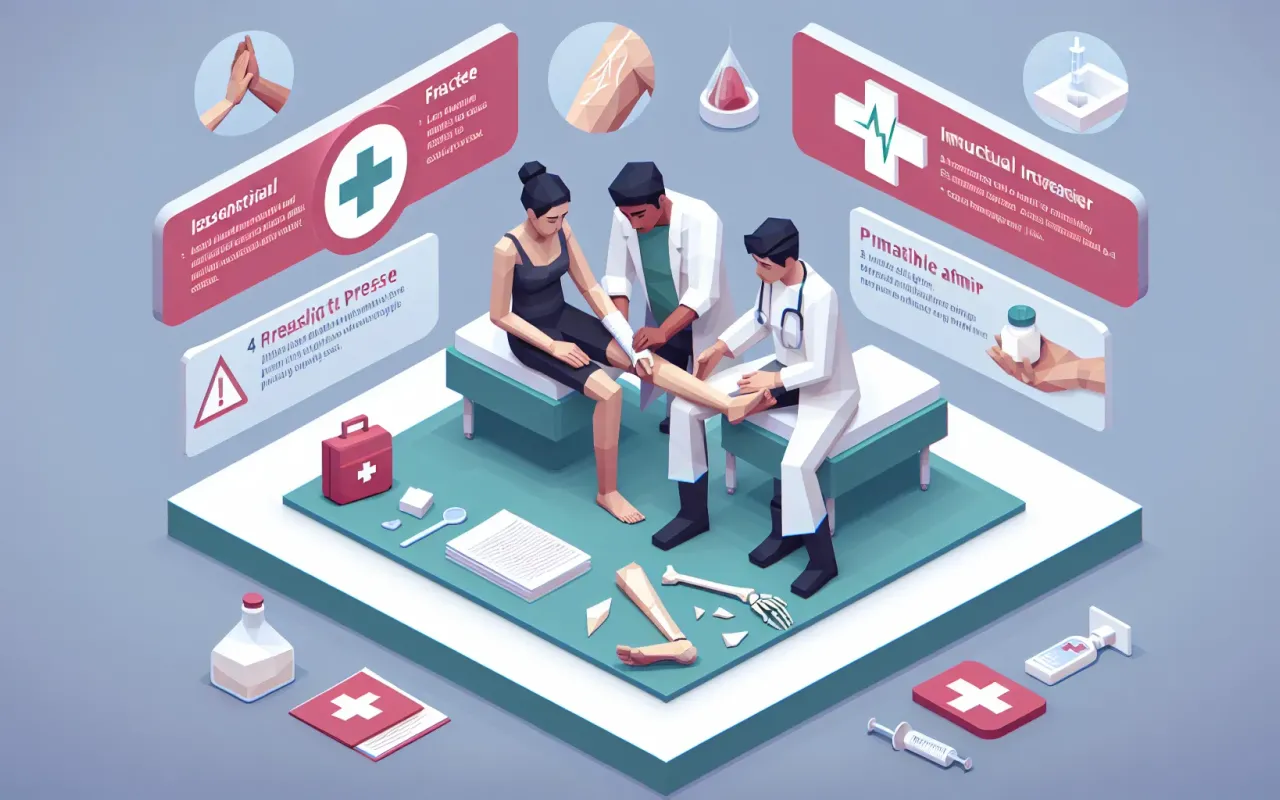
Learn the essential steps to take immediate first aid for fractures. This comprehensive guide provides valuable insights and solutions for handling fractures effectively.
- November 25, 2024
Introduction
Fractures can be a distressing experience both for the injured person and those around them. Knowing the immediate first aid for fractures not only aids in relieving pain but also prevents further complications. This article will guide you through the essential steps to take immediately when a fracture occurs, ensuring you are prepared to provide the best possible care in such situations.
Understanding Fractures
A fracture is a break or crack in a bone and can vary in severity from a hairline fracture to a complete break. They are commonly caused by trauma such as falls, impacts, or accidents. Recognizing the signs of a fracture and understanding the basic types can help in administering effective first aid.
Types of Fractures
- Closed (Simple) Fracture: The bone is broken, but the skin remains intact.
- Open (Compound) Fracture: The bone pierces the skin, creating a risk of infection.
- Comminuted Fracture: The bone shatters into three or more pieces.
- Greenstick Fracture: Common in children, where the bone bends and partially breaks.
- Stress Fracture: A small crack in the bone resulting from repetitive forces.
Immediate First Aid Steps
Providing immediate first aid for fractures involves several important steps aimed at stabilizing the injured area and preventing further harm. Follow these guidelines:
1. Ensure Safety
Before attending to the injury, ensure the scene is safe to prevent additional injuries. Move the person only if necessary, and call emergency services if the situation appears dire.
2. Assess and Secure the Area
Identify the location and severity of the fracture. If the fracture involves the neck, head, back, or pelvis, exercise extreme caution and immobilize the person to prevent further injury.
3. Stop Bleeding
If the fracture is open and there is bleeding, apply gentle pressure with a clean cloth or bandage to control it. Avoid pushing on any protruding bone.
4. Immobilize the Fracture
Use a splint to immobilize the fractured bone. You can use items like sticks, boards, or rolled-up newspapers as makeshift splints, securing them with cloth or bandages. Make sure the splint immobilizes above and below the fracture site.
5. Reduce Swelling
Apply ice packs wrapped in a cloth to the area for 20 minutes every hour if possible. This can help reduce swelling and pain but be careful not to place ice directly on the skin.
6. Elevate the Limb
If the fracture is in an arm or leg, elevate the limb above heart level to help reduce swelling.
7. Monitor for Shock
Check for signs of shock, such as pale, clammy skin, rapid pulse, or shallow breathing. If the person appears to be in shock, lay them down and elevate their legs if possible, and keep them warm with a blanket.
8. Seek Professional Medical Help
Even if the fracture seems minor, professional medical treatment is necessary to ensure proper healing. Transport the injured person to a healthcare facility as soon as possible or wait for emergency services if already contacted.
Preventing Further Injury
Proper first aid can significantly minimize complications and facilitate smoother recovery. However, there are additional considerations to prevent further injury:
Avoid Moving the Person Unnecessarily
Try not to move the injured person unless there is an immediate danger like fire or falling debris. Movement can exacerbate the injury.
Do Not Attempt to Realign the Bone
Leave the realignment and treatment of the fracture to professionals. Attempting to set the bone yourself can result in permanent damage.
Maintain Calm and Reassurance
Keep the injured person calm and provide reassurance. This can help in managing stress and pain, making the situation less traumatic.
Conclusion
Knowing the immediate first aid for fractures is crucial for preventing complications and ensuring the injured person receives appropriate care. By following these essential steps, you can effectively stabilize the fracture and manage the situation until professional medical help arrives. Remember, quick and calm actions can make a significant difference in the outcome of a fracture injury.