Discover 10 easy ways to teach kids good manners in this comprehensive guide for parents. Ensure your child grows up with essential etiquette skills.
- November 22, 2024
Introduction
Teaching children good manners is an essential part of parenting. Mannerly behavior not only helps kids interact more positively with others but also instills respect, empathy, and self-discipline. This guide explores easy ways to teach kids good manners, ensuring they grow up as polite and well-rounded individuals.
Start Early
Starting early is crucial for ingraining good manners. Children as young as toddlers can begin learning basic etiquette. The earlier you start, the more naturally these behaviors will become ingrained in their daily interactions.
Model Good Manners
Children learn a great deal from observing the behavior of adults. Demonstrate good manners in your everyday actions. Say “please†and “thank you†regularly, and be respectful and courteous to others.
Encourage Polite Language
Simple Words Make a Difference
Teach your child the importance of polite language by reinforcing the use of words like “please,†“thank you,†“excuse me,†and “sorry.†These simple expressions can significantly improve social interactions.
Practice Makes Perfect
Role-playing scenarios can help reinforce polite language. Practicing these scenarios can make children more comfortable using polite expressions in real-life situations.
Teach Table Manners
Good table manners are a fundamental aspect of polite society. Teach your child to wait until everyone is served before eating, to chew with their mouth closed, and to ask to be excused when finished.
Promote Kindness and Empathy
Encouraging empathy and kindness goes hand-in-hand with teaching good manners. Teach your child to consider others' feelings and to offer help when needed. Acts of kindness, no matter how small, can foster a polite and compassionate demeanor.
Correct Gently
When correcting your child’s manners, do so gently and constructively. Yelling or punishing can be counterproductive. Instead, explain the appropriate behavior and why it’s important in a calm and supportive manner.
Set Clear Expectations
Children benefit from understanding what is expected of them. Explain the specific manners you want to see and why they matter. Consistency is key, so ensure that your expectations are clear and consistently reinforced.
Reward Good Manners
Positive Reinforcement
Rewarding good manners with praise or small incentives can reinforce positive behavior. Acknowledging their efforts helps children understand that good manners are appreciated and valued.
Create a Reward System
Consider implementing a reward system, such as a sticker chart, where children can earn rewards for consistently displaying good manners.
Practice Gratitude
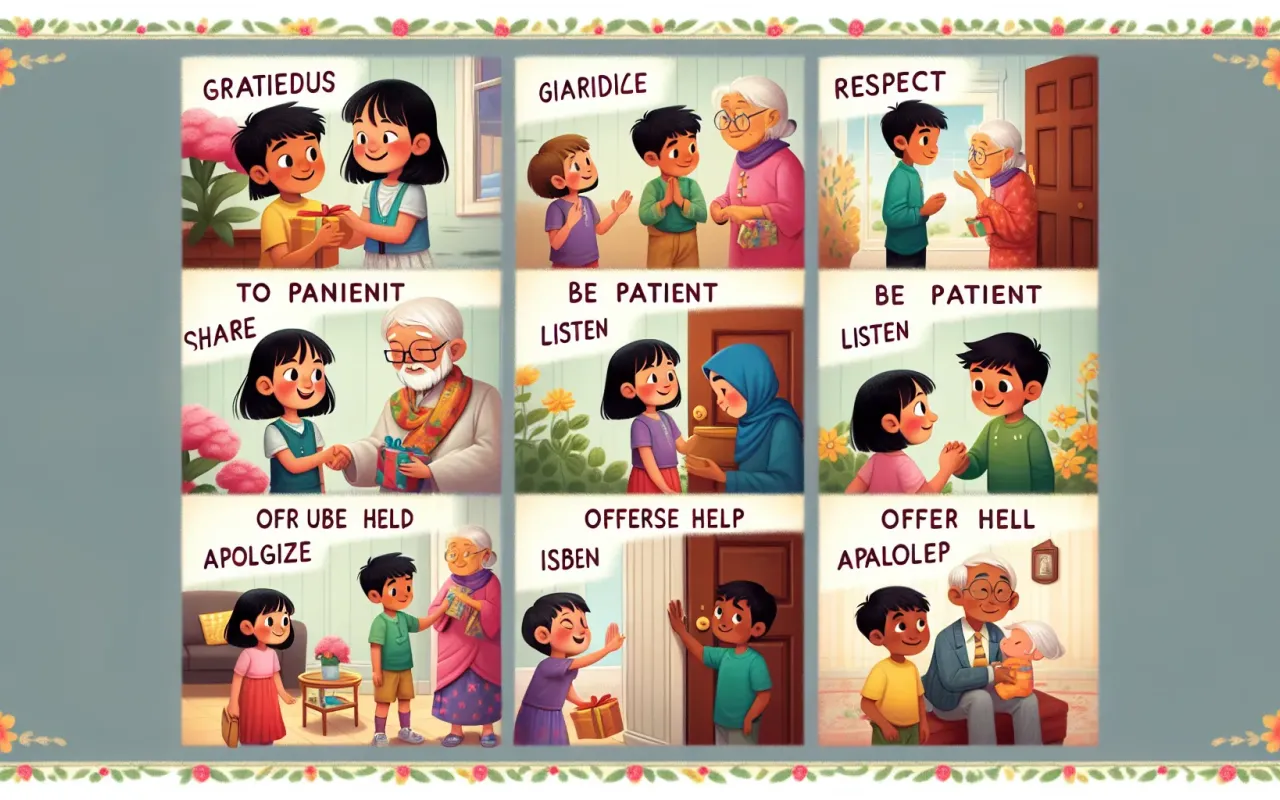
Gratitude is a cornerstone of good manners. Encourage your child to express thanks and show appreciation regularly. Writing thank-you notes for gifts or kind actions can help reinforce this habit.
Be Patient
Learning good manners takes time and patience. Every child is different, and progress may vary. Be patient and persistent, and remember that teaching manners is an ongoing process that requires consistent reinforcement.
Involve Them in Social Situations
Expose your child to a variety of social situations where they can practice their manners. Family gatherings, playdates, and community events are excellent opportunities for children to interact with others and apply what they have learned.
Concluding Summary
Teaching kids good manners is an essential part of fostering respectful and empathetic individuals. By starting early, modeling good behavior, and consistently reinforcing polite conduct, parents can instill valuable etiquette skills in their children. Using these easy ways to teach kids good manners, you can ensure your child grows up with the social skills needed to navigate life’s interactions with confidence and respect. Remember, patience and consistent effort are key to making manners a natural part of your child's behavior.