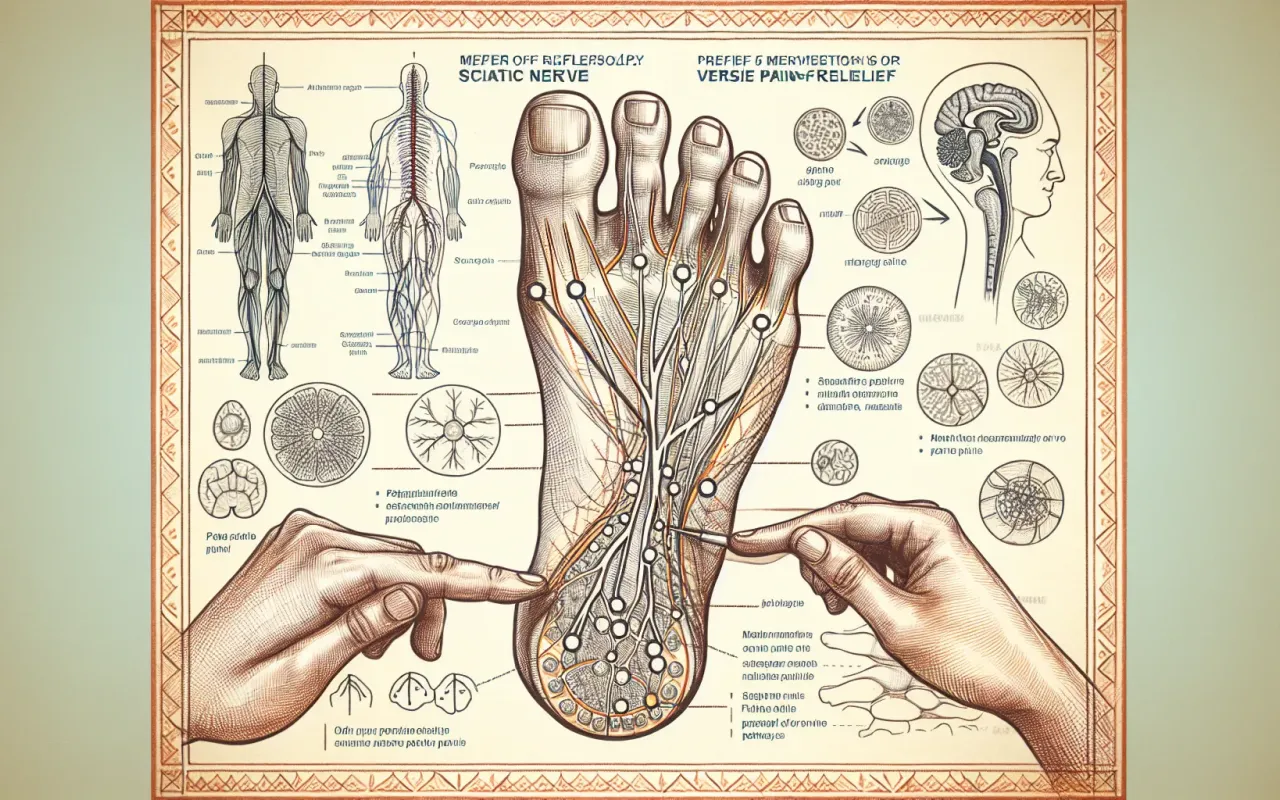
Discover effective reflexology methods for sciatic nerve pain relief in this comprehensive guide. Learn 5 techniques to alleviate your discomfort and improve your well-being.
- September 22, 2024
Sciatic nerve pain can significantly impact your daily life, making it essential to find effective relief methods. Reflexology, an ancient therapy that involves applying pressure to specific points on the feet, hands, and ears, has shown promising results in alleviating pain. This guide explores reflexology methods for sciatic nerve pain relief to help you manage and reduce discomfort.
Understanding Sciatic Nerve Pain
The sciatic nerve is the longest nerve in your body, running from the lower back down each leg. Sciatic nerve pain, or sciatica, often results from compression or irritation of this nerve. Common symptoms include lower back pain, buttock pain, leg pain, and even numbness. Causes range from herniated discs to muscle spasms, and addressing sciatic nerve pain requires a multi-faceted approach.
How Reflexology Helps with Sciatic Nerve Pain
Reflexology focuses on stimulating specific points on the body to improve overall health and well-being. By targeting reflex points corresponding to the sciatic nerve, reflexology can:
- Reduce inflammation and pain
- Promote relaxation
- Improve blood circulation
- Enhance nerve function
These benefits make reflexology a valuable complementary treatment for managing sciatic nerve pain.
5 Reflexology Methods for Sciatic Nerve Pain Relief
1. Foot Reflexology
Foot reflexology is the most common form of reflexology. Specific points on your feet correspond to different body parts, including the sciatic nerve. To target sciatic pain, focus on the following areas:
- The Heel: Massaging the bottom of the heel can help relieve sciatic pain.
- The Arch: Work on the inner arch of your foot to target lower back pain.
Using firm yet gentle pressure, massage these areas in a circular motion for several minutes daily.
2. Hand Reflexology
Hand reflexology is another effective method, especially for those who find foot reflexology uncomfortable. Key points to massage include:
- The Base of the Thumb: Helps alleviate pain in the lower back and sciatic region.
- The Outer Edge of the Palm: This area can reduce overall nerve pain.
Apply steady pressure to these points using your thumb or knuckles for optimal results.
3. Ear Reflexology
Ear reflexology involves stimulating specific points on the ear, believed to correspond to other body parts. For sciatic nerve pain, concentrate on the following points:
- The Upper Outer Ear: This area correlates with the lower back and can provide relief.
- The Inner Ear Area Above the Lobe: Targets the sciatic nerve specifically.
Using your fingers or a small, rounded tool, apply gentle pressure and massage these areas.
4. Hot Stone Reflexology
Hot stone reflexology combines traditional reflexology with the use of heated stones. The warmth from the stones helps to:
- Relax muscles and reduce tension
- Improve circulation
- Enhance the effectiveness of pressure points
Place the heated stones on the reflex points described earlier and gently massage the area for a deeply relaxing experience.
5. Reflexology with Essential Oils
Enhance your reflexology session with essential oils known for their pain-relieving properties. Some beneficial oils include:
- Peppermint Oil: Known for its cooling and anti-inflammatory effects.
- Lavender Oil: Helps with relaxation and pain relief.
- Eucalyptus Oil: Aids in reducing inflammation and promoting healing.
Apply a few drops of the essential oil to your hands or feet before starting your reflexology session for added benefits.
Conclusion
Dealing with sciatic nerve pain can be challenging, but integrating reflexology into your treatment plan can provide significant relief. These reflexology methods for sciatic nerve pain relief target specific points on the feet, hands, and ears to reduce pain, enhance relaxation, and improve overall well-being. Remember to consult with a healthcare professional before starting any new treatment, and consider working with a certified reflexologist for optimal results.