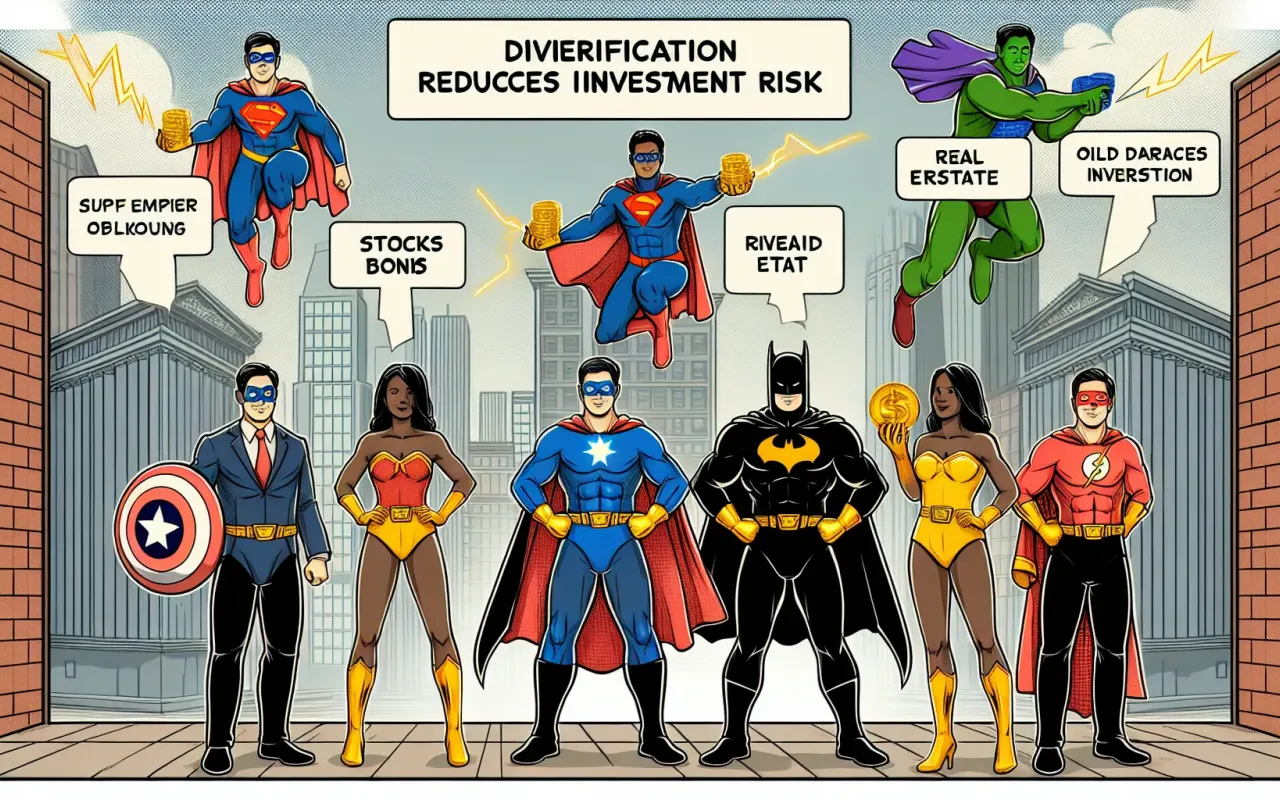
Discover how diversification reduces investment risk and helps you build a smarter, more resilient investment portfolio. Learn practical tips for diversifying effectively.
- September 1, 2024
Introduction
Investment risk is an inherent part of the financial world. While risk can never be entirely eliminated, it can be managed to significantly reduce its impact. One of the most effective strategies investors can employ is diversification. This article will explore how diversification reduces investment risk, offering practical insights to help you build a more resilient investment portfolio.
Understanding Investment Risk
To comprehend how diversification reduces investment risk, it's essential first to understand what investment risk entails. Investment risk refers to the potential for an investment to yield a return that's different from what was expected. This can manifest as the risk of losing part or all of the initial investment, or not achieving the desired returns.
There are several types of investment risks:
- Market Risk: The risk of investments losing value due to market fluctuations.
- Credit Risk: The risk that a borrower will default on a loan or bond.
- Liquidity Risk: The risk of being unable to sell an investment quickly without a significant price reduction.
- Inflation Risk: The risk that inflation will erode the purchasing power of returns.
- Currency Risk: The risk of fluctuations in currency exchange rates impacting returns.
The Concept of Diversification
Diversification involves spreading investments across different assets, sectors, and geographies to reduce exposure to any single investment's risks. The principle is analogous to the saying, "Don't put all your eggs in one basket." By doing so, you reduce the likelihood that a poor performance in one area will significantly impact your overall portfolio.
How Diversification Reduces Investment Risk
1. Reducing Market Risk
Market risk can be mitigated through diversification by spreading investments across different asset classes such as stocks, bonds, real estate, and commodities. These assets typically don't move in the same direction simultaneously, particularly during market downturns. For instance, when stock prices fall, bond prices may rise, balancing the overall portfolio.
2. Balancing Sector-Specific Risk
Diversifying across various industries helps minimize the impact of sector-specific downturns. For example, a decline in the technology sector may not affect the healthcare sector, ensuring that your overall portfolio remains stable.
3. Mitigating Credit Risk
Investing in different types of bonds, such as government, municipal, and corporate bonds with varying credit ratings, can reduce the impact of a default in any single bond. This approach ensures that not all your investments are exposed to the same degree of credit risk.
4. Managing Liquidity Risk
Diversifying your investments to include assets with different liquidity profiles can help manage liquidity risk. For example, holding a mix of easily sellable stocks and less liquid real estate investments ensures that you can access funds when needed without significant losses.
5. Hedging Against Inflation and Currency Risks
Including inflation-protected securities, such as TIPS (Treasury Inflation-Protected Securities), and holding investments in multiple currencies can protect against inflation and currency risk, respectively.
Practical Tips for Diversifying Your Portfolio
1. Determine Your Risk Tolerance
Understanding your risk tolerance is crucial before diversifying. Your investment choices should align with your risk appetite, financial goals, and investment horizon.
2. Use Diversified Investment Vehicles
Consider investment vehicles like mutual funds and exchange-traded funds (ETFs) that inherently provide diversification by pooling money from many investors to purchase a diversified portfolio of stocks, bonds, or other assets.
3. Rebalance Your Portfolio Regularly
Regular rebalancing ensures that your portfolio maintains a desired level of risk. This process involves adjusting the proportions of different assets back to their intended allocation when market movements cause significant shifts.
4. Diversify Within Asset Classes
Don't limit diversification to just across different asset classes; diversify within them. For example, within stocks, invest in a mix of large-cap, mid-cap, and small-cap companies, and across different sectors and geographies.
Common Pitfalls to Avoid
While diversification is a powerful strategy, it must be executed properly to be effective. Here are some common pitfalls to avoid:
- Over-Diversification: Spreading investments too thin can dilute potential returns. It's essential to find a balance.
- Lack of Strategy: Diversifying without a clear strategy can lead to a poorly constructed portfolio that doesn't align with your financial goals.
- Ignoring Correlation: Investing in assets that are highly correlated can negate the benefits of diversification. It's important to choose assets with low correlation to each other.
Case Study: The Role of Diversification in the 2008 Financial Crisis
The 2008 financial crisis serves as a potent example of the importance of diversification. Investors who had diversified portfolios containing a mix of asset classes, including government bonds and international assets, generally fared better than those heavily concentrated in financial stocks or real estate. Diversified portfolios were able to recover more quickly and with less volatility.
Conclusion
Diversification is a fundamental principle of smart investing. It offers a strategic way to reduce investment risk by spreading exposure across various asset classes, sectors, and geographies. By understanding how diversification reduces investment risk and implementing appropriate diversification strategies, you can build a resilient and balanced portfolio that stands a better chance of weathering market fluctuations.
Remember, diversification is not a guarantee against loss, but it is a tried-and-tested method to manage risk more effectively and enhance the long-term stability of your investments.