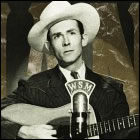
 Hiram "Hank" Williams, born on September 17, 1923, in Mount Olive, Alabama, stands as one of the most significant and influential musicians of the 20th century, a pioneering force who transformed country music into a major cultural power. In a career tragically cut short at just 29 years old, Williams recorded 55 singles that reached the top 10 of the Billboard Country & Western Best Sellers chart, with 12 of those climbing to number one. His raw, emotionally resonant songwriting and distinctive vocal delivery left an indelible mark on American music, influencing generations of artists across genres, from Chuck Berry and Elvis Presley to Johnny Cash, Bob Dylan, and the Rolling Stones.
Raised in Alabama, Williams learned to play guitar from blues musician Rufus Payne, whose style, along with that of Roy Acuff, profoundly shaped his musical approach. After winning an amateur talent contest, he launched his professional career in Montgomery in the late 1930s, performing on local radio stations and at venues ranging from schoolhouses to bars. He formed his backing band, the Drifting Cowboys, managed by his mother, and ultimately dropped out of school to dedicate himself fully to music. However, his growing alcoholism made him unreliable, leading to multiple firings and rehirings by radio station WSFA, and he also struggled to retain band members who were drafted during World War II.
In 1944, Williams married Audrey Sheppard, who soon competed fiercely with his mother for control of his career. After recording early tracks with Sterling Records, he signed with MGM Records and released his breakthrough hit "Move It On Over" in 1947. He joined the Louisiana Hayride radio program, and the following year, his cover of "Lovesick Blues" shot to number one on Billboard's Top Country & Western singles chart, propelling him to stardom on the Grand Ole Opry. Despite being unable to read or notate music to any significant degree, he penned iconic songs that have become standards, including "Your Cheatin' Heart," "Hey, Good Lookin'," and "I'm So Lonesome I Could Cry." His later years were plagued by chronic back pain and substance abuse, which severely strained his relationship with Audrey and his standing with the Opry.
Williams died on New Year's Day 1953 from heart failure in the back seat of a car near Oak Hill, West Virginia, while en route to a concert in Canton, Ohio. His legacy, however, has only grown in the decades since. He was inducted into the Country Music Hall of Fame in 1961, the Songwriters Hall of Fame in 1970, the Rock and Roll Hall of Fame in 1987, and received a star on the Hollywood Walk of Fame. In 2010, he was posthumously awarded a Pulitzer Prize Special Citation for his "craftsmanship as a songwriter who expressed universal feelings with poignant simplicity and played a pivotal role in transforming country music into a major musical and cultural force in American life." His remarkable life and career have been dramatized in the 1964 film Your Cheatin' Heart and the 2015 biopic I Saw the Light, cementing his status as a legendary and enduring figure in American music.
⭐
Similar Celebrities



📷
Recent Photos
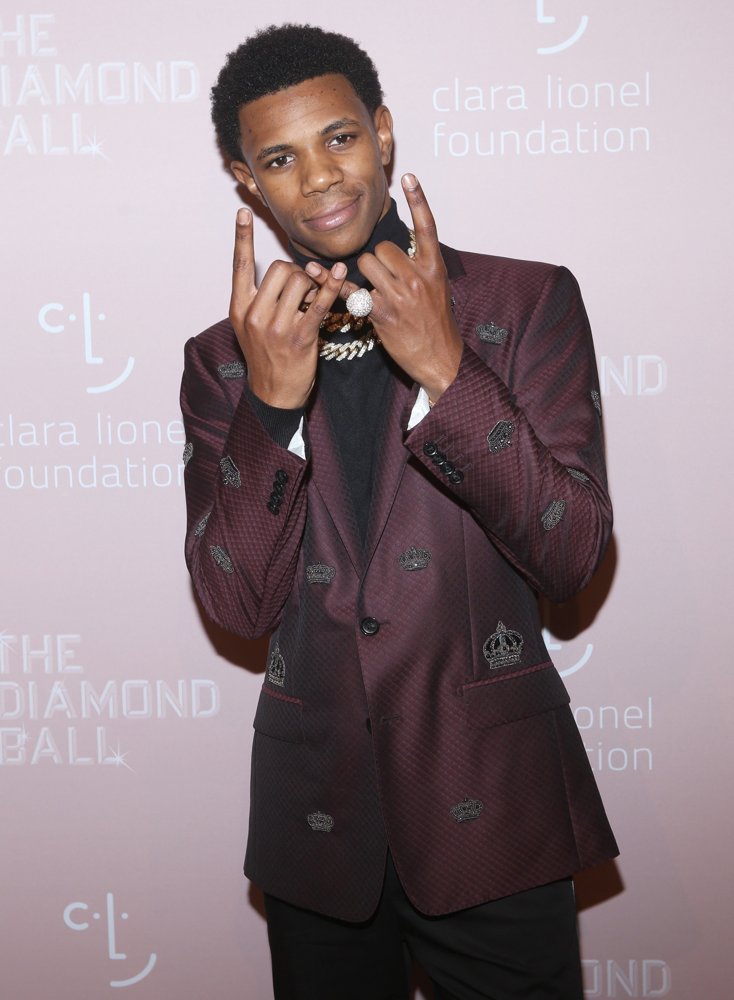
A Boogie Wit Da Hoodie
Rihanna's 4th Annual Diamond Ball
Sep 13, 2018

A Boogie Wit Da Hoodie
Lincoln Center Fashion Gala - An Evening Honoring Coach
Nov 29, 2018

A Boogie Wit Da Hoodie
STARZ Red Carpet Event for Power Final Season World Premiere
Aug 20, 2019

A Fine Frenzy
The 24th Annual Screen Actors Guild Awards - Arrivals
Jan 21, 2018

A Fine Frenzy
World Premiere of Fantastic Beasts: The Crimes of Grindelwald - Arrivals
Nov 8, 2018

A Fine Frenzy
The UK Premiere of Fantastic Beasts: The Crimes of Grindelwald - Arrivals
Nov 13, 2018





⭐Featured Celebrities