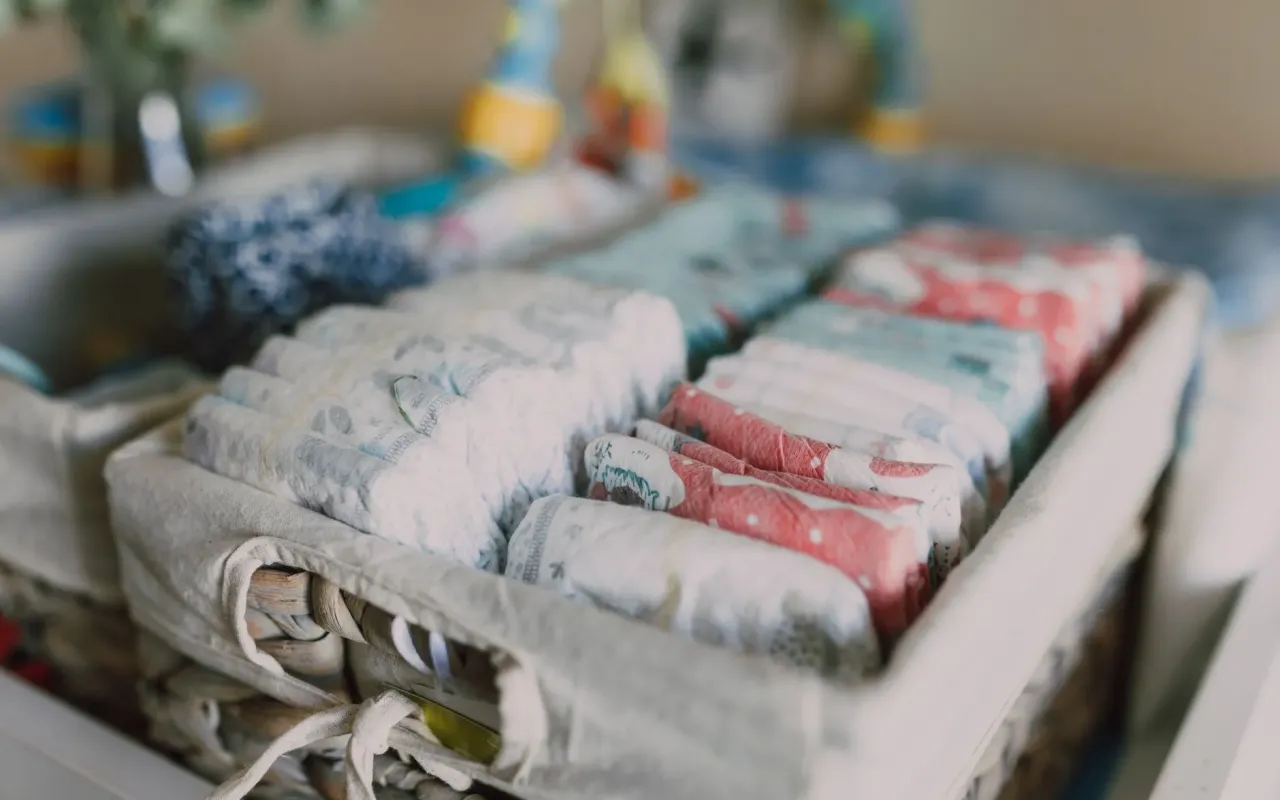
Cloth diapers save money but cost time. Disposables are convenient but pricey. We break down the true costs, environmental impact, and daily reality of both.
- September 5, 2026
AceShowbiz - You know that moment when you're standing in the baby aisle, staring at a wall of diapers, and your brain just short-circuits? The Pampers are on sale, but your cousin swears by her cloth stash. Your neighbor says disposables are drowning the ocean. And your partner just wants something that doesn't leak at 3 AM. If you're pregnant with your first or considering a switch for your second, the cloth versus disposable debate can feel overwhelming. But here's the thing nobody tells you: the choice isn't about being a "good" parent. It's about your lifestyle, your budget, and how much laundry you can realistically handle. Let's cut through the marketing and the mom-shaming to look at what actually matters.
I've changed roughly 4,000 diapers between my two kids, and I've used both systems. I've had cloth diapers blow out in a Target parking lot, and I've spent $60 a month on disposables while questioning my life choices. The truth is, both options work. They just work differently. This guide breaks down the real numbers, the actual environmental impact, and the day-to-day reality of each choice so you can make a decision you won't second-guess at 2 AM.
The Financial Reality: What Diapering Actually Costs You
Let's start with the numbers because that's usually the first thing parents ask about. A typical baby will use between 2,500 and 3,000 diapers in their first year alone. By the time you potty train—usually between 2.5 and 3 years—you're looking at roughly 7,000 to 8,000 diaper changes total. That's a lot of money, regardless of which route you choose.
For disposables, the average cost per diaper is about $0.20 to $0.35 for name brands like Huggies or Pampers, though store brands like Kirkland or Up & Up can drop that to $0.15 to $0.20. If you're buying average-priced diapers, you're spending roughly $70 to $90 per month. Over 2.5 years, that's $2,100 to $2,700. If your child is a heavy wetter or you go through more diapers in the newborn phase, you can easily push past $3,000 total.
Cloth diapers have a higher upfront cost, but the long-term savings are significant. A basic stash of 24 to 36 all-in-one diapers or pockets will cost you between $300 and $600. Add in a wet bag (about $20), a sprayer for your toilet if you want one ($40), and maybe some extra inserts ($30), and you're looking at $400 to $700 total. Even if you factor in the extra water and electricity for washing—roughly $10 to $15 per month—your total cost over 2.5 years lands around $800 to $1,100. That's a savings of $1,000 to $1,900 per child, and the savings multiply if you use the same stash for a second or third baby.
Actionable takeaway: If you're on a tight budget, cloth diapers will save you money by month four or five. But if you can't afford the $400 upfront cost, look for used cloth diaper bundles on Facebook Marketplace or Mercari—many parents sell gently used stashes for under $200.
The Environmental Impact: Beyond the Landfill Debate
Here's where things get murky. The common argument is that disposables fill landfills with plastic that takes 500 years to decompose. That's true, but it's not the whole story. A 2008 UK Environment Agency study found that cloth diapers have a similar carbon footprint to disposables when you factor in the water, energy, and detergent used to wash them. The study didn't account for modern washing machines or eco-friendly detergents, so the gap has likely narrowed, but it's still not a clean win for cloth.
Disposables are made from a mix of wood pulp, super-absorbent polymers, and polyethylene plastic. They're single-use, and the average baby creates about 1 ton of diaper waste before potty training. In the US alone, that's roughly 20 billion diapers per year ending up in landfills. They also require significant resources to manufacture—about one cup of crude oil per diaper for the plastic components.
Cloth diapers, on the other hand, use cotton, hemp, or bamboo, which are renewable resources. But cotton farming is water-intensive, and growing it conventionally uses pesticides. The real environmental cost comes from washing. If you wash in hot water, run extra rinse cycles, and dry in a machine, you're using a lot of energy. However, if you wash in cold water, line-dry, and use a high-efficiency washer, cloth diapers have a significantly lower environmental impact than disposables.
Actionable takeaway: If you choose cloth, wash in cold water and hang-dry the inserts and shells. If you choose disposables, buy in bulk to reduce packaging waste and look for brands like Dyper or Coterie that offer carbon-offset programs. Neither choice makes you an eco-hero or a villain—just be honest about your capacity.
Convenience and Daily Life: The 3 AM Test
Let's be real about the biggest difference: convenience. Disposables are stupidly easy. You change the diaper, wrap it up with the tape tabs, toss it in the diaper pail, and you're done. No soaking, no scrubbing, no laundry. When you're out running errands, you can change your baby in a public restroom and just throw the diaper away. When you're traveling, you don't have to pack a wet bag or worry about finding a washing machine.
Cloth diapers require a system. You need a wet bag for dirty diapers when you're out, and you need to carry enough diapers for the entire outing—usually one per hour. At home, you'll need to deal with the soiled diapers within a few days. For breastfed babies, the poop is water-soluble and can go straight in the wash. Once you introduce solids, you'll need to scrape or spray the poop into the toilet before washing. That's a step that makes some parents nope out immediately.
But here's the thing about the 3 AM test: cloth diapers aren't actually harder at night. You can use a heavier insert or a fitted diaper with a wool cover, and many parents find cloth diapers leak less than disposables because the fit is more customizable. The real issue is laundry. You'll be washing diapers every two to three days, which means one extra load of laundry per cycle. If you're already drowning in baby clothes and burp cloths, that extra load might be the straw that breaks you.
Actionable takeaway: Do a trial run. Buy a 6-pack of cloth diapers and use them only during the day for two weeks. If you hate it, you've only spent $60. If you love it, you can build your stash gradually instead of dropping $500 at once.
Baby's Skin and Health: Rashes, Chemicals, and Comfort
Parents often worry about what's touching their baby's skin. Disposables contain super-absorbent polymers and often have lotions or fragrances that can irritate sensitive skin. Chlorine bleaching is less common now, but some brands still use it. If your baby has eczema or frequent diaper rash, switching to a fragrance-free disposable or a cloth diaper often helps because cloth allows more airflow and doesn't trap heat and moisture against the skin.
Cloth diapers are made from natural fibers like cotton or hemp, which are breathable. Many parents report fewer rashes with cloth, particularly if they change frequently and use a barrier cream. However, cloth diapers require more frequent changes—every 1.5 to 2 hours versus 2 to 3 hours for disposables—because they don't wick moisture away as aggressively. If you're a parent who tends to wait until the diaper feels full, cloth diapers will leave your baby's skin damp and increase rash risk.
There's also the question of chemicals. Disposables have been linked to trace amounts of volatile organic compounds (VOCs) and phthalates, though the levels are considered safe by the FDA and Consumer Product Safety Commission. Cloth diapers, especially organic cotton or bamboo, have virtually no chemical exposure. But they do require you to use a gentle, fragrance-free detergent, and you'll need to strip them every few months to remove buildup from hard water or creams.
Actionable takeaway: If your baby has persistent diaper rash, try a fragrance-free disposable first. If that doesn't work, switch to cloth for a week. Many parents find that the switch alone clears up stubborn rashes without any other intervention.
Daycare and Caregivers: Who Else is Changing Diapers?
Here's a factor that catches many parents off guard: daycare. Most daycare centers in the US require disposable diapers. They simply don't have the staff or the facilities to handle cloth. If you're planning to send your baby to a center, you'll need to ask upfront about their policy. Some centers will accept cloth if you provide a designated wet bag and pre-stuffed diapers, but many won't. This can completely change your cost calculation.
If you have a nanny or a family member watching your baby, you'll need to train them on your cloth system. Some caregivers are totally on board; others find the whole process gross or confusing. You'll need to show them how to remove the insert, where to put the dirty diaper, and how to handle poop. If your caregiver isn't comfortable, you'll end up doing all the cloth diaper laundry and management yourself, which defeats the convenience factor.
Many parents do a hybrid approach: cloth at home and on weekends, disposables at daycare and when traveling. This extends the life of your cloth stash and reduces your disposable usage by about 60%. It also gives you a break from laundry on weekdays. The downside is that you're paying for both systems, which means you might only save $500 to $800 total instead of the full $1,500.
Actionable takeaway: Before committing to cloth, call your daycare or potential daycare and ask their policy. If they don't accept cloth, plan a hybrid schedule from the start so you're not caught off guard with a full cloth system you can't use during the week.
The Smell Factor and Poop Management
Nobody talks about this enough, but the smell is a real issue. Disposable diaper pails like the Diaper Genie do a decent job of containing odors, but they use proprietary refill bags that cost extra. If you're using a regular trash can, you'll be taking the trash out daily, especially once your baby starts eating solids. The smell of a day-old disposable diaper is uniquely offensive—it's a mix of ammonia and something that can only be described as "biological."
Cloth diapers, when stored properly in a wet bag or a pail with a lid, actually smell less than disposables because they're not sitting in chemical-filled gel. You'll wash them every two to three days, so the smell doesn't have time to build up. However, the washing process itself can be gross. You'll need to do a pre-rinse cycle to remove urine and poop, then a hot wash with detergent, and sometimes an extra rinse. If you're squeamish about handling poop, you'll want a diaper sprayer attached to your toilet.
The poop management is the biggest hurdle for most parents. With disposables, you just throw the whole thing away. With cloth, you have to dispose of the poop separately—either by shaking it into the toilet, spraying it off, or using disposable liners that you can toss. Breastfed baby poop is water-soluble and can go straight into the wash, which makes the newborn phase easier. But once solids start, you're dealing with a more hands-on process.
Actionable takeaway: Invest in a good diaper sprayer and a spray pal or shield. It costs about $50 total and makes the poop removal process 10 times easier. Alternatively, use flushable bamboo liners—they cost about $10 per month and let you just lift and toss the liner into the toilet.
Making Your Decision: A Practical Framework
So, what's the verdict? There isn't a universal one. Cloth diapers are better for your wallet in the long run and have a lower environmental impact if you wash efficiently. They also tend to be gentler on sensitive skin. But they require time, energy, and a certain tolerance for handling mess. Disposables are convenient, widely accepted, and easier for caregivers, but they cost more and generate more waste.
Here's my honest advice: If you're a first-time parent with no village, start with disposables. Get through the fourth trimester, figure out your baby, and then consider cloth once you've found your footing. If you're having a second baby and you already know you hate laundry, stick with disposables and don't feel guilty. If you're motivated by cost savings or environmental concerns and you have a supportive partner, cloth is absolutely doable—just start with a small stash and build up.
The most important thing is to ignore the online mom-shaming. The cloth diaper community can be intense, and the disposable camp can be dismissive. Neither group knows your life. You might be a working parent with a 45-minute commute, a toddler at home, and a partner who travels for work. You might be a stay-at-home parent with a supportive partner and a washer right next to the nursery. Your capacity is different from anyone else's, and that's okay.
Whichever you choose, remember that diapering is a season. It feels endless when you're in it, but sooner than you think, your baby will be potty training and you'll forget what it was like to carry a diaper bag. Make the choice that keeps you sane, keeps your baby dry, and keeps your budget intact. That's the only "right" answer.