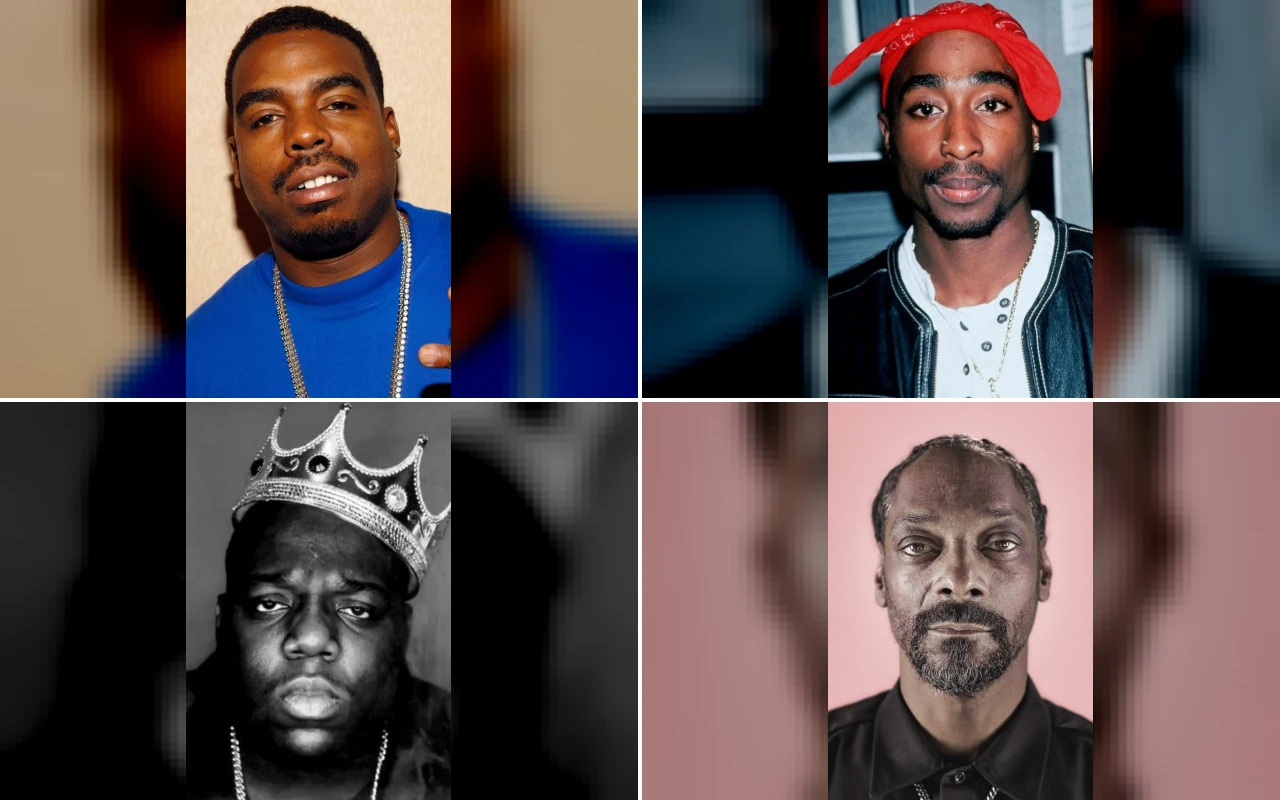
Daz Dillinger reveals how Biggie’s radio comments and a Brooklyn shooting sparked 2Pac’s fury, escalating the East Coast-West Coast rivalry.
- June 11, 2026
AceShowbiz - Daz Dillinger has shed light on a defining moment in hip-hop history that escalated the East Coast-West Coast rivalry, revealing how comments made by The Notorious B.I.G. on the radio triggered [strong]2Pac[/strong]'s intense anger and a wave of retaliatory diss tracks.
The incident took place while Dillinger and his crew were shooting the "New York, New York" music video in Red Hook, Brooklyn. During the shoot, their trailer was suddenly targeted in a shooting, with windows shattering from gunfire. Despite the dangerous situation, those inside the trailer kept their composure until the security team confirmed they were from Death Row Records, allowing the crew to safely finish the video shoot.
This violent episode was followed by a radio broadcast where Funk Master Flex and [strong]Biggie[/strong] revealed the exact location of the Death Row team, effectively broadcasting their whereabouts to the public. According to Dillinger, this public disclosure marked a turning point, intensifying the conflict between the coasts.
Upon hearing about the shooting and the subsequent radio comments, [strong]2Pac[/strong> reportedly lost control, his fury driving the creation of aggressive diss tracks such as "NY 187." This song, produced by Dillinger and featuring [strong]Snoop Dogg[/strong], delivered direct shots at Biggie and became one of the most confrontational responses in the escalating feud.
Despite the heated rivalry, Dillinger also revealed moments of connection between the two camps. Before the deaths of [strong]2Pac[/strong] and Biggie, artists including Mase, Lil' Cease, and Biggie himself invited Dillinger to the studio, maintaining some level of camaraderie amid the tension. During this meeting, Dillinger provided Biggie with marijuana freely, highlighting a personal bond that existed behind the scenes.
Further complicating the dynamics, Dillinger noted that Puffy had plans to mix the Dogg Pound album, but these efforts were halted by Suge Knight. When Biggie traveled to Los Angeles shortly after [strong]2Pac[/strong]'s death, Dillinger described the move as bold, suggesting a lack of understanding of street and gang culture, and questioning Puffy's judgment in the decision.
This account from [strong]Daz Dillinger[/strong] offers a detailed perspective on the events that fueled one of the most notorious rivalries in hip-hop, illustrating how a violent incident and provocative radio remarks ignited a chain reaction that deeply impacted the genre's history.
This article is based on reporting originally published by AllHipHop.