Discover how the new Michael Jackson biopic 'Michael' prioritizes nostalgia and box office success over historical accuracy, sidestepping controversy.
- April 26, 2026
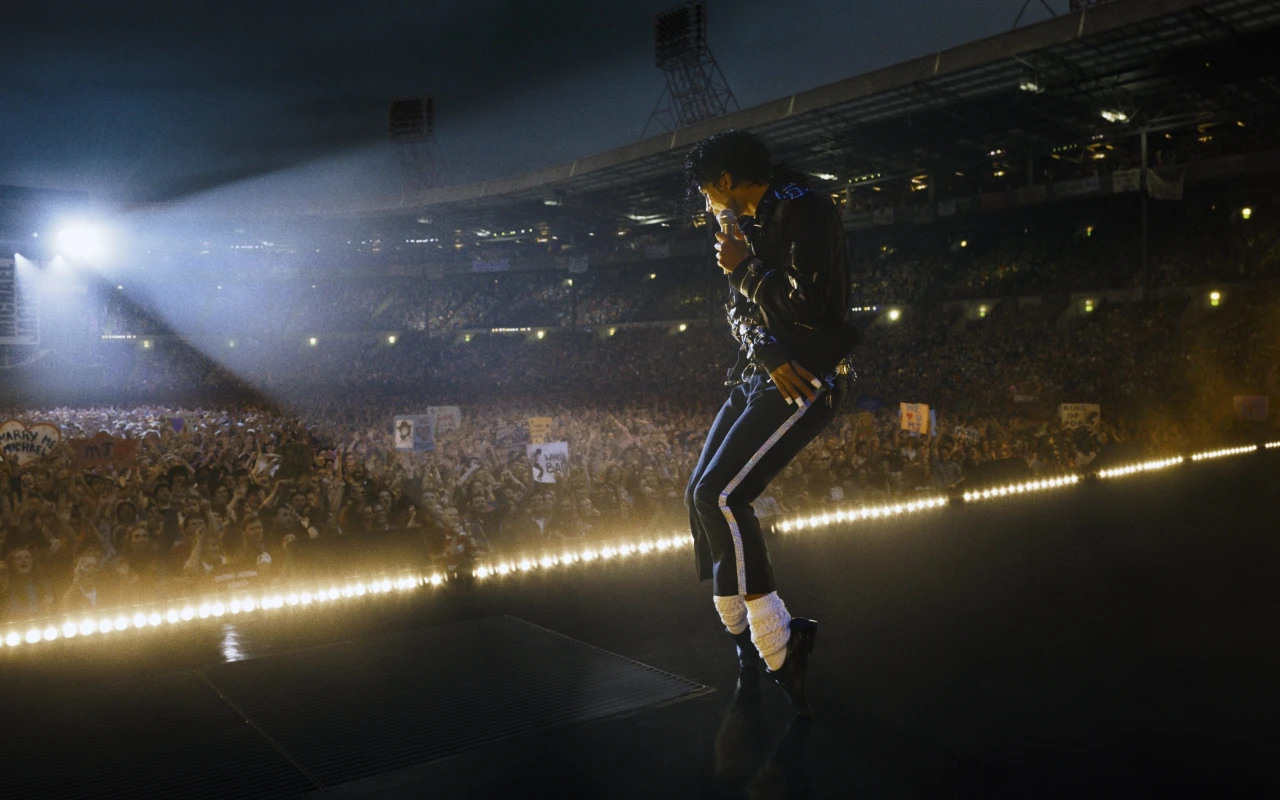
AceShowbiz - The creators behind the new biopic Michael Jackson titled Michael set out with ambitious goals. Directed by Antoine Fuqua, written by John Logan, and produced by Graham King, John Branca, and John McClain, the film aimed to generate significant revenue for Lionsgate, appeal to fans by emphasizing nostalgia from Michael Jackson’s peak years, and avoid delving into the severe child abuse allegations that shadowed the artist later in life. There is also speculation about the possibility of expanding this into a broader Jackson Family cinematic universe.
However, one aspect the filmmakers appear to have sidelined is adherence to historical accuracy. While biopics traditionally take creative liberties, it is important to note that they are not intended to serve as definitive historical records. As seen with other music biopics—covering artists like Queen, Elton John, Mötley Crüe, Amy Winehouse, Bob Dylan, and the Sex Pistols—those interested in precise historical detail should look to books or documentaries instead.
Unlike the Bruce Springsteen film Deliver Me From Nowhere, which succeeds in factual accuracy by focusing on a concise time span of roughly a year, Michael attempts to narrate over two decades, from 1966 to 1988, within a 140-minute runtime. This inevitably results in significant compression of events, omission of key moments, and a timeline that becomes flexible to the point of distortion.
In line with the genre’s tradition, the movie fabricates or heavily alters several events and characters. For example, when a producer is portrayed on screen—as in this film and others like Love and Mercy—they tend to be depicted in an unrealistically perfect light.
Below is a detailed overview of some notable factual inaccuracies and omissions found in Michael:
Rebbie Jackson’s Absence
At the film’s start in 1966, eldest sibling Rebbie Jackson was 16 years old, attending high school, and living with the family. Yet, the film makes no mention or appearance of her. She is missing from key family scenes, including the dinner table and rehearsal sessions, as if her existence was erased from this retelling.
Randy Jackson Is Missing Too
Randy Jackson, the youngest of the six brothers and the second-youngest sibling overall, was just five years old when the movie begins. Historically, Randy began performing live with the Jackson 5 in 1971, became effectively the sixth member, gained prominence when the group left Motown in 1975, and even co-wrote the 1979 hit "Shake Your Body (Down to the Ground)." The movie, however, excludes Randy entirely, as if he had never been born.
Janet Jackson’s Complete Omission
By 1968, Michael should have had a baby sister named Janet Jackson, the youngest of the nine siblings. She moved to California with the family in 1970, began performing live with the group in 1974, debuted on television in 1975, acted on the show Good Times in 1977, and launched her solo career with her debut album in 1982. Yet, in the film’s universe, only middle sister La Toya is acknowledged as a daughter, and Janet is never mentioned. La Toya Jackson told Variety that Janet was invited to participate but declined, a wish that was respected. Randy Jackson, who manages Janet today, likely concurs with this decision.
The Jackson 5’s 1968 Chicago Performance Misrepresented
The movie depicts the Jackson 5 performing at Chicago’s Regal Theater on July 12, 1968, following Gladys Knight and the Pips. In reality, they followed Bobby Taylor & The Vancouvers that night. Although the actress Liv Symone delivers an excellent Gladys Knight impression in the film, the two acts did not perform back-to-back at that event, even though their paths would cross frequently in later years.
Suzanne de Passe’s Role Misplaced
In a scene at the Regal Theater, Motown executive Suzanne de Passe, played by Laura Harrier, is shown handing Joe Jackson her business card to initiate the Jackson 5’s Motown audition. Historically, it was headliner Bobby Taylor who alerted Motown to the group and arranged their audition. While de Passe was instrumental in the band’s rise, she was not present at that specific concert. The film also omits the Jackson 5’s brief stint with Steeltown Records before signing with Motown, though this omission is less a factual error and more a narrative choice.
Off the Wall Is Not Michael’s Solo Debut
The film fast-forwards to 1977, depicting Michael, now portrayed by Jaafar Jackson, eager to record solo music. He is shown nervously asking two record executives to request permission from his father, Joe Jackson, who agrees only if sessions occur at night so Michael can continue working with his brothers during the day. Joe’s line, "I own his ass from nine to five," emphasizes this control. However, the film neglects to acknowledge Michael’s earlier solo albums: Got To Be There (1972), Ben (1972), Music & Me (1973), and Forever Michael (1975). Off the Wall was actually his fifth solo record and his first with Epic after his Motown tenure.
The Jacksons’ Touring Lineup Mischaracterized
Following the success of Off the Wall, the film shows Joe urging his sons to tour, questioning how they will manage without Jermaine, who remained with Motown when the group left. Joe’s response implies they had not toured since Jermaine’s departure and doubted it was feasible without him. In reality, Randy Jackson had already replaced Jermaine, and the group performed numerous concerts as a five-piece between 1976 and 1978. The 1979 Destiny Tour was not a revival but a continuation of their ongoing performances. The film incorrectly depicts Randy as nonexistent and presents the band as a quartet during this period.
Bubbles the Chimpanzee Arrives Too Soon
One unintentionally humorous moment shows Michael surprising his family by adopting a CGI baby chimpanzee named Bubbles around 1979. In truth, Bubbles was born in 1983, meaning this event occurred years later than portrayed. While the film suggests Michael played Twister with Bubbles, this is more playful speculation than documented fact.
The Giraffe Came Later as Well
Though it might sound unbelievable, Michael Jackson did have a baby giraffe at his Encino, California family compound before moving elsewhere. The film’s timeline places this earlier than it actually happened, another distortion of fact for narrative convenience.
In summary, the movie Michael sacrifices historical accuracy for dramatic storytelling, nostalgia, and estate approval. Key family members like Rebbie, Randy, and Janet Jackson are either erased or ignored, timelines are compressed or altered, and significant events are wrongly depicted or omitted. While this approach may serve cinematic goals and audience engagement, viewers seeking a factual biography should look elsewhere.