Sundance-winning film Josephine tackles abuse survivors' silence & shame. Director Beth de Araújo demands accountability for perpetrators. Stars Channing Ta...
- March 14, 2026
AceShowbiz - Josephine director Beth de Araújo, who earned both the grand jury prize and the audience award at Sundance, emphasized the crucial need for stronger accountability for sexual abuse perpetrators during the film’s Berlinale presentation. The emotionally powerful drama focuses on the silence and shame survivors endure when abusers face little to no consequences.
Speaking at the Berlinale press conference, de Araújo reiterated sentiments from her tearful Sundance acceptance speech. She stressed that insufficient accountability “creates more silence, more shame,” forcing survivors to navigate healing largely on their own. “The shame needs to be on them,” she said, referring to the perpetrators including pedophiles and rapists.
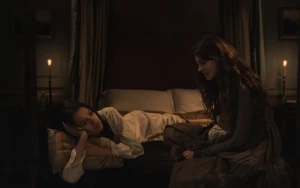
Joining de Araújo were the film’s stars and producers Channing Tatum and Gemma Chan. The film, a work of autobiographical fiction, tells the story of an eight-year-old girl, Josephine, portrayed by newcomer Mason Reeves, who witnesses a rape in San Francisco’s Golden Gate Park. Tatum and Chan play Josephine’s parents, grappling with their daughter’s trauma while seeking justice for the survivor.
Josephine was twelve years in the making and was originally intended to be de Araújo’s debut feature, developed through the Sundance Lab. After financing challenges delayed the project, she directed the single-shot thriller Soft & Quiet, which premiered at SXSW and was acquired by Blumhouse.
The inspiration for Josephine comes from de Araújo’s own childhood experience when, at age eight, she and her father interrupted a sexual assault in Golden Gate Park. She explained her desire to explore the lasting hypervigilance born from that traumatic moment, depicting it through a child’s perspective. “Kind of exploring both the intersection of unreasonable hypervigilance and reasonable fear that we have walking through the world,” she said.
While de Araújo did not testify in court like the character Josephine, she conducted extensive research on children’s experiences in legal proceedings to authentically portray the process. She also trained to become a certified witness advocate in hospitals for rape victims.
When asked about societal progress regarding sexual assault survivors, de Araújo expressed mixed views: “It depends what country I think, but I don’t think we’re better equipped to handle it now.” She added a hopeful note referencing the UK, possibly alluding to recent high-profile cases such as Andrew Mountbatten-Windsor’s arrest linked to Jeffrey Epstein.
Tatum, a father himself, shared how the film resonated personally. “That conversation that I had with Josephine underneath the bridge is a conversation that I’ve had with my daughter,” he said. “You will never be in trouble with me if you protect yourself. If someone is doing something that you are asking them not to do and they don’t listen, you have full right to protect yourself and I will back you forever. Don’t fuck with my daughter.”
The press conference took a tense turn when a reporter questioned Tatum about an open letter signed by celebrities including Mark Ruffalo and Tilda Swinton, criticizing the Berlinale festival for its “silence” on Gaza. This political controversy has sparked debate throughout the event, especially after jury president Wim Wenders advised filmmakers to “stay out of politics.”
Following the question, an audience member shouted, causing confusion. Tatum admitted, “I don’t even know what’s happening exactly,” as he looked toward moderator Jacqueline Lyanga. Although unclear, the words “Hamas” and “Gaza” were audible. Tatum then added, “I didn’t hear very much of what you said but now I think I do,” but declined to comment further. The moderator quickly moved the discussion to another question, deferring the political conversation to after the press session.
Later, Tatum explained why he chose to join Josephine, especially after acting in lighter films like Magic Mike. “Beth wrote this and I read it and I just wanted to be a part of it. I wanted to be a part of something honest and beautiful and important,” he said.
In a Variety interview ahead of the Berlinale premiere, Gemma Chan revealed her emotional connection to the film, shaped by an experience witnessing a fatal stabbing in London in 2012. She courageously testified in court afterward, which deepened her bond with the story. “It was a big part of me wanting to be a part of the story and connecting to it emotionally,” she said. “The world is a very dangerous place. Unfortunately, I know that and many people know that. It just really hit a raw nerve with me.”
Producer David Kaplan spoke openly about the financing struggles for Josephine. Despite de Araújo’s growing reputation, securing funds was nearly impossible. “99% of the people we went to and said, ‘Would you like to make this film?’ said, ‘Absolutely not,’” Kaplan recalled.
He attributed the resistance to concerns over the film’s commercial viability and its heavy subject matter. “Resistance, concern, skepticism about the commerciality, worry from parents about what this film is and worrying that it’s too dark,” Kaplan explained. “I think there was a lot of concern about who this movie is for and how it’s going to be perceived.”
Kaplan also highlighted an “inherent bias against films that are perhaps more geared towards women and assault survivors,” which complicated efforts to find backers.
Nonetheless, Josephine was ultimately acquired for U.S. distribution by Sumerian Pictures in a competitive seven-figure deal, signaling strong confidence in the film’s impact and potential.
The film’s production team includes David Kaplan, Josh Peters, Beth de Araújo, Marina Stabile, Channing Tatum, Gemma Chan, Mark H. Rapaport, and Crystine Zhang, with executive producers Emanuel Nuñez and Jordan Rapaport.
Josephine stands as a poignant, personal exploration of trauma and resilience, underscoring the urgent call for societal accountability and support for survivors of sexual abuse. Through this deeply autobiographical work, de Araújo offers a rare, unflinching look at the lingering effects of abuse and the necessity of placing responsibility where it belongs: on the perpetrators.