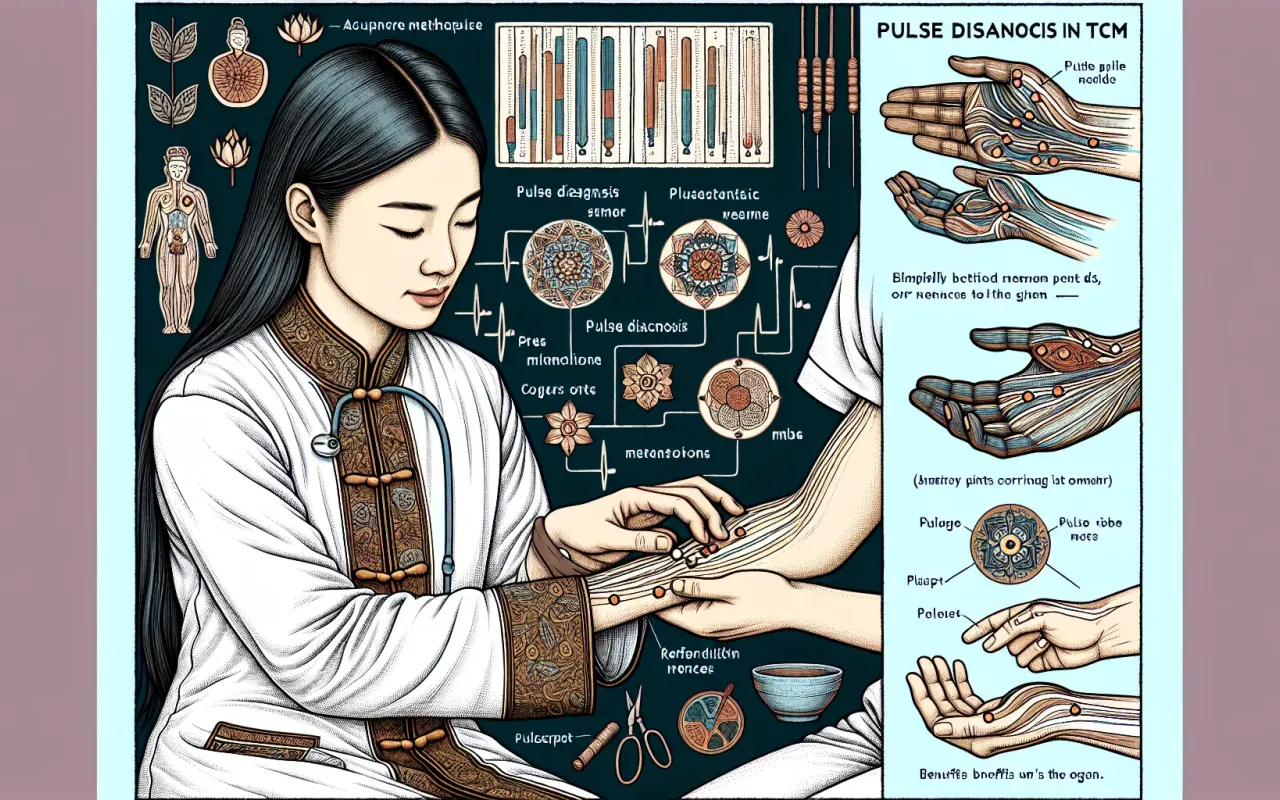
Explore the techniques and benefits of Pulse Diagnosis in Traditional Chinese Medicine. Learn how this ancient practice offers holistic insights into your health.
- November 18, 2024
AceShowbiz - Pulse Diagnosis in Traditional Chinese Medicine (TCM) is one of the oldest and most revered diagnostic tools used to assess a patient's health. This sophisticated technique leverages the subtle qualities of the pulse to uncover deep insights into the body's state of balance and internal harmony. In this article, we will delve into the intricacies of pulse diagnosis, outline the methods used, and highlight the profound benefits it offers.
The Foundations of Pulse Diagnosis
Pulse diagnosis, or "mai zhen" (脈診) in Mandarin, is a cornerstone of Traditional Chinese Medicine, fundamentally rooted in ancient theories. The practice involves palpating the radial artery to detect variations in pulse quality, which are indicative of distinct physiological and pathological states.
Historical Origins
The origins of pulse diagnosis can be traced back to ancient China, with historical texts such as the Huangdi Neijing (Yellow Emperor's Inner Canon), dating over 2,000 years ago, detailing its early practice. Ancient physicians meticulously documented the relationships between different pulse patterns, organ systems, and disease conditions.
Basic Principles
At its core, pulse diagnosis is based on the theories of Yin-Yang and the Five Elements (Wood, Fire, Earth, Metal, and Water), which provide a framework for understanding the body's dynamic internal environment. The pulses correspond to different organ systems and meridians, with practitioners assessing their qualities such as strength, depth, and rhythm.
Techniques of Pulse Diagnosis in TCM
The techniques of pulse diagnosis are both art and science, requiring years of practice and a deep understanding of TCM principles. Here are the key methods used in pulse diagnosis:
Position and Palpation
The pulse is typically felt at three positions on each wrist, with each position corresponding to different internal organs. These positions are:
- Cun (寸) - Nearest to the wrist crease, corresponding to the heart and lung.
- Guan (關) - In the middle, associated with the liver and spleen.
- Chi (å°º) - Farthest from the wrist, linked to the kidney and bladder.
Qualitative Assessment
Practitioners assess the pulse for various qualities, including:
- Depth - Whether the pulse is superficial or deep.
- Speed - The pulse rate, which can be rapid or slow.
- Strength - The forcefulness of the pulse.
- Width - Whether the pulse is wide or thin.
- Rhythm - The regularity of the pulse beats.
Benefits of Pulse Diagnosis
Pulse diagnosis offers a myriad of benefits, enhancing the diagnostic accuracy and therapeutic outcomes in TCM:
Holistic Health Insight
Unlike conventional diagnostic tools, pulse diagnosis provides a comprehensive view of the patient's overall health. It reveals imbalances in the body, offering insights into both acute and chronic conditions.
Early Detection
The subtle changes detected through pulse diagnosis can indicate the early stages of disease, often before symptoms become apparent. This allows for timely intervention and preventive care.
Personalized Treatment
Pulse diagnosis enables practitioners to tailor treatment plans based on the individual’s unique physiological patterns. This personalized approach enhances the effectiveness of acupuncture, herbal medicine, and other TCM therapies.
Non-Invasive and Safe
As a non-invasive technique, pulse diagnosis is safe and free from side effects, making it ideal for patients of all ages, including those who may be contraindicated for certain diagnostic procedures.
Challenges and Considerations
While pulse diagnosis is a valuable tool, it requires a significant amount of skill and experience to master. Practitioners must undergo extensive training and maintain a high level of sensitivity and intuition. Additionally, environmental factors such as the patient’s emotional state, time of day, and season can influence pulse readings, necessitating a holistic and flexible approach.
Conclusion
In conclusion, Pulse Diagnosis in Traditional Chinese Medicine is a profound diagnostic modality that offers deep insights into an individual’s health. By understanding and mastering this ancient art, TCM practitioners can deliver more nuanced and effective care. For patients, it provides a pathway to holistic health, facilitating early detection and personalized treatment. As both a science and an art, pulse diagnosis remains an integral part of TCM’s enduring legacy.