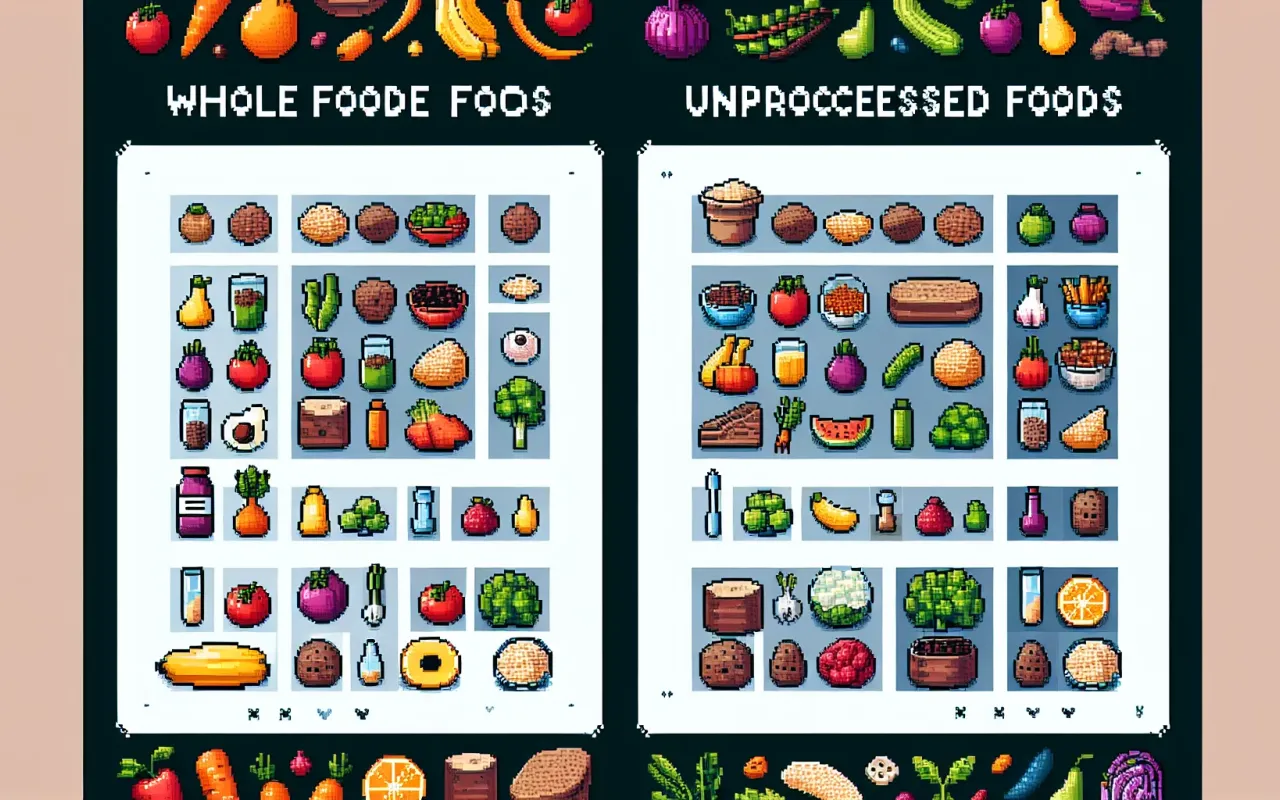
Discover the differences between whole foods and unprocessed foods, why they matter for your health, and how to incorporate them into your diet effectively.
- November 9, 2024
In today's health-conscious world, terms like "whole foods" and "unprocessed foods" are often used interchangeably. While they share similarities, they are not identical concepts. Understanding the distinctions between the two can significantly impact your health and dietary choices. This article will explore what these terms mean, their benefits, and practical ways to include them in your diet.
Defining Whole Foods
Whole foods are foods that are consumed in their natural state, free from artificial additives, chemicals, and preservatives. They are typically unrefined and minimally processed, preserving most of their nutritional content. Examples of whole foods include fresh fruits, vegetables, nuts, seeds, legumes, whole grains, and organic meats.
Benefits of Whole Foods
- Nutrient Density: Whole foods are rich in essential nutrients like vitamins, minerals, and antioxidants.
- Better Digestion: They are high in dietary fiber, promoting healthy digestion and regular bowel movements.
- Reduced Risk of Chronic Diseases: Consuming whole foods can help reduce the risk of diseases such as diabetes, heart disease, and cancer.
Understanding Unprocessed Foods
Unprocessed foods, like whole foods, are free from additives and preservatives. However, the term "unprocessed" is broader and can include foods that have undergone minimal processing, provided they do not have synthetic ingredients. This includes foods like raw honey, cold-pressed oils, and homemade yogurt.
Examples of Unprocessed Foods
- Raw fruits and vegetables
- Unrefined grains like brown rice and quinoa
- Pure, unprocessed nuts and seeds
- Organic, grass-fed dairy and meat products
Key Differences Between Whole Foods and Unprocessed Foods
While whole foods and unprocessed foods share many similarities, their key differences lie in their definitions and scope. Whole foods are a subset of unprocessed foods, specifically emphasizing foods that are in their natural state. Unprocessed foods can include items that have undergone minimal, non-industrial processing without synthetic additives.
Overlap and Distinctions
- Whole foods are always unprocessed, but not all unprocessed foods are whole foods.
- Whole foods focus on being as close to their natural form as possible, while unprocessed foods allow for slight modifications.
- Both types prioritize health benefits by avoiding artificial ingredients and preservatives.
Incorporating Whole and Unprocessed Foods into Your Diet
Shifting to a diet rich in whole and unprocessed foods can seem daunting, but it can be done gradually through mindful changes to your eating habits. Here are some practical tips to help you get started.
How to Start
- Plan Your Meals: Prepare meals using fresh ingredients and plan your week's menu to incorporate a variety of whole and unprocessed foods.
- Shop Smart: Focus on the perimeters of the grocery store where fresh produce, dairy, and meats are usually located.
- Cook at Home: Home-cooked meals allow you to control the ingredients and avoid unnecessary additives.
- Read Labels: Learn to identify processed ingredients and choose products with minimal and natural ingredients.
Conclusion
Understanding the difference between whole foods and unprocessed foods is crucial for making informed dietary choices. Both types offer significant health benefits, including better nutrient intake and reduced risks of chronic diseases. By incorporating more whole and unprocessed foods into your diet, you can enjoy a healthier lifestyle. Start with small, manageable changes, focus on fresh and natural ingredients, and gradually shift towards a diet that prioritizes whole and unprocessed foods.