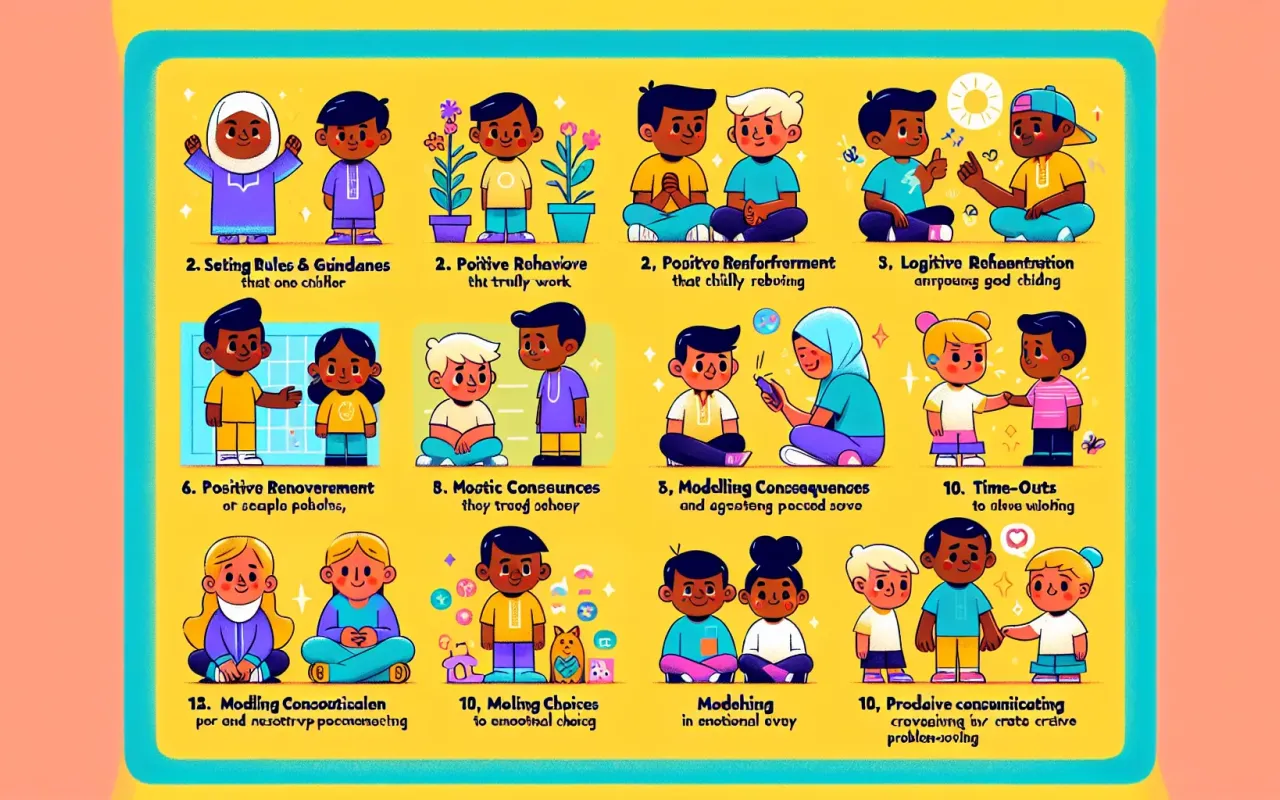
Discover 10 effective discipline techniques for children that really work. This comprehensive guide offers practical solutions for parents aiming to create a positive and nurturing environment.
- October 24, 2024
Disciplining children can be one of the most challenging aspects of parenting. It's important to find methods that are effective, nurturing, and align with positive parenting philosophies. In this article, we explore ten effective discipline techniques for children that really work. These strategies are designed to help parents foster a respectful and cooperative environment while addressing key behavioral issues.
Introduction to Effective Discipline Techniques for Children
Understanding the importance of discipline in children's development is crucial. Discipline teaches children about boundaries, self-control, and acceptable behavior. However, it's essential to approach discipline in a way that promotes learning and growth rather than instilling fear or resentment. Let's delve into some effective discipline techniques for children that can help create a healthy and respectful family dynamic.
Top 10 Effective Discipline Techniques for Children
1. Positive Reinforcement
Positive reinforcement involves rewarding desirable behavior to increase the likelihood of it recurring. This can be in the form of praise, extra playtime, or a small treat. By focusing on positive behavior and rewarding it, children learn that good behavior gets attention and recognition.
2. Consistent Rules and Consequences
Children thrive on consistency. Establish clear rules and the consequences for breaking them, and ensure that they are consistently enforced. This helps children understand expectations and the predictable outcomes of their actions, fostering a sense of security and fairness.
3. Time-Outs
Time-outs are effective for younger children who need a break to calm down and reflect on their behavior. Create a designated time-out space and set a specific duration appropriate for the child's age. Time-outs should be used sparingly and followed up with a discussion about the behavior.
4. Natural and Logical Consequences
Allowing children to experience the natural consequences of their actions can be a powerful learning tool. For instance, if a child refuses to wear a coat, they may feel cold and understand the importance of listening. Logical consequences are directly related to the behavior, such as losing screen time for not completing homework.
5. Modeling Appropriate Behavior
Children learn by observing the adults around them. Model the behavior you want to see in your children. Demonstrating respect, patience, and self-control in your interactions teaches children to emulate these behaviors in their own lives.
6. Setting Clear Expectations
Clearly communicate your expectations regarding behavior and responsibilities. Use simple language and ensure that children understand what is expected of them. Providing reasons for rules helps children grasp the importance of following them.
7. Active Listening and Empathy
Practice active listening to understand your child's perspective. Showing empathy by acknowledging their feelings helps build a trusting relationship. When children feel heard and understood, they are more likely to cooperate and adhere to rules.
8. Distraction and Redirection
For younger children, distraction and redirection can be effective in preventing undesirable behavior. If a child is acting out, redirect their attention to a different activity or toy. This technique helps avoid confrontations and encourages positive engagement.
9. Problem-Solving Together
Involving children in problem-solving fosters responsibility and cooperative behavior. When conflicts arise, discuss the issue together and brainstorm solutions. Empowering children to contribute to the resolution promotes critical thinking and accountability.
10. Encouraging Responsibility and Independence
Encourage children to take responsibility for their actions and become more independent. Assign age-appropriate chores and responsibilities to teach accountability. Celebrating their achievements and progress reinforces positive behavior and boosts self-esteem.
Conclusion
Effective discipline techniques for children are integral to nurturing their development and fostering a harmonious family environment. By employing strategies such as positive reinforcement, consistent rules, and active listening, parents can guide their children towards respectful and cooperative behavior. Remember, discipline should be a tool for teaching and growth, not punishment. Implementing these techniques with patience and empathy will contribute to raising well-rounded and responsible individuals.