Discover the most effective labeling methods to achieve a meticulously organized office space. Implement these strategies to boost productivity and maintain order.
- October 23, 2024
In today's fast-paced work environment, maintaining an organized office space is crucial for productivity and efficiency. Effective labeling methods can play a significant role in achieving and sustaining this organization. This article explores seven practical and effective labeling methods for an organized office space, providing you with insights and strategies to streamline your workspace.
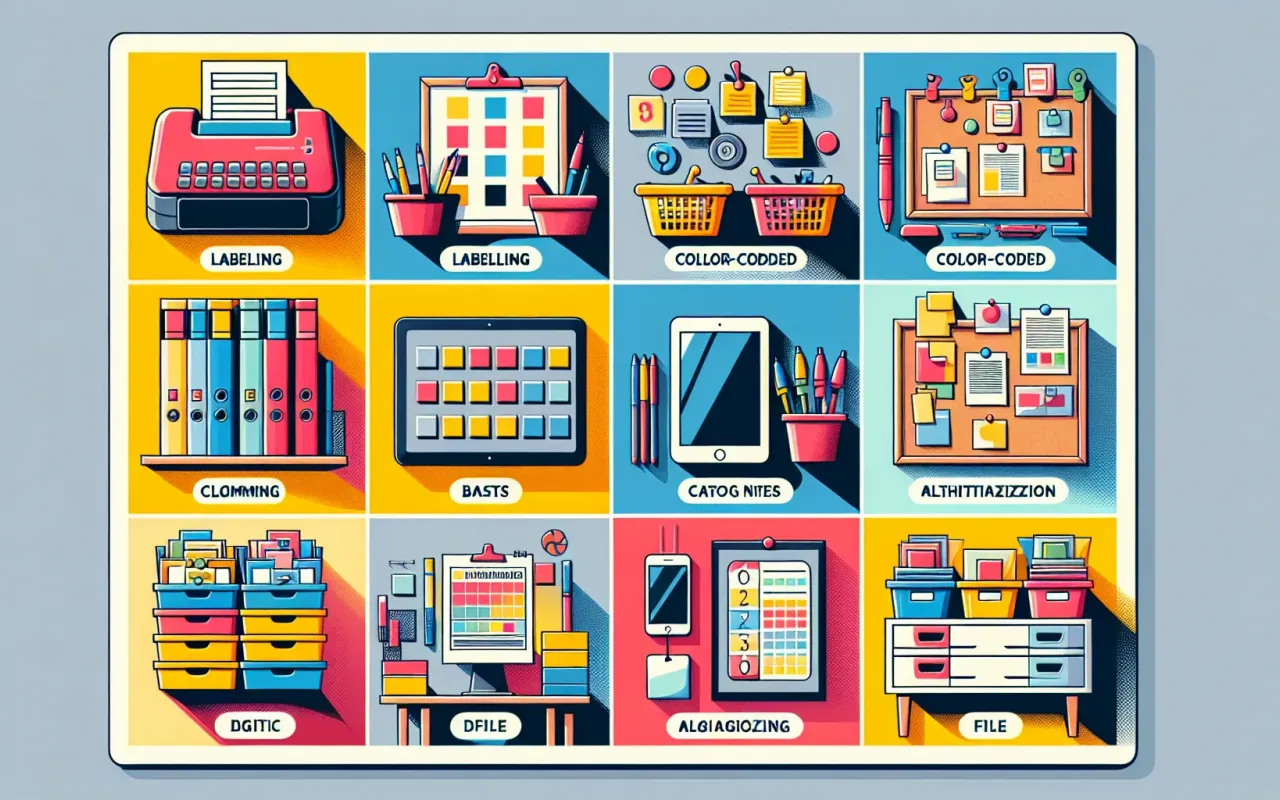
1. Color-Coded Labels
Color-coding is a powerful visual tool that can instantly categorize and distinguish between different types of files, documents, and supplies. By assigning specific colors to different categories (e.g., red for financial documents, blue for client files), you can quickly locate items without sifting through piles of paperwork.
2. Label Makers
Investing in a high-quality label maker can revolutionize your office organization. Label makers allow for the creation of uniform, professional-looking labels that can be easily read and understood. Use label makers for everything from file folders to storage bins, ensuring consistency and clarity across your workspace.
3. Digital Labeling Systems
As offices become increasingly digitized, integrating digital labeling systems can enhance traditional methods. Software solutions that create and manage labels electronically can be synchronized with inventory management systems, making it easier to track items and maintain an organized digital filing system.
4. Magnetic Labels
Magnetic labels offer flexibility and ease of repositioning, making them ideal for environments where items and storage solutions frequently change. Use magnetic labels on metal filing cabinets, shelves, and drawers to ensure that each item has a clearly defined place, facilitating orderly transitions.
5. Transparent Label Pockets
Transparent label pockets provide a clean and professional look by allowing you to slide in printed labels that can be easily changed as needed. This method is particularly useful for binders, notebooks, and storage containers, where labels may need to be updated or changed frequently.
6. QR Code Labels
Leveraging QR codes for labeling offers an innovative and tech-savvy approach. QR code labels can store a wealth of information and can be scanned using a smartphone or tablet. This method is particularly useful for tracking inventory, providing instant access to detailed information about the item.
7. Labeling Guidelines and Policies
Implementing standardized guidelines and policies for labeling ensures consistency across the organization. Establish clear rules about where and how labels should be applied, the format to be used, and the frequency of updates. Training employees on these guidelines can further enhance organizational coherence.
Conclusion
An organized office space is essential for effective workflow and productivity. By incorporating these seven effective labeling methods, you can create a systematic and orderly environment that minimizes clutter, enhances efficiency, and supports a professional atmosphere. Whether through color-coding, label makers, or digital solutions, the key is to implement strategies that are practical and consistent with your office needs.