A real-world pre-road-trip car checklist: tires, fluids, brakes, battery, and the emergency kit you'll actually use. Check these before you leave.
- October 22, 2026
AceShowbiz - Every summer, AAA answers roughly 30 million roadside assistance calls. The single busiest stretch? The days right after Memorial Day and the Fourth of July, when families pile into cars and discover—somewhere between home and the beach—that their battery is six years old or a tire has been quietly losing air for months. The frustrating part is that most of these breakdowns were preventable with an hour of checking things in your own driveway.
Here's the honest truth: you don't need to be a mechanic to catch the problems that ruin road trips. You need a flashlight, a tire gauge, a few minutes of patience, and a willingness to get your hands a little dirty. This checklist walks you through what actually matters, in the order that matters, so you can leave with confidence instead of crossing your fingers.
Start With the Tires, Because They're Where Most Trips Go Wrong
Tires are the only thing connecting your car to the road, and they're also the most neglected part of most vehicles. A tire that's underinflated by just 10 PSI can increase fuel consumption by around 3 percent and dramatically raise your risk of a blowout at highway speeds—especially when the pavement is hot and you're carrying a fully loaded car. That's not a theoretical risk. It's the most common cause of summer highway breakdowns.
Check the pressure when the tires are cold, meaning before you've driven more than a mile or two. You'll find the correct PSI on a sticker inside the driver's door jamb—not on the tire sidewall, which lists the maximum the tire can handle, not what your car needs. Don't forget the spare. A flat spare is almost worse than no spare, because it gives you false confidence.
While you're crouched down, look at the tread. The old penny test still works: stick a penny into the tread groove with Lincoln's head down. If you can see the top of his head, you're at 2/32 of an inch or less and you need new tires before a long drive. Also run your hand along the tread and feel for uneven wear or bulges. A bulge on a sidewall is a ticking time bomb—replace that tire, no debate.
Quick tire action items
- Inflate to the door-jamb PSI, including the spare
- Check tread depth with the penny test on all four tires
- Look for cracks, bulges, or embedded nails
- Torque your lug nuts if you've had recent tire work
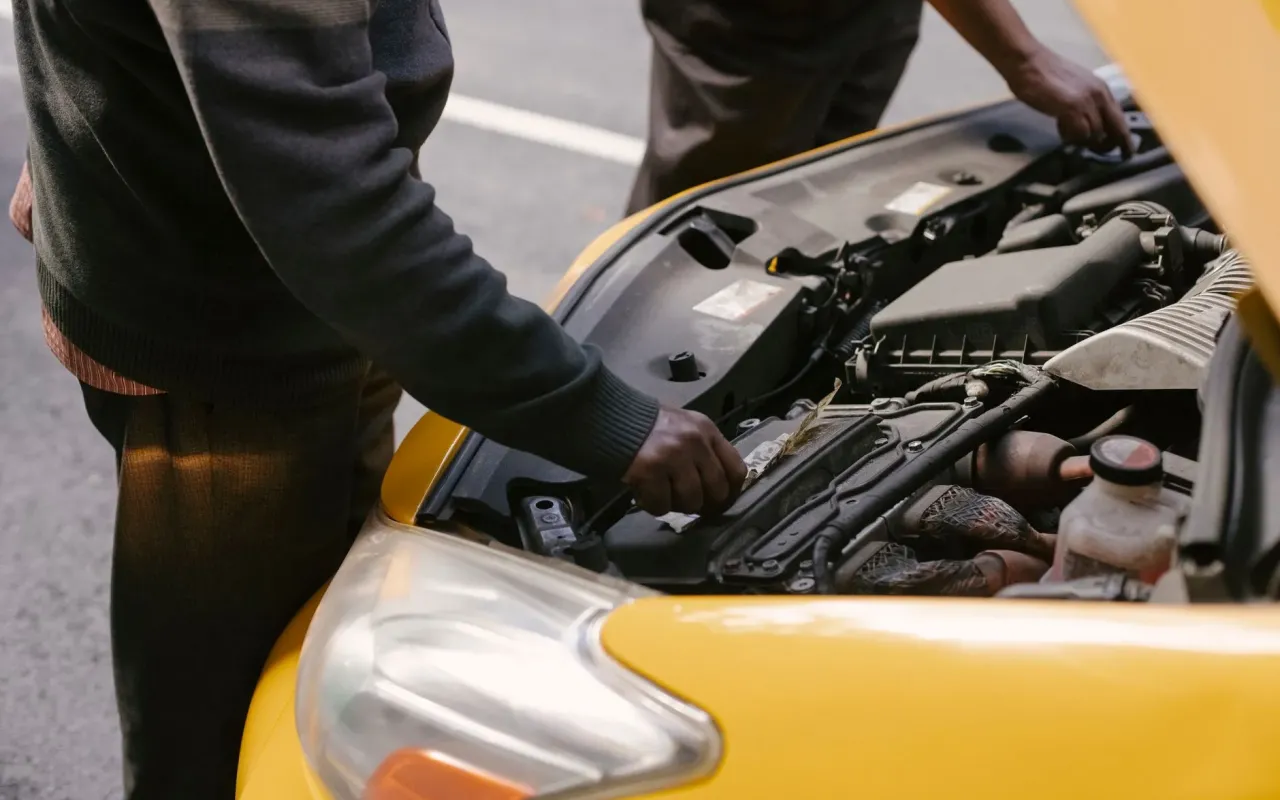
Pop the Hood: Fluids Are Cheap, Engines Are Not
A blown engine from low oil can cost $5,000 or more to replace. A quart of oil costs about eight bucks. That math should tell you everything about why this section matters. Before any trip longer than a few hours, check your oil with the engine cold and the car on level ground. Pull the dipstick, wipe it, reinsert it, and read the level. If it's below the lower mark, add oil—and if it's dark and gritty, consider an oil change before you go.
Coolant is the next one people forget, and it's the fluid most likely to strand you in the desert. With the engine completely cool—never open a hot radiator—check the overflow reservoir and make sure the level sits between the min and max lines. If it's low, top it off with the correct 50/50 coolant mix. If you keep having to add coolant, you have a leak, and that's a fix-before-you-go situation.
Don't overlook the small stuff either. Windshield washer fluid sounds trivial until you're driving through a bug-heavy stretch of highway at dusk with a smeared windshield. Brake fluid should be at the full line and shouldn't look dark or murky. And take thirty seconds to check your belts for cracks and your hoses for soft spots or bulges—both are far easier to replace in your driveway than on the shoulder of I-80.
Practical tip
Keep a small notebook in the glovebox and jot down the date and mileage every time you check fluids. It takes ten seconds and it turns vague memory into a real maintenance record—which also helps at resale time.
Brakes, Battery, and Belts: The Three B's That Strand People
Brakes are the one system you absolutely cannot gamble on, especially if your trip involves mountains. Listen for squealing (worn pads), grinding (metal on metal—stop driving), or a soft, spongy pedal (possible fluid or air issue). If your car pulls to one side when you brake, that's a caliper problem worth diagnosing before you load up the family. A brake job at home costs a few hundred dollars; brake failure on a downhill grade is a different category of problem entirely.
Batteries are quietly the number one cause of no-start calls, and heat is actually harder on them than cold. A battery that's four or five years old is living on borrowed time, even if it starts fine today. Most auto parts stores will test your battery and alternator for free in about five minutes. Take them up on it—it's the single highest-value free check on this list.
Belts deserve a mention too. A serpentine belt that snaps takes out your power steering, your alternator, and your water pump all at once. Look for glazing, fraying, or cracks across the ribs. If it looks original and your car has over 60,000 miles, seriously consider replacing it as preventive maintenance before a long trip.
Battery reality check
If your battery is pushing five years old and you're planning a trip through remote country, replace it now. It's a $150-ish decision that eliminates one of the most common and most annoying ways a road trip dies.
Lights, Wipers, and Visibility: The Stuff You Notice Too Late
You'd be surprised how many people discover a dead taillight when a state trooper pulls them over at 10 p.m. in a construction zone. Do a full light walk-around: headlights (both high and low beams), turn signals front and rear, brake lights, reverse lights, and hazard flashers. It takes five minutes and a friend, or you can back up to a storefront window and use the reflection to check your brake lights alone.
Wiper blades are another small item with outsized impact. A streaky, chattering blade in a sudden summer downpour is genuinely dangerous, and blades degrade fast in hot sun—often in under a year. If yours leave streaks or skip across the glass, spend the $20 and replace them. While you're at it, top off the washer fluid and make sure your headlights aren't fogged or yellowed, which cuts your night visibility significantly.
Clean your windshield inside and out, too. A film of interior haze that's invisible during the day turns into a blinding glare at night when oncoming headlights hit it. It's a two-minute fix that makes a long evening drive far more comfortable.
Emergency Kit and Final Walkaround: Prepare for the 1 Percent
You can do everything right and still end up on the shoulder with a problem. The difference between a minor inconvenience and a genuinely bad day is what's in your trunk. At minimum, carry a properly inflated spare, a jack, and a lug wrench you've actually test-fitted to your car's lug nuts—some cars ship with wrenches that don't match. Add jumper cables or a portable jump starter, a flashlight with fresh batteries, and a basic first aid kit.
For anything beyond a quick city trip, toss in water, a phone charger and cable, a reflective triangle or road flares, and a warm layer even in summer if you're heading into mountains where temperatures drop at night. If you're driving through remote stretches, a paper map or downloaded offline maps are worth having—cell coverage has a way of vanishing exactly when you need it.
Finally, do one last walkaround the night before you leave. Look under the car for fresh drips, make sure nothing is loose or hanging, and confirm your registration and insurance card are in the glovebox. Then get a good night's sleep—fatigue causes more accidents than most mechanical failures ever will. An hour of checking today buys you a trip where the only surprises are good ones.